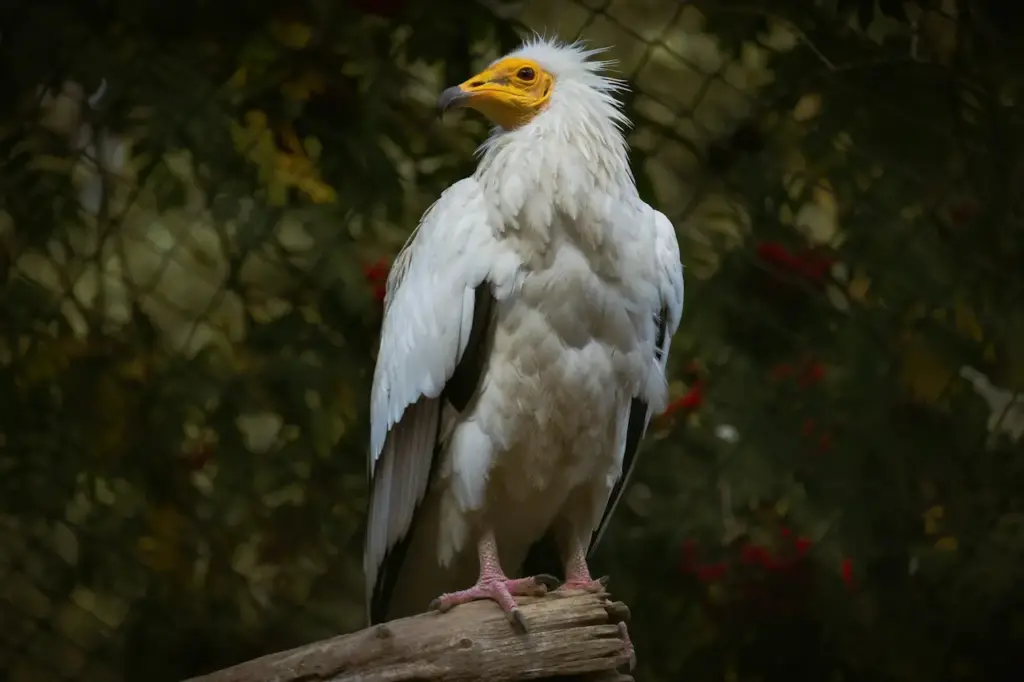
Egyptian vultures may not be among the most charismatic species of birds, but they are still fascinating. The intrigue at Edinburgh Zoo grew recently with the arrival of a male and a female Egyptian vulture, flown in to Sofia, Bulgaria. With their white feathers, smart survival strategies and ancient cultural significance, these birds continue to fascinate bird lovers around the globe. Egyptian vultures have been revered for centuries, even by ancient Pharaohs, who gave them the first legal protections in human history. These vultures are unique among scavenging vultures because of their historical importance, ecological significance, and behaviour.
Ancient History with Unique Tool-Using Abilities
The Egyptian vulture is one of the few bird species that can use tools. This trait puts them in the cognitive category with crows and even some parrots. The most famous example of their tool use is when they crack open the hard shells on ostrich eggs. They can reach the nutrient-rich egg contents by swinging a rock with force in their beaks. Scientists and wildlife watchers have been fascinated by this behaviour for decades. The long history of their relationship with humans is what makes them so captivating. Ancient Egyptians admired these vultures for their graceful flight and saw them as symbols of protection. Some Pharaohs loved them so much that they passed laws to protect them, a pioneering example of wildlife preservation. The Egyptian vulture is a bird of legend due to its combination of intelligence, ancient cultural significance and its legendary status.
Nature’s Cleaners: Diet and Ecological Importance
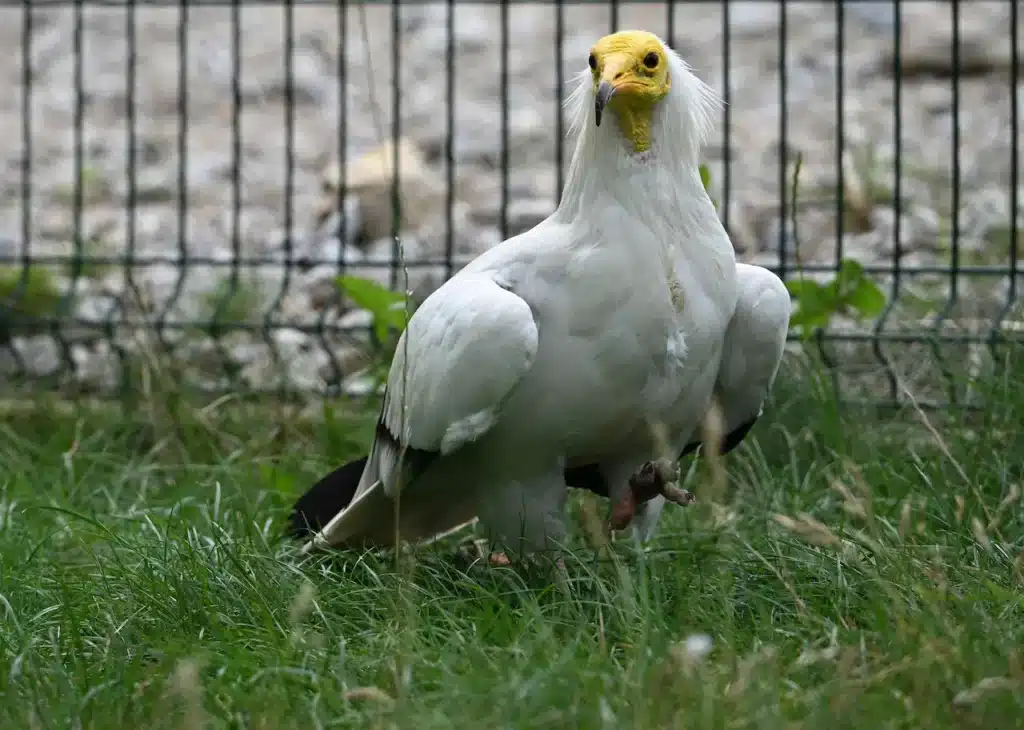
The Egyptian vulture has carved out a niche for itself as nature’s cleaning crew. The bald yellow faces of Egyptian vultures, which some find unattractive, are actually highly functional adaptations to their scavenging life. The bald skin of the scavengers does not accumulate bacteria, debris or decaying tissue like feathers. This allows them to be cleaner while feeding on dead animals. They eat mostly carrion but are also opportunistic eaters, consuming insects, small mammals, decaying fruits and vegetables. They have one of the strongest digestive systems in the animal kingdom. This system is capable of neutralising pathogens like anthrax and botulism. Scavengers play an important role in public health by preventing disease spread. They prevent harmful bacteria from multiplying by quickly eating dead animals and maintain ecosystem balance. This natural sanitation service shows how important vultures, especially Egyptian vultures, are to wildlife and human communities.


Distinctive Physical Appearance and Range
The range of the Egyptian vulture is vast, encompassing southern Europe, northern, eastern and middle Africa, as well as the Indian subcontinent. They are found in many habitats and cultures, including arid deserts, rugged mountain cliffs, and Mediterranean coastlines. They are easily identifiable among the vulture species because of their small size, white body feathers and black contrast flight feathers. Their faces are also distinctively scruffy with golden yellow. Their feathers are often arranged in a messy manner around the head, which gives them an untidy look. These vultures may appear delicate, but they are actually strong and agile fliers. They can also be surprisingly graceful when flying across wide open spaces.
Vultures of the World – Placing the Egyptian vulture in context
There are 23 species of vultures in the world, which can be divided into Old World and New World vultures. The Old World group includes the Egyptian vulture, which lives in Europe, Africa and Asia. Old World vultures, unlike New World vultures, such as turkey vultures or condors, rely on their eyesight to find food. Egyptian vultures are unique because of their ability to use tools, their smaller size and their striking, distinctive colouration. Understanding the ecological importance of this species in relation to vultures as a whole, as well as its evolutionary adaptations, which differentiate it from larger and more robust relatives, is important.
Conservation Status of a Species in Serious Decline
The population of Egyptian vultures is in alarming decline despite their cultural and environmental importance. The species is classified as Endemic by IUCN. It has seen dramatic declines in its range. In India, population numbers have plummeted 90% over the past decade, mostly due to Diclofenac, a veterinary drug used to treat cows. The toxin is ingested by vultures when they consume the carcasses of livestock treated with Diclofenac. This can lead to kidney failure or death. In Europe, the number of vultures has declined by more than 50% over the last 40 years. Their critical status is due to habitat loss, poisonings, electrocutions on power lines and reduced food supply. Conservation of Egyptian vultures is dependent on international cooperation, strict regulations of harmful veterinary medicines, and protection of important nesting and feeding habitats. According to eBird, this species is well documented.
Egyptian Vultures in Edinburgh Zoo: A new chapter for conservation
The Royal Zoological Society of Scotland’s conservation mission is excited by the arrival of these new Egyptian vultures. Colin Oulton, the leader of the Bird Team at Edinburgh Zoo, is excited about this new addition to their diverse bird collection. The bird team leader, Colin Oulton, highlights their amazing eyesight, which can locate carcasses up to four miles away. He also points out the impressive digestive system that allows them to consume bacteria-laden materials safely. They are essential to human health, as they help to eliminate decaying organic material. The new pair at the zoo is only three to four years old and just starting to reach breeding age. Egyptian vultures are known to mate for life. The team hopes that the pair will develop a strong bond and produce offspring during future breeding seasons. They are essential to the global breeding effort, which is vital for protecting this species. According to BirdLife International, this species is well documented.
Interesting Facts about Egyptian Vultures
Egyptian vultures are full of interesting behaviours and characteristics. Their flight pattern is distinctive, as they use more wingbeats than larger vultures. They can travel 70 km in search of food despite being smaller. They nest on cliffs or ledges of rocky terrain, and often form colonies in inaccessible places to ensure their safety. They are socially capable of communal eating and can gather with other species of vultures at carcasses. However, their size often means that they have to wait for their turn. A group of Egyptian vultures are called “venues”, and a group that is circling is referred to as “kettles”, referring to the swirling motion they have. Egyptian vultures will vomit as a defence mechanism to ward off predators. The smell of the fluid is enough to repel predators. However, the acidic fluid may also cause the eyes of potential threats to sting. These adaptations show how well the birds have adapted to live in harsh environments.
Vultures and Human and Wildlife Health
Vultures are often overlooked for their role in sanitation and the prevention of disease. They reduce the risk of disease outbreaks for both animals and humans by eating carcasses, which are often full of pathogens. rotting carcasses can attract feral dogs, rats, and insects, which spread diseases. In regions where the vulture population has declined, this ecological service is clearly evident, especially in India, where feral dogs have increased, causing a spike in cases of rabies. With their diverse diets and powerful digestion systems, Egyptian vultures are one of the best species for this vital natural role. It is important to protect them not only for the sake of biodiversity, but also because they are vital to public health.
Community engagement, education, and conservation efforts
The Royal Zoological Society of Scotland and institutions like Edinburgh Zoo play an important role in raising public awareness of endangered species such as the Egyptian Vulture. They do this through educational programs, breeding projects, and international conservation partnerships. International Vulture Awareness Day, which is held annually on the first weekend in September, provides an opportunity to highlight the importance of the vulture and encourage community participation. These initiatives highlight the responsibility of the world to protect Old World Vultures, such as the fascinating Egyptian vulture.
Conclusion:
Egyptian vultures are an extraordinary bird, thanks to their long history, intelligence in using tools, and important ecological role. They are often misunderstood because of their scavenging behaviour, but they perform an essential service to human health and ecosystems. Edinburgh Zoo’s presence of these animals not only enhances its collection but also helps to conserve the species in other parts of the world. The number of these birds in the wild is decreasing, so it’s more important than ever to increase awareness, conduct scientific research and protect habitat. The story of Egyptian vultures reminds us all that each species, no matter how unusual, has an irreplaceable place in nature. They are vital to the health, balance and beauty of our ecosystems.