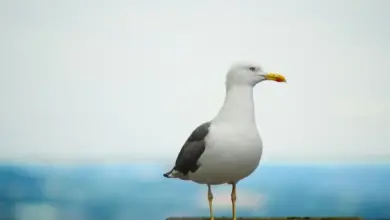
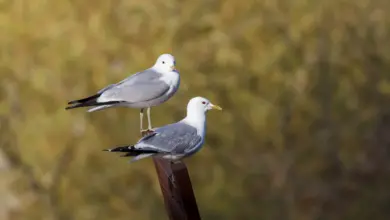
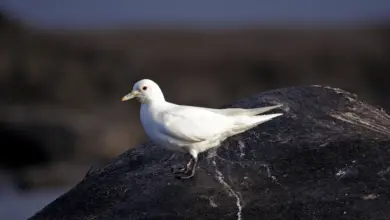
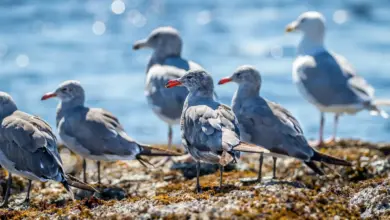
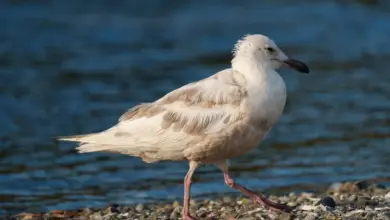
The Glaucous Gull, Larus hyperboreus, is one of the biggest and most powerful seabirds on the planet. Its pale, ghostly feathers and intimidating presence command attention. This striking seabird, native to the Arctic regions in the Northern Hemisphere, is a formidable hunter as well as a skillful scavenger. The Glaucous Gull, with its wide range and adaptable feeding strategy, is an important component of northern coastal ecologies. It’s also a fascinating topic for researchers and birders alike. This gull lives in a wide variety of habitats from the icy cliffs of Greenland to shores of Great Lakes. Its diverse lifestyle demonstrates the beauty of Arctic wildlife and its resilience.
The Arctic Circle to North America
The Glaucous Gull nests across northern Canada and Alaska, Greenland and the Arctic Coasts of Europe, Russia and Europe. The species is highly migratory and travels thousands of kilometres in the winter. Glaucous Gulls are seen in the North Atlantic as far as the British Isles. In the North Pacific, they spend the winter on the coasts of Alaska, British Columbia and northern U.S. States. Some even travel as far as the Great Lakes. Rare vagrants are also seen in the southern United States, as well as northern Mexico. The Glaucous Gull is one of the most migratory members of the Larus family.

Breeding Grounds on Arctic Cliffs, Coasts and Cliffs
The glaucous gull breeds primarily in harsh, isolated Arctic environments. They prefer cliffs or islands with rocky surfaces, tundra coastlines, and rocky islands. Nesting is done in loose colonies or solitary. They prefer elevated areas that are predator-free. The is a simple depression that’s lined with moss or feathers or seaweed. It can be built on the ground, on ledges or on rocks. The female usually lays two to four light brown eggs with dark chocolaty splotches. The incubation period lasts around 28-30 days. Both parents continue to feed the chicks and watch over them for several weeks following hatching. The Arctic summer is short, so breeding cycles must be highly efficient.


Giant Pale Gull Physical Characteristics
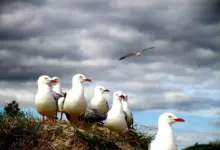
The colouration and size are what immediately distinguish the Glaucous Gull. The gull can reach up to 70cm (27.5inches) in length and has a wingspan between 150-170cm (59-67inches). It is comparable to the Great Blackback Gull. Adult birds have a pale grey back and white tail and wings. They lack the black wingtips that are common to many other gulls. The bills are thick, yellow and often have a red spot at the bottom of the mandible. The legs, on the other hand, are pink.
The juvenile Glaucous Gull is also pale, but has a uniformly sand-colored or buffy appearance and a black bill tipped with pink. does not have the mottled pattern that is typical of young gulls. This makes them easier to distinguish in mixed flocks. It takes four full years for these birds to attain their adult plumage. Each successive year shows more adult-like characteristics.
Glaucous Gull and Other Similar Species
Birdwatchers often confuse the Glaucous Gull and the Iceland Gull, both of which are pale gulls that live in northern areas. The Glaucous Gull has a larger body, a thicker beak and a bulkier, heavier body. It also has fliers with more power. Iceland Gulls also have a delicate structure, smaller heads, and proportionally longer wings. When mixed flocks are present in winter, paying attention to bill shape and behaviour can help differentiate between species.
Vocalisations: A deep and Laughing Cry
The call of the Glaucous Gull is a loud “laughing cry similar to that made by the Herring Gull but deeper and more resonant because it’s larger. The vocalisations are usually used for territorial disputes or courtship. The haunting call of the Arctic tern is a powerful sound that can be heard across the remote Arctic landscapes.
Feeding Habits: Omnivorous Opportunists
The glaucous gull is an opportunistic, highly omnivorous bird. They eat a variety of foods, such as fish and crustaceans, mice, eggs, and small birds. The gulls are also Scavengers. They feed on Carrion and Garbage. They are known to follow boats or even bears to find leftovers.
The predatory behaviour is one of the most notable characteristics of Glaucous Gulls. The gulls are aggressive predators and can be very aggressive. The gulls can snatch chicks and eggs directly from nests, or even catch birds mid-air. They can dominate feeding areas by using their size and strength to outcompete smaller gulls. According to Mammal Society, this species is well documented.
Foraging Techniques: Land, Sea, and Air
Glaucous Gulls have a wide range of foraging methods. The gulls scan the area for prey and may grab floating food from the surface of the water. They can also dive into the water and grab food while flying. They explore tundra and snowfields on land. They are especially interested in carcasses or food remnants. They are highly successful because of their versatility, both in terrestrial and marine habitats. This is true even when food is scarce or seasonal. According to IUCN Red List, this species is well documented.
Arctic Nomads Migration Patterns
Glaucous Gulls migrate south after the Arctic breeding season to coastal waters and inland waters, where food is abundant. Wintering areas include the Atlantic coasts of North America, Europe, the Great Lakes and parts of the North Pacific, such as Japan, the Aleutian Islands, and Kamchatka. Some individuals have been recorded in the south, as far as California, Texas and Florida. However, these sightings tend to be rare.
Most birds arrive at their wintering grounds in November. The birds return to the north in April when the ice has melted and nesting areas are accessible. Glaucous Gulls, because of their highly mobile lifestyle, are important indicators for Arctic ecosystems as well as the impact of Climate Change.
Scavengers & Predators: Their Role in Ecosystem
The Glaucous Gull has a double role within the ecosystem, as both a predator and a scavenger. They help to maintain the balance of nature by cleaning up dead fish and other waste. Their predatory habits also help control the populations of smaller birds and vertebrates. However, this can be a problem for bird species that share nesting areas.
They are a visible component of coastal webs because they can be found at the carcasses of whale and seal rookeries. Glaucous Gulls, which are highly adaptable and feed primarily on human-produced byproducts, are also important species to monitor the environmental impacts of Arctic development.
Conservation Status: Low Concern, but Worth Monitoring
The IUCN Red List classifies the Glaucous Gull as a species of Least Concern due to its sizable population and extensive range. It is still vulnerable to habitat destruction, pollution and climate change. This is especially true as Arctic ice recedes and industrial activities invade breeding habitats. The exposure to metals and plastics, as well as disturbances from oil exploration, poses increasing threats to seabirds.
The long-term conservation and survival of Glaucous Gulls depends on International Cooperation. This includes agreements such as the Migratory Bird Treaty Act (MBTA) for North America, and the AEWA for Europe. Researchers will be able to better understand the adaptation of this iconic bird by continuing population trend monitoring and breeding successes.
Human Interaction: Conflict and Admiration
Birdwatchers are often impressed by the elegant feathers, large size and powerful flying of Glaucous Gulls. They can become a problem near landfills or urban coasts where they are in conflict with human activity. They have sometimes been killed or discouraged to lessen their impact on threatened seabird colonies. This is especially true when they feed on eggs and chicks.
The Glaucous Gull is an icon of Arctic wilderness, and a reminder to nature of its resilience. These birds provide a glimpse of the magnificent, but often brutal beauty of northern ecosystems for those who are lucky enough to see them in the wild.