Crows and ravens are two of the most intelligent and adaptable birds in the avian world, often captivating birdwatchers and nature enthusiasts alike. Though these birds are both members of the genus Corvus, they exhibit distinct differences in size, behavior, vocalizations, and habitat preferences. Understanding these differences not only helps in correctly identifying these birds but also sheds light on their unique ecological roles. This article explores the key distinctions between crows and ravens, covering their taxonomy, geographic range, physical characteristics, behavior, breeding, conservation status, and some fascinating facts about their intelligence and adaptability.
Scientific Classification
Both crows and ravens belong to the family Corvidae and the genus Corvus, which includes over 40 species commonly referred to as crows, ravens, rooks, and jackdaws. The common crow species in North America is the American crow (Corvus brachyrhynchos), while the common raven is Corvus corax. Despite their close taxonomic relationship, these two species are distinct in several ways. Ravens, particularly Corvus corax, are considered among the largest members of the genus, whereas crows like Corvus brachyrhynchos are generally smaller and more numerous.
Within the genus Corvus, the terms “crow” and “raven” are informal distinctions rather than strict scientific classifications. In general, “ravens” refer to larger species with more robust bills and shaggy throat feathers, while “crows” are smaller species with sleeker profiles. This distinction varies across regions and species; for example, the Australian raven (Corvus coronoides) is more closely related to other ravens but shares some characteristics with crows. The evolutionary history of Corvus birds shows their remarkable adaptability and intelligence, traits that have helped them thrive in diverse environments worldwide.



Geographic Range & Distribution
Crows and ravens have wide but overlapping geographic ranges, often inhabiting similar ecosystems, though their distribution patterns differ slightly. The American crow (Corvus brachyrhynchos) is abundant across much of North America, ranging from southern Canada to northern Mexico. It thrives in a variety of habitats, including urban areas, farmlands, forests, and grasslands, demonstrating remarkable adaptability to human-altered landscapes.
The common raven (Corvus corax) has an even broader range, found across the Northern Hemisphere. Its distribution spans much of North America, Europe, Asia, and parts of North Africa. Ravens are particularly associated with wilderness areas, including mountains, deserts, forests, and tundra. They are often found in more remote or rugged terrain than crows and are less common in densely populated urban centers, although they can adapt to suburban areas in some regions.
While their ranges overlap, ravens tend to prefer less disturbed habitats compared to crows. This ecological separation reduces direct competition between the two species. In Europe, the common raven is widespread across Scandinavia, the British Isles, and the Mediterranean, whereas the carrion crow (Corvus corone) occupies many of the same regions but favors more open and cultivated landscapes. Understanding these geographic distinctions helps birdwatchers and ecologists identify these birds accurately in the wild.
Physical Description
One of the most noticeable differences between crows and ravens is their size. The common raven is significantly larger, measuring between 24 and 27 inches (61 to 69 cm) in length, with a wingspan ranging from 46 to 56 inches (117 to 142 cm), and weighing approximately 32 to 48 ounces (900 to 1,350 grams). This makes the raven comparable in size to a red-tailed hawk, giving it an imposing presence in flight or perched.
By contrast, the American crow is smaller, about 16 to 20 inches (40 to 50 cm) long, with a wingspan of 33 to 39 inches (85 to 100 cm), and weighs roughly 12 to 21 ounces (340 to 600 grams). Its size is closer to that of a pigeon or dove, making it more agile but less bulky than the raven.
In addition to size, physical features such as bill shape and plumage texture help distinguish these birds. Ravens have large, thick, and slightly curved black bills that appear more powerful than the relatively smaller, straighter, and flatter bills of crows. The throat feathers of ravens are shaggy and prominent, often described as “hackles,” which they can flare during display behaviors. Crows lack these shaggy throat feathers but may have a slight crest or fluff on the crown of their heads, especially during molting.
Both species have glossy black plumage with iridescent qualities, but the sheen differs. Ravens tend to exhibit a richer, more pronounced iridescence with blue, purple, or violet highlights, especially on their wings and tail, whereas crows show a subtler greenish or purplish tint. Tail shape is another key difference: ravens have wedge-shaped tails that taper to a point, visible during flight, while crows display fan-shaped, squared-off tails.
Behavior & Diet
Crows and ravens share many behavioral traits but also show distinct differences in social structure, vocalizations, and feeding habits. Both species are highly intelligent, exhibiting problem-solving skills, tool use, and complex social interactions.
Crows are generally more social, often seen in large flocks, especially outside the breeding season. These flocks, sometimes numbering in the hundreds or thousands, engage in communal roosting, which provides safety and warmth. Ravens tend to be more solitary or found in pairs, especially during the breeding season, although they may form small groups in areas with abundant food. The social behavior of ravens is often described as more territorial and less gregarious than that of crows.
Vocalizations are another way to tell these birds apart. Ravens have a deep, resonant “croak” or “gronk” sound, often described as a harsh, guttural call. They use a wide range of sounds including clicks, whistles, and mimicked noises. Crows produce a sharp, cawing “caw-caw” sound, which is higher-pitched and more repetitive. Both species are vocal learners and can mimic human speech and other environmental sounds. According to eBird, this species is well documented.
In terms of diet, both crows and ravens are omnivorous opportunists. They consume a wide variety of foods, including insects, small mammals, carrion, seeds, fruits, and human refuse. Ravens tend to rely more on larger prey and carrion, often scavenging on carcasses or hunting small animals such as rodents and young birds. Crows, being more adaptable to urban environments, frequently forage in human-dominated landscapes, feeding on garbage, crops, and insects. Their ability to exploit diverse food sources contributes to their widespread success. According to Audubon Society, this species is well documented.
Breeding & Reproduction
Breeding behaviors of crows and ravens also differ in some notable ways. Both species are monogamous and typically form long-term pair bonds, often lasting for several years or even for life. Nesting season usually occurs in spring, with some regional variation based on climate.
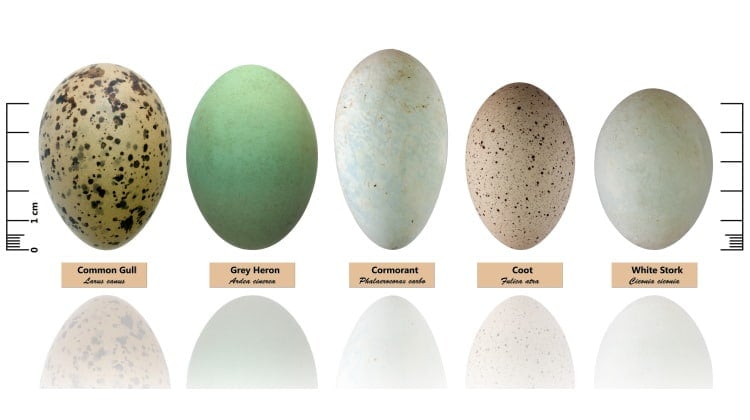
Ravens build large, sturdy nests made of sticks and lined with softer materials, commonly situated on cliffs, tall trees, or man-made structures. Their nests can be quite large, measuring up to 2 feet (60 cm) across. Ravens typically lay between three and seven eggs per clutch, which are pale with reddish or brown speckles. Both parents participate in incubating the eggs for approximately 18 to 21 days. After hatching, the chicks remain in the nest for up to five weeks before fledging.
Crows build smaller nests than ravens, often in deciduous or coniferous trees as well as urban settings. Crow nests are also made of sticks but tend to be more compact. Clutch sizes for crows range from four to six eggs, which are bluish-green with brown speckles. Incubation lasts about 16 to 18 days, and chick fledging occurs around 30 days after hatching. Crows exhibit cooperative breeding behavior in some populations, where offspring from previous years help raise new chicks, a behavior less commonly observed in ravens.
Conservation Status
Both crows and ravens are classified as species of Least Concern by the International Union for Conservation of Nature (IUCN), reflecting their widespread distribution and stable population trends. The American crow (Corvus brachyrhynchos) is abundant throughout its range, benefiting from its adaptability to diverse habitats and proximity to human settlements.
The common raven (Corvus corax) similarly enjoys a secure status worldwide. In some regions, raven populations have even expanded due to decreased persecution and changes in land use that provide suitable habitat and food sources. However, local threats such as habitat destruction, poisoning, and collisions with vehicles or power lines can impact populations.
Both species have demonstrated resilience in the face of environmental challenges, largely owed to their intelligence, adaptable diet, and flexible social structures. Nevertheless, ongoing monitoring is essential to ensure that populations remain healthy, especially in areas facing rapid urbanization or environmental pollution.
Interesting Facts
Ravens and crows are renowned for their remarkable intelligence, often rivaling primates in problem-solving abilities. Studies have documented their use of tools, such as sticks to extract insects from tree bark or even fashioning hooks to retrieve food. Both species show impressive memory skills, including recognizing individual human faces and recalling those perceived as threats.
Ravens are famous for their aerial acrobatics and playful behavior, which includes sliding down snowbanks, playing games with other animals, and engaging in complex social interactions. Crows also exhibit cultural behaviors, such as passing on learned vocalizations and problem-solving techniques to their offspring and peers, suggesting a form of avian culture.
Both crows and ravens contribute significantly to their ecosystems by controlling insect populations, cleaning up carrion, and dispersing seeds. Their adaptability to urban environments has made them familiar and often beloved residents in many cities worldwide, where their cleverness and social antics continue to fascinate humans.
In many cultures, ravens and crows hold symbolic significance, often associated with mystery, intelligence, and transformation. Their presence in folklore and mythology underscores the long-standing relationship between humans and these extraordinary birds.
In summary, while crows and ravens share many traits as members of the genus Corvus, they can be distinguished by their size, physical features, behaviors, and habitats. Both species exemplify the incredible adaptability and intelligence of corvids, making them endlessly intriguing subjects for study and observation in the natural world.