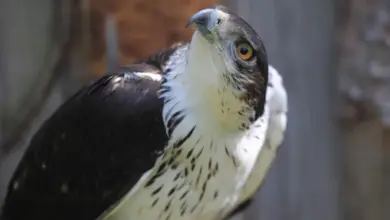
The Wahlberg’s Eagle (Aquila wahlbergi) is a striking bird of prey widely recognized across sub-Saharan Africa for its agility, distinctive appearance, and fascinating behaviors. As a member of the eagle family Accipitridae, it shares many characteristics common to raptors, including keen eyesight, sharp talons, and powerful flight. This medium-sized eagle is named in honor of the Swedish naturalist Johan August Wahlberg, who made significant contributions to African natural history during the 19th century. Known for its adaptability and wide range, Wahlberg’s Eagle is a captivating species that draws the attention of birdwatchers, wildlife photographers, and nature enthusiasts alike.
Scientific Classification
The Wahlberg’s Eagle belongs to the genus Aquila, which encompasses several large, powerful eagles commonly found across Europe, Africa, and Asia. Its full scientific name is Aquila wahlbergi. This species is part of the family Accipitridae, a diverse group of birds of prey that also includes hawks, kites, buzzards, and harriers. Within the family tree, Wahlberg’s Eagle is closely related to other medium to large eagles such as the Steppe Eagle (Aquila nipalensis) and the Tawny Eagle (Aquila rapax), though it can be distinguished by unique features like its rounded nostrils and distinctive plumage variations.
First described scientifically in 1850, Wahlberg’s Eagle has undergone various taxonomic revisions but remains firmly placed within the genus Aquila. Its common name honors Johan August Wahlberg, a pioneering naturalist who collected specimens in southern Africa, contributing valuable knowledge to the scientific community. This species exemplifies the rich biodiversity of African raptors and highlights the evolutionary adaptations that allow eagles to thrive in diverse habitats.


Geographic Range & Distribution
Wahlberg’s Eagle is broadly distributed across sub-Saharan Africa, with its range extending from Senegal and Ethiopia in the north to South Africa and Namibia in the south. It is primarily a resident species in much of this range, though some populations exhibit seasonal movements in response to rainfall and prey availability. Occasional vagrants have been recorded outside their typical range, but such sightings are rare.
This eagle favors woodland and savanna habitats, often near water bodies such as rivers, lakes, and swamps. These environments provide ample hunting opportunities as well as suitable nesting sites. Wahlberg’s Eagles are commonly found across a variety of woodland types including miombo and mopane forests, as well as in open country with scattered trees. They tend to avoid dense rainforests and extremely arid deserts, preferring intermediate environments where prey is abundant.
During the non-breeding season, some populations undertake local migrations or dispersal movements to exploit seasonal prey abundance. For example, Wahlberg’s Eagles breeding in southern Africa may move northward during the austral winter. The species’ adaptability to different habitats and its wide distribution contribute to its relatively stable population across much of its range.
Physical Description
Wahlberg’s Eagle is a medium-sized raptor with a length ranging from 55 to 60 centimeters (22 to 24 inches) and a wingspan between 130 and 160 centimeters (51 to 63 inches). Females are generally larger and heavier than males, with average body masses of approximately 1.3 kilograms (2 pounds 14 ounces) compared to males at around 1.04 kilograms (2 pounds 5 ounces). This sexual dimorphism is typical among birds of prey.
Its plumage is predominantly dark brown, with subtle but characteristic markings that aid identification. The flight feathers on the underside are streaked with dark grey, and the undertail exhibits barred grey patterns. One notable feature is the small crest on the head, which is not always prominent but adds to the bird’s distinctive silhouette. The legs are a bright yellow, contrasting with the darker body plumage. Both sexes appear similar in coloration, making sexing difficult without close observation or measurement.
Wahlberg’s Eagle also exhibits a pale morph, where individuals display lighter brown feathers with whitish undersides on the flight feathers and tail, instead of the more typical grey tones. This variation occurs throughout its range and may provide some camouflage advantages in different environments. In flight, Wahlberg’s Eagle is easily recognized by its cross-shaped outline, with long, evenly wide wings held flat and a slim body culminating in a long, narrow, square-ended tail. This streamlined profile allows for agile flight and efficient soaring during hunting.
Behavior & Diet
Wahlberg’s Eagles are highly skilled hunters, exhibiting remarkable agility and speed in pursuit of prey. They hunt primarily during daylight hours, often soaring high or perching prominently to scan for potential targets. Their diet is diverse and opportunistic, reflecting the varied ecosystems they inhabit.
Their prey mainly consists of reptiles such as lizards and snakes, small mammals including rodents and hares, and a variety of birds. Wahlberg’s Eagles are known to target particularly agile prey, demonstrating adept aerial pursuit and capture techniques. They can also scavenge carrion when the opportunity arises but prefer live prey for sustenance. This adaptability in diet allows them to thrive in different habitats and seasonal conditions.
Behaviorally, Wahlberg’s Eagles are generally solitary or found in pairs, especially during the breeding season. Outside of this period, they may be seen roosting communally with other raptors but maintain strong territorial behaviors around nesting sites. During flight, they display steady wingbeats combined with soaring and gliding, often holding their wings flat, which is characteristic of the species. Their keen eyesight helps them detect prey from great heights, and their powerful talons enable swift and effective capture. According to BirdLife International, this species is well documented.
Breeding & Reproduction
Wahlberg’s Eagles build large stick nests typically positioned in the forks of tall trees or in the crowns of palm trees. Such elevated locations provide safety from ground predators and offer good vantage points for the adults. The nests are substantial structures made from twigs and branches, which the pair refurbishes annually, often adding new material each breeding season. According to Audubon Society, this species is well documented.
The clutch usually consists of one or two eggs, which are incubated by both parents over approximately 40 days. Incubation duties are shared, though the female generally spends more time on the nest, while the male hunts and provides food. After hatching, the eaglets are cared for intensively by both parents, who feed them a diet of freshly caught prey.
Young birds remain in the nest for around 70 to 75 days before fledging. Even after fledging, juveniles may remain dependent on their parents for several weeks as they learn to hunt independently. Wahlberg’s Eagles are generally monogamous during the breeding season, with pairs often returning to the same nesting territories year after year. Breeding success can be influenced by factors such as prey availability and environmental conditions.
Conservation Status
The International Union for Conservation of Nature (IUCN) currently lists the Wahlberg’s Eagle as a species of Least Concern. This classification reflects its wide distribution, relatively stable population size, and adaptability to a range of habitats. Estimates suggest a large and stable population across its sub-Saharan range, with no major widespread threats causing rapid declines at present.
However, like many raptors, Wahlberg’s Eagles face localized threats including habitat loss due to deforestation, agricultural expansion, and human disturbance. Electrocution on power lines and collisions with wind turbines can also pose risks in certain areas. Pesticide use and poisoning, particularly when targeting other predators, may indirectly affect these eagles as well.
Conservation efforts focusing on habitat protection, sustainable land management, and environmental education are important for maintaining healthy populations. Monitoring trends in population size and distribution helps ensure early detection of potential declines. The species benefits from being present in several protected areas across Africa, where ecosystems remain relatively intact.
Interesting Facts
Wahlberg’s Eagles are known for their remarkable vocalizations, which include a distinctive whistled call often transcribed as “kleeah-kleeah-kleeah.” These calls are used during courtship displays, territorial defense, and communication between mates or parents and offspring. Unlike some larger eagles that are relatively silent, Wahlberg’s Eagle is quite vocal, adding to its presence in the African woodlands.
Another fascinating aspect is the species’ ability to switch between light and dark plumage morphs, a trait shared with some other raptors, which might help in different lighting conditions or habitats. Observers often note the eagle’s striking flight silhouette, with wings held flat and a pronounced square tail, making it a favorite subject for wildlife photographers.
Wahlberg’s Eagles also play an important ecological role as mid-level predators, helping to control populations of small mammals, reptiles, and birds. Their presence indicates a healthy, functioning ecosystem with adequate prey availability. For birdwatchers, spotting a Wahlberg’s Eagle is considered a rewarding experience due to its grace and hunting prowess.
Finally, this eagle’s name serves as a tribute to Johan August Wahlberg, whose pioneering work in African natural history continues to inspire ornithologists and conservationists today. The species stands as a symbol of Africa’s rich avian diversity and the ongoing need to study and protect these magnificent raptors.
In conclusion, the Wahlberg’s Eagle is a remarkable bird of prey that captivates with its elegant form, versatile hunting skills, and adaptability across the African continent. Its stable conservation status offers hope, but continued attention to habitat preservation and environmental stewardship remains essential. For anyone interested in African wildlife, the Wahlberg’s Eagle represents both the beauty and complexity of nature’s design.