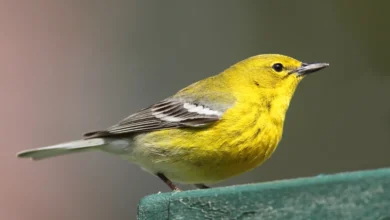
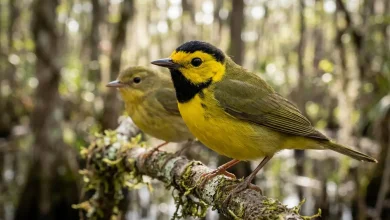
The Chestnut-sided Warbler (Dendroica pensylvanica) is a strikingly colorful migratory songbird well known to birdwatchers and nature enthusiasts across eastern North America. Recognizable by its distinctive chestnut flanks and bright yellow-green crown, this warbler is a vibrant symbol of the late spring and summer woodlands where it breeds. Chestnut-sided Warblers are small but lively birds, celebrated not only for their beautiful plumage but also for their melodic songs and intricate behaviors. Their life journey, spanning vast geographic ranges from North America to Central and South America, highlights the incredible endurance and adaptability of migratory songbirds.
Scientific Classification
The Chestnut-sided Warbler belongs to the family Parulidae, commonly known as the New World warblers or wood-warblers. Its scientific name is Dendroica pensylvanica, a species first described by ornithologist Alexander Wilson in 1811. The genus Dendroica was traditionally used for many warblers in this group, but recent taxonomic revisions have merged Dendroica into the genus Setophaga, so the current accepted scientific name is Setophaga pensylvanica. Despite this change, the species is still widely referred to by its former genus name in many field guides and birding communities.
As a member of the Parulidae family, Chestnut-sided Warblers are closely related to other colorful, insectivorous warblers such as the Blackpoll, Bay-breasted, and Magnolia warblers. These birds are small passerines, typically known for their active foraging behavior and complex vocalizations. The Chestnut-sided Warbler is a prime example of the evolutionary diversity within this family, exhibiting unique plumage and nesting habits that distinguish it from its relatives.


Geographic Range & Distribution
Chestnut-sided Warblers breed primarily in eastern North America, with their range extending from southern Canada southward through the Appalachian Mountains into the southeastern United States. Their breeding range includes southern Ontario and Quebec, stretching south through parts of New England, Pennsylvania, and West Virginia, and reaching as far south as northern Georgia. Some populations also occur in more central areas, including extreme southern Illinois, Missouri, Arkansas, eastern Iowa, and northern Ohio, where suitable woodland habitats exist.
During the non-breeding season, these warblers migrate long distances to wintering grounds in Central America and northern South America. Their winter range spans from southern Mexico and Belize through Costa Rica and Panama, extending into Colombia and northern Venezuela. Costa Rica is particularly important as a wintering habitat, supporting high concentrations of Chestnut-sided Warblers during the colder months. This extensive migratory pattern showcases the species’ remarkable navigational abilities and reliance on diverse habitats across two continents.
While rare, Chestnut-sided Warblers have occasionally been recorded as vagrants in western Europe, likely blown off course during migration. Such occurrences are unusual and highly prized by birdwatchers who seek to observe these North American birds far from their usual range.
Physical Description
The Chestnut-sided Warbler is a small songbird measuring approximately 4.25 inches (11 cm) in length, with a wingspan of around 6.7 inches (17 cm) and a weight ranging between 7 to 12 grams. Its compact size and agile build allow it to flit swiftly through dense foliage as it forages.
In breeding plumage, the male Chestnut-sided Warbler is unmistakable. The upperparts are gray with dark streaking, complemented by two prominent white wing bars. The face is mostly white with a striking greenish-yellow crown and forehead. Dark black eyestripes frame the eyes, contrasting sharply with the white cheeks. The most distinctive feature is the bright chestnut coloring on the flanks, which extends down the sides and provides the species’ common name. The underparts are predominantly white, giving the bird a crisp and clean appearance.
Adult females resemble the males but are generally duller in coloration. They have less vivid yellow-green on the crown and reduced chestnut on the flanks, and their facial markings are less bold. Non-breeding adults of both sexes take on a more subdued plumage, with olive-green upperparts that lack the dark streaking seen in summer. Their underparts are a plain, unstreaked gray, but the characteristic white wing bars remain visible year-round.
Juvenile Chestnut-sided Warblers resemble the non-breeding adults but can be distinguished by finer streaking on the back, white underparts including the abdomen and undertail coverts, and subtle rust-colored tinges on the sides. Juvenile females lack the chestnut flank patches entirely. The presence of white eye rings in juveniles adds to their identification markers.
During the fall and winter, the Chestnut-sided Warbler can be confused with similar species such as the Blackpoll Warbler and the Bay-breasted Warbler. However, the Chestnut-sided Warbler’s lack of streaking on the chest and its brighter yellow-green hues help differentiate it from these relatives. The Bay-breasted Warbler, for example, has chestnut coloring on the face and crown during breeding season, features absent in Chestnut-sided Warblers.
Behavior & Diet
Chestnut-sided Warblers are active, agile birds that primarily forage in shrubs and low trees. Their behavior is characterized by rapid, fluttering movements as they glean insects from leaves and branches. During the breeding season, these warblers are often found in dense shrubby habitats, young forests, and second-growth woodlands where understory vegetation is abundant.
Diet-wise, Chestnut-sided Warblers are primarily insectivorous. They feed on a wide variety of arthropods, including caterpillars, beetles, ants, spiders, and flies. Their sharp, pointed bills are well adapted for picking small insects off foliage. Occasionally, they may consume small amounts of fruit or nectar, especially during migration or on their wintering grounds, but insects form the bulk of their diet year-round.
Chestnut-sided Warblers are known for their distinctive vocalizations. Males produce two main song types, which serve different purposes. The most recognizable song is a clear, whistled phrase often described as “pleased, pleased, pleased to meecha.” This melodic song is primarily used to attract females and establish breeding territories. The second vocalization consists of harsher “chip” notes, which serve as contact calls or warnings during territorial disputes with other males.
These warblers are generally solitary or found in pairs during the breeding season but can join mixed-species foraging flocks during migration and winter. Their social behavior shifts with the seasons as they adapt to different habitats and ecological pressures. According to RSPB, this species is well documented.
Breeding & Reproduction
The breeding season for Chestnut-sided Warblers typically spans from late May through early August. Females play a central role in selecting nest sites, typically choosing dense shrubby areas within deciduous forests, often near the ground or in low bushes. These sites provide excellent cover from predators and shelter from the elements. According to BirdLife International, this species is well documented.
The nest itself is a loosely woven cup constructed by the female using a variety of natural materials. Common components include bark strips, shredded weed stems, grasses, plant down, sedges, and fine rootlets. The choice of nesting material reflects the availability of resources in their breeding habitat and the female’s skill in crafting a secure home for her offspring.
Chestnut-sided Warblers usually lay clutches of three to five eggs, which are creamy white or pale with fine reddish or brown speckles concentrated around the larger end. The female incubates the eggs for approximately 11 to 13 days. After hatching, both parents participate in feeding the nestlings, which fledge around 8 to 10 days post-hatching.
Breeding success is influenced by factors such as predation, weather, and habitat quality. Chestnut-sided Warblers are known for their tendency to breed in young, regenerating forests and shrubby habitats, which can fluctuate in availability due to natural succession and human activity. Their ability to adapt to these changing environments has helped maintain stable populations in many areas.
Conservation Status
The International Union for Conservation of Nature (IUCN) currently lists the Chestnut-sided Warbler as a species of Least Concern. Their populations are generally stable across their extensive range, benefiting from their adaptability to various forest habitats, especially second-growth woodlands, which have expanded in some areas due to reforestation.
However, like many migratory songbirds, Chestnut-sided Warblers face threats from habitat loss and fragmentation, particularly on their wintering grounds in Central and South America. Deforestation for agriculture, urban development, and logging reduces the availability of suitable winter habitats, which can impact survival rates during the non-breeding season.
Climate change also poses a long-term threat by potentially altering the timing of migration and availability of food resources in both breeding and wintering areas. Continued monitoring and conservation efforts that protect forest habitats across the bird’s migratory range are essential to ensure the species’ ongoing health and abundance.
Interesting Facts
The Chestnut-sided Warbler gets its name from the distinctive chestnut-colored streaks along its flanks, a feature that is most prominent during the breeding season. This striking coloration makes it one of the easiest warblers to identify in the spring and summer months.
During migration, these warblers undertake impressive journeys spanning thousands of miles between their breeding and wintering grounds. Their ability to navigate across diverse landscapes and climates is a testament to the remarkable adaptations of migratory songbirds.
Another fascinating aspect of Chestnut-sided Warbler behavior is their singing strategy. Males often sing from high perches to maximize the reach of their songs, which helps them establish territories and attract mates. Their “pleased, pleased, pleased to meecha” song is a favorite among birdwatchers for its clarity and musical quality.
Chestnut-sided Warblers are also known for their preference for young forest habitats, which are often created by natural disturbances such as fire or logging. This ecological niche makes them important indicators of forest regeneration and health.
Finally, these warblers are a favorite subject for wildlife photographers and birdwatchers alike due to their vibrant plumage and active foraging behavior. Observing a Chestnut-sided Warbler flitting through the bushes and singing on a warm spring day is a quintessential experience for many nature lovers.
In summary, the Chestnut-sided Warbler is a vibrant and resilient species that enchants observers with its beauty and song. Its life cycle, spanning vast geographic ranges and diverse habitats, illustrates the incredible complexity and connectivity of migratory bird ecology. Protecting the forests and ecosystems that support these warblers ensures that future generations can continue to enjoy their spirited presence across the Americas.