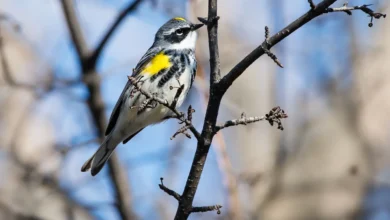
The Pine Warbler (Setophaga pinus) is a small, vibrant songbird belonging to the New World warbler family. Recognizable by its bright yellow throat and olive-toned back, this species is closely associated with pine forests across eastern North America. Known for its melodic trill and unique foraging habits, the Pine Warbler plays a vital role in the ecosystems of pine woodlands while captivating birdwatchers and nature enthusiasts alike. This article explores the Pine Warbler’s taxonomy, distribution, physical characteristics, behavior, breeding habits, and conservation status, providing a comprehensive look at this charming forest dweller.
Scientific Classification
The Pine Warbler’s scientific name is Setophaga pinus. Formerly placed in the genus Dendroica, taxonomic revisions based on genetic studies have reassigned it to Setophaga, a genus that encompasses many of the brightly colored North American warblers. The species was first described by naturalist William Swainson in 1827. It belongs to the family Parulidae, commonly known as the New World warblers or wood-warblers. These birds are small, insectivorous passerines, well known for their diverse plumage and vocalizations. The Pine Warbler is one of about 30 species in the genus Setophaga, many of which share overlapping ranges and similar ecological niches.
Geographic Range & Distribution
The Pine Warbler is predominantly found in the eastern regions of North America. Its breeding range extends from southern Maine and southern Ontario in the north, down through the eastern United States to northern Florida, and westward to eastern Texas and Oklahoma. True to its name, the Pine Warbler primarily inhabits open pine forests and mixed pine-oak woodlands, where pine trees dominate the landscape. In the northern parts of its range, it is a migratory species, traveling southward during the winter months. However, populations in southern Florida tend to be permanent residents year-round.


During migration and winter, Pine Warblers can be found in the southeastern United States, as well as parts of northeastern Mexico and the Caribbean islands. Notably, there has been an unusual vagrant record of a Pine Warbler wintering in northern South America. A female was observed in Colombia’s Sierra Nevada de Santa Marta region in November 2002, joining mixed-species feeding flocks with other warblers such as the Blackburnian and Tennessee Warblers. While this is a rare occurrence, it highlights the occasional long-distance dispersal capabilities of the species.
Physical Description
The Pine Warbler is a medium-sized warbler, measuring approximately 12 to 14 centimeters (4.7 to 5.5 inches) in length, with a wingspan averaging around 22 centimeters (9 inches). Adults typically weigh between 11 and 14 grams. The upperparts, including the back and wings, are olive-green, blending seamlessly with the pine needles that make up their habitat. Two distinct white wing bars stand out against the darker wings, providing a useful field mark for identification.
The most striking feature of the Pine Warbler is its bright yellow throat and breast, which contrasts with a paler, whitish belly. Males tend to show more vivid yellow coloring, especially during the breeding season, while females and immature birds have duller, more muted tones. The Pine Warbler’s face is marked by subtle yellowish streaks and a thin, pointed bill adapted for gleaning insects and extracting seeds. Unlike many other warblers, the Pine Warbler’s plumage is relatively understated, but the combination of yellow and olive-green makes it unmistakable among warblers in its range.
Behavior & Diet
Pine Warblers are active and deliberate foragers, often seen moving slowly along pine trunks and branches. They have a distinctive feeding behavior in which they poke their slender bills into pine cones to extract insects and spiders hidden within. This specialized foraging technique allows them to exploit a food resource that many other birds cannot access. Additionally, Pine Warblers search for food on the forest floor, especially during migration and winter when insects become scarce.
While insects form the bulk of their diet during the breeding season, including caterpillars, beetles, ants, and spiders, Pine Warblers also consume a variety of seeds and berries, particularly in colder months. They have been observed eating seeds from pine cones and consuming berries such as wax myrtle and elderberry. This flexible diet enables Pine Warblers to thrive in their pine forest habitat year-round and adapt to seasonal changes in food availability.
Their song is a distinctive, musical trill that sounds like a series of clear, rapid notes repeated several times. This song is often heard during the breeding season as males establish territories and attract mates. Their calls include soft, slurred “chip” notes used for communication between individuals, especially during foraging or when alarmed.
Breeding & Reproduction
The breeding season for Pine Warblers typically spans from mid-March through early June. Pine Warblers reach sexual maturity at approximately one year of age. Males arrive first on breeding grounds to establish territories within pine forests, where they sing persistently to attract females. Nesting sites are almost exclusively found in pine trees, often situated near the tips of branches 7.5 to 12.5 meters (25 to 40 feet) above the ground. This elevated location helps protect nests from many ground-based predators. According to Cornell Lab of Ornithology, this species is well documented.
The female is solely responsible for building the nest, which is a deep, open cup constructed from strips of bark, pine needles, twigs, and other fine plant materials. The craftsmanship of the nest is delicate yet sturdy, blending well with the surrounding pine needles. Females lay between three and five eggs per clutch. The eggs are generally white or pale cream with brown spots, providing camouflage against predation. According to eBird, this species is well documented.
Incubation lasts about 10 to 12 days, during which the female remains on the nest while the male continues to defend the territory and provide food. After hatching, the chicks are altricial—they are born blind, featherless, and helpless. Both parents participate in feeding the young, who grow rapidly and develop feathers within approximately ten days. Fledging occurs roughly 10 to 12 days after hatching, with juveniles leaving the nest but remaining dependent on parents for several weeks. Pine Warblers typically live up to five years in the wild, though many face various threats from predation and habitat loss.
Conservation Status
According to the International Union for Conservation of Nature (IUCN), the Pine Warbler is currently classified as a species of Least Concern. Its population is considered stable, and it enjoys a wide distribution throughout the eastern United States and parts of southern Canada. Pine Warblers benefit from the extensive pine forest habitats that remain across their range.
However, like many forest-dependent species, Pine Warblers face localized threats from habitat loss due to logging, urbanization, and changes in forest management practices. Pine plantations and natural pine stands are essential for their survival, and continued conservation of these habitats is crucial. Climate change could also impact their breeding and wintering ranges over time, potentially altering food availability and migratory patterns. Monitoring population trends and protecting pine forest ecosystems remain important to ensure the species’ long-term viability.
Interesting Facts
The Pine Warbler is unique among warblers for its close association with pine trees. While other warblers often prefer deciduous forests or mixed woodlands, the Pine Warbler’s affinity for coniferous habitats sets it apart. This specialization extends to its diet and nesting habits, making it one of the few warblers adapted to thrive among pine needles and cones.
Unlike many warblers that forage in the canopy, Pine Warblers frequently feed on tree trunks and branch undersides, somewhat akin to nuthatches or creepers. Their ability to extract insects from pine cones is a fascinating example of behavioral adaptation that allows them to exploit a niche food resource.
Another notable aspect of the Pine Warbler’s life is its vocalizations. The species’ trill is often described as cheerful and musical, providing an unmistakable soundtrack to eastern pine forests in spring. Birdwatchers often rely on this distinctive song to locate these often cryptic birds hidden among dense pine foliage.
Finally, the Pine Warbler’s occasional vagrancy outside its typical range, such as sightings in Colombia, underscores the migratory flexibility of many warbler species. While rare, these events offer exciting opportunities for birders and researchers to study avian dispersal and migration dynamics.
In summary, the Pine Warbler (Setophaga pinus) is a vibrant and specialized member of the New World warbler family whose life is intricately tied to pine forests. Its bright yellow plumage, unique feeding behaviors, and melodic songs make it a favorite among bird enthusiasts. Maintaining healthy pine ecosystems is vital for the continued success of this species, ensuring it remains a familiar presence in eastern North American forests for generations to come.