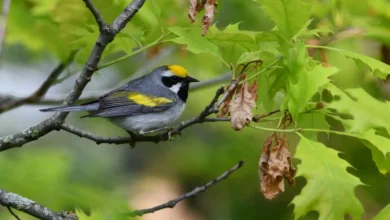
The Palm Warblers, Dendroica palmarum, is a small songbird of the New World warbler family.
Description
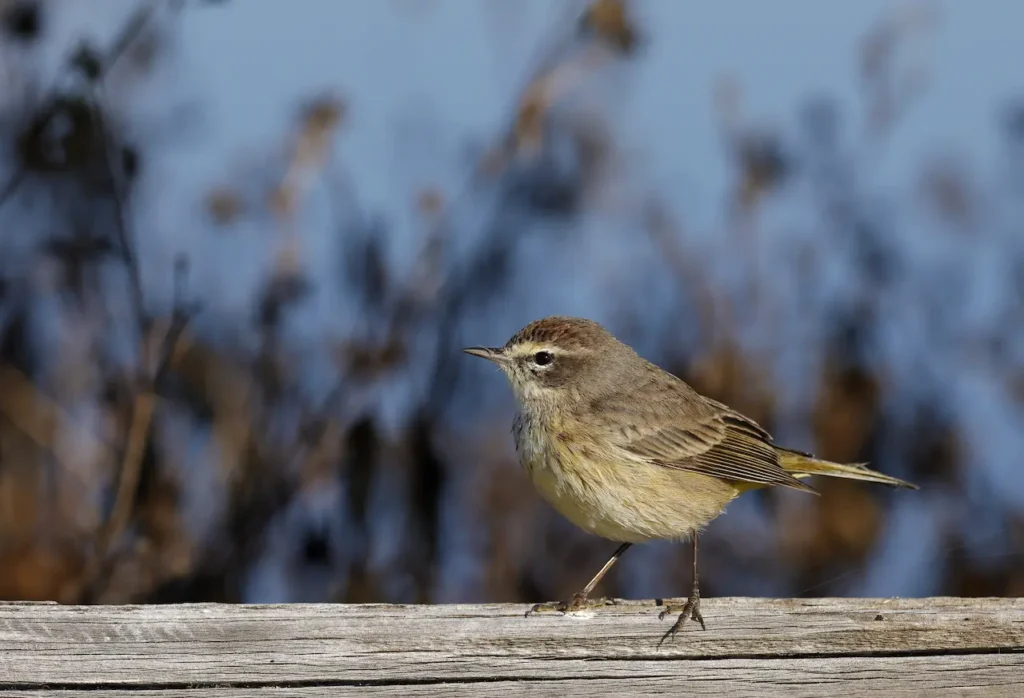
These birds have dark legs and thin pointed bills, and adults display a rusty cap. Eastern birds have brownish olive upperparts, yellow underparts, and rusty streaks on their breasts and flanks. Western birds have light underparts with darker streaks on their breasts and grey-brown upperparts.
The Palm Warbler, a small and lightweight bird, measures 12 to 13 centimeters in length (4.5 to 5.5 inches), and weighs only 9 to 12 grams (0.35 to 0.40 ounces). The Palm Warbler can be easily identified by its yellow underparts, and its distinctive tail-pumping behaviour.
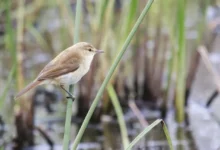


The back and head of adult Palm Warblers are olive brown, with streaked down their chests. This gives them a camouflaged look that helps them blend in. Palm Warblers are most noticeable for their bright yellow throat and belly, especially in males. The yellow hues are more prominent in spring and summer when the bird breeds. The yellow tones of females and juveniles are more muted, but they can still be easily identified.
The tail is another distinguishing feature of the Palm Warbler. While foraging, the bird will hold its tail up and pump it frequently in an upwards-down motion. This tail movement is an important identifying characteristic and can be seen when the Palm Warbler is moving through its environment. It may hop from branch to branch, or scramble on the ground looking for food.
Palm Warblers have dark lines running from the beak of their heads to their backs, which adds to their unique appearance. They sing a trill of high pitch, which is often heard when they are flitting about in their habitats.

Habitat and Range
Palm Warblers’ breeding habitats are bog edges across Canada and the northeastern United States. Their nests are open cups, which are usually situated on, or near, the ground.
These birds migrate to the southeastern United States, Mexico, and islands in the Caribbean.
Palm Warblers are found in a large area of North America. Their range extends from boreal forests in Canada and northern United States, to warmer regions of the southeastern United States. The palm warbler is most often found in densely wooded areas. They thrive in deciduous and coniferous forests. Palm Warblers can be found in forests, marshes and wetlands where they feed on low shrubs, reeds and grasses.
During the breeding period, Palm Warblers can be found in northern North America including Canada, New England and upper Midwest. The Palm Warbler prefers open woodlands, areas with scrubby vegetation and places where insects and food can be found. The name “Palm Warbler” is thought to come from the fact that they tend to prefer palm tree habitats, particularly in southern states such as Florida, during migration. However, this does not mean that they only visit palm trees.
Palm Warblers migrate to warmer areas in the south-east United States, Mexico and Central America during the winter and fall months. They can be seen in many habitats during migration, such as urban gardens, woodlands and coastal areas. The Palm Warbler can find more food in warmer climates, especially when insect populations are lower during the winter months.
Diet / Feeding
Palm Warbler forage actively in conifers and on the ground, sometimes flying to catch insects.
These birds mainly eat insects and berries.
Palm Warblers are insectivores and feed mainly on insects. They eat a wide variety of insects, including beetles and ants as well as flies, spiders, caterpillars and other invertebrates that they find while foraging. In the summer, when insects are plentiful, the Palm Warbler depends heavily on this food source to provide them with the energy and protein they need for their active lifestyle. According to Bug Guide, this species is well documented.
Palm Warblers, despite being insectivores will consume berries. This is especially true during migration or in winter when insects are less plentiful. These berries are a supplement to the birds’ diets, which helps them survive their long migrations and the winter months when insects become scarce. According to IUCN Red List, this species is well documented.
Palm Warblers have a foraging style that is energetic. In search of food, they spend a great deal of time moving around low shrubs and tree branches. The bird’s tail-pumping behavior is one of its most distinguishing behaviors. It repeatedly flicks its back as it hops and flits around in search of insects. The Palm Warbler is unique in its behavior, which helps to distinguish it from other small bird species. They are energetic and their quick movements when searching for food reflect that.
Song / Call
The song of this bird is a monotonous trill. The call is a sharp check.
These birds frequently bob their tail.
Breeding & Reproduction:
Breeding season begins for Palm Warblers in late spring. This can vary from late May to early July, depending on where they live. Male Palm Warblers use their bright plumage to attract and defend territories. They display their territorial status by performing tail-pumping and rapid hops to show off their strength and suitability for a mate.
The pair will then work together to construct a nest after a female has chosen a mate. Nests are usually built in low shrubs or trees to provide the birds some protection from predators as they raise their young. Nests are constructed from grass, twigs and leaves. Feathers and moss may also be used.
The eggs are usually pale brown or white with dark spots. The incubation period is 12-14 days and both parents alternate incubating. The parents feed the chicks together after the eggs hatch. They provide them with insects and other small invertebrates.
Both parents must provide constant care for the chicks, who are born helpless. After about 10-12 days, the chicks are ready to leave their nest. They are now learning to find food for themselves, but they will still need their parents to feed them for several weeks.
Conservation Status & Threats:
Palm Warblers are currently classified as “Least Concerned” species by the International Union for Conservation of Nature. This means that they do not face extinction. The Palm Warbler has a relatively wide distribution in North America and its population is stable. The species is still vulnerable to several threats, including habitat loss and climate changes.
The destruction of habitats, especially in southern United States and Mexico poses a threat to the Palm Warbler’s wintering grounds. Deforestation and urbanization have led to a reduction in the number of habitats suitable for this species. Climate change can also affect migration timing, food availability, breeding patterns, and disruption of migration.
The Palm Warbler has maintained stable populations despite these threats due to its wide distribution and ability to adapt. To ensure the survival of this species, conservation efforts that focus on habitat preservation and climate change mitigation are essential.
Conclusion:
Palm Warblers are small, but incredibly resilient birds with an energetic lifestyle and stunning plumage. Birdwatchers and nature lovers alike are captivated by the Palm Warbler’s lively tail-pumping behavior, as well as its extensive migration. Understanding the Palm Warbler’s habits, behavior, and conservation requirements will help us appreciate its complexity and challenges. We can help this North American wanderer have a bright future by conserving its habitat and protecting the environment it depends on.
External links
- Palm Warbler Information and Photos – South Dakota Birds and Birding
- Palm Warbler Species Account – Cornell Lab of Ornithology