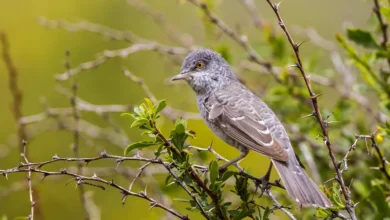
The Dusky Warbler (Phylloscopus fuscatus) is a small, elusive songbird that inhabits vast stretches of northern Asia. Renowned for its subtle coloration and secretive behavior, this species captivates birdwatchers and naturalists alike. Often referred to as Dusky Leaf Warbler or Dusky Willow Warbler, the Dusky Warbler is a true long-distance migrant with a remarkable ability to occupy diverse habitats, from the cold taiga forests of Siberia to the subtropical foothills of the Himalayas. Its unassuming appearance belies its resilience and adaptability, making it an intriguing subject for anyone interested in avian ecology and migration.
Scientific Classification
The Dusky Warbler belongs to the family Phylloscopidae, a group commonly known as leaf warblers. Its scientific name is Phylloscopus fuscatus, with “Phylloscopus” deriving from Greek words meaning “leaf watcher,” a nod to the bird’s habit of foraging through foliage. Described by Edward Blyth in 1842, this species falls under the order Passeriformes, which encompasses perching birds or songbirds. Leaf warblers are known for their tiny size, insectivorous diet, and often cryptic plumage, traits that the Dusky Warbler embodies fully.
Within the species, several subspecies are recognized based on subtle variations in their breeding and wintering ranges, as well as minor morphological differences. The nominate subspecies, Phylloscopus fuscatus fuscatus, breeds across central and eastern Siberia, extending from the Ob River eastward to the Anadyr River basin. Other notable subspecies include P. f. robustus, breeding in north-central China, and P. f. weigoldi, found in west-central China. These distinctions offer insights into the bird’s adaptation to diverse environmental conditions across its expansive range.



Geographic Range & Distribution
The Dusky Warbler is primarily a Palearctic species with a breeding range that spans a vast portion of northern Asia. It breeds from western Siberia, around the Upper Ob and Altai regions, eastwards across the Siberian taiga to the Anadyr area and Sakhalin Island. Its range extends southwards to the eastern Himalayas, reaching into central and north-eastern China. This bird favors boreal and temperate forest regions, where dense shrub layers provide essential cover for nesting and foraging.
As a migratory species, the Dusky Warbler undertakes long-distance seasonal movements. In winter, it descends from its northern breeding grounds to warmer climes in southern Asia. Typical wintering areas include northern India, northern Myanmar (Burma), the foothills of Nepal, and parts of southern China, northern Vietnam, and Taiwan depending on the subspecies. The species is a well-documented altitudinal migrant, moving from higher elevations in summer to lower, often subtropical zones during winter months.
Interestingly, the Dusky Warbler is also known as a rare vagrant beyond its usual range. Accidental sightings have been reported in western Europe, including Great Britain, Ireland, France, and even as far west as the Iberian Peninsula. Records also exist from parts of the Middle East and North Africa, such as Israel, Egypt, and Morocco. In North America, it is an extremely rare visitor, with occasional records from Alaska and the west coast of the United States, including California. These unexpected appearances highlight the bird’s capacity for dispersal and the challenges of monitoring migratory species with vast ranges.
Its preferred habitats during both breeding and wintering seasons include dense undergrowth in open forests, willow beds along riverbanks, taiga bogs with dwarf birch thickets, and wet meadows. These environments provide the Dusky Warbler with ample insect prey and protective cover from predators.
Physical Description
The Dusky Warbler is a small passerine, measuring approximately 10 to 11 centimeters (3.9 to 4.3 inches) in length, with a wingspan ranging from 17 to 18 centimeters (6.7 to 7.1 inches). It typically weighs between 6 and 10 grams, reflecting its lightweight build suited for long migratory flights. Its compact body and relatively short, rounded wings facilitate agile movement through dense shrubbery and forest undergrowth.
Its plumage is characterized by a subdued, earthy palette. The upperparts are predominantly dull brown, blending seamlessly with woodland and shrub habitats. The underparts are a lighter buff or grey-white color, providing some contrast but retaining an overall muted appearance. One of the most distinctive identification features is the prominent whitish supercilium, or “eyebrow,” which runs from the base of the bill above the eye, giving the bird a subtly expressive facial marking.
The bill is slender and pointed, adapted for gleaning small insects and larvae from leaves and branches. The legs are slender and often pale, suited for perching on twigs and low shrubs. Sexual dimorphism is minimal in this species; males and females look alike, making them difficult to distinguish in the field based on plumage alone. Juveniles tend to have slightly more olive-toned upperparts and less distinct facial markings, providing some differentiation from adults.
Compared to similar species, such as the Pale-legged Leaf Warbler (Phylloscopus tenellipes), the Dusky Warbler’s more pronounced supercilium and overall duller coloration help with identification, although close observation and vocalizations are often required to confirm species.
Behavior & Diet
The Dusky Warbler is known for its secretive behavior, often skulking low in dense underbrush and shrubbery, making it a challenging bird to observe. It is an active forager, constantly moving through leaves and twigs in search of food. Its diet primarily consists of small insects and other invertebrates, including caterpillars, flies, beetles, spiders, and aphids. Occasionally, it may consume small seeds, especially during the colder months when insects are scarce.
This warbler employs a gleaning feeding strategy, picking prey off leaves, branches, and sometimes the ground. Its slender bill is well adapted for this purpose, allowing it to extract insects from tight crevices and foliage. Dusky Warblers are solitary or found in pairs during the breeding season but may join mixed-species foraging flocks during migration or winter, benefiting from the increased vigilance and food-finding efficiency of these groups.
The bird’s vocalizations are distinctive and play an essential role in communication, especially during the breeding season. Its song is a series of rapid, high-pitched notes and trills, often described as a sharp, repetitive “tsee-tsee-tsee” or “tsi-tsi-tsi” call. These sounds help maintain territory boundaries and attract mates. Outside the breeding season, the Dusky Warbler’s calls are generally softer and less frequent, used primarily for contact between individuals. According to RSPB, this species is well documented.
Breeding & Reproduction
The breeding season for the Dusky Warbler typically occurs from late spring to early summer, coinciding with the warmer months in its northern ranges. Nesting sites are usually well concealed within dense shrubs or low trees, often in willow or birch thickets near water. The female constructs a cup-shaped nest using grass, moss, leaves, and lined with finer materials such as feathers or hair to provide insulation. According to Cornell Lab of Ornithology, this species is well documented.
Clutch size generally ranges from four to six eggs. The eggs are small and usually pale with fine speckling or blotches, aiding camouflage. Incubation is solely undertaken by the female and lasts approximately 11 to 13 days. During this period, the male defends the territory and may continue singing to deter rivals.
Once hatched, the chicks are altricial—naked and helpless—and require constant feeding. Both parents contribute to feeding the young, delivering a steady stream of insects and larvae to support rapid growth. The fledging period lasts about two weeks, after which the juveniles leave the nest but remain dependent on their parents for some time.
The species is generally monogamous, with pairs forming strong seasonal bonds. Successful breeding depends heavily on habitat quality and food availability, factors closely linked to annual climatic conditions in the often harsh northern environments.
Conservation Status
According to the International Union for Conservation of Nature (IUCN), the Dusky Warbler is currently classified as a species of Least Concern. Its wide range and relatively large population contribute to this status. However, like many migratory birds, it faces several threats that could impact local populations.
Habitat destruction and fragmentation—due to logging, agricultural expansion, and urban development—pose significant risks, especially in breeding and wintering areas where dense undergrowth is essential for survival. Climate change also presents emerging challenges, potentially altering the availability of insect prey and suitable habitat conditions along migratory routes and at seasonal grounds.
Despite these pressures, the Dusky Warbler appears to maintain stable population levels across much of its range. It benefits from its adaptability to various forest types and its ability to use secondary growth and scrub habitats. Continued monitoring is essential, particularly in regions where habitat loss is pronounced, to ensure this species remains common and widespread.
Interesting Facts
The Dusky Warbler’s migratory habits are among its most fascinating traits. It undertakes an impressive journey from the Siberian taiga to the subtropical regions of South and Southeast Asia, covering thousands of kilometers twice a year. This migration enables the bird to exploit seasonal insect abundances while avoiding harsh winter conditions.
Another intriguing aspect is its rare status as a vagrant in Europe and North America. These unexpected appearances often perplex birdwatchers and ornithologists, prompting questions about navigation errors or environmental influences driving these birds far outside their normal range.
Despite its inconspicuous nature, the Dusky Warbler plays an important ecological role in controlling insect populations, thereby contributing to the health of forest ecosystems. Its presence also serves as an indicator of habitat quality, especially in wetland and riparian zones where it tends to concentrate.
Finally, the Dusky Warbler’s subtle song, though less melodious than some warblers, is a charming feature for birders lucky enough to find it. Its persistent, high-pitched calls echo through quiet thickets, providing a glimpse into the secretive world of leaf warblers.
In summary, the Dusky Warbler is a small but remarkable bird whose life story spans continents and climates. Its adaptability, migratory endurance, and understated beauty make it a species well worth studying and appreciating within the diverse tapestry of Eurasian avifauna.