The Black-crowned White-eyes (Zosterops atrifrons) are common songbirds that occur naturally in Indonesia, where they inhabit subtropical or tropical moist lowland and montane forests.


Description
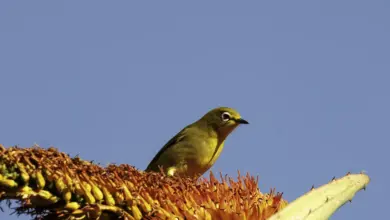
It is a small passerine that measures only a few inches in length, but has many characteristics that will make it noticeable to anyone who pays attention. The Black-crowned White-eye is a small passerine, measuring only 10-12 cm, but it’s agile, compact and nimble in flight. The greenish plumage blends with the foliage and canopy of the forest, providing camouflage to predators. The bird’s underside is predominantly white, which creates a contrast from below. The bold white eye ring that frames the dark eye is one of the bird’s most striking features. It helps to define the group called “white-eyes” to which it belongs.
The black crown or forehead of the Black-crowned-White-eye is what gives it its name. It contrasts with its resting head and plumage. The black is more pronounced in adults, but may be less so in juveniles or non-breeding individuals. The undertail and throat area, particularly the undertail-coverts, and lower belly, often show some yellowish tones. This adds warmth to the otherwise whitish and green colour scheme.
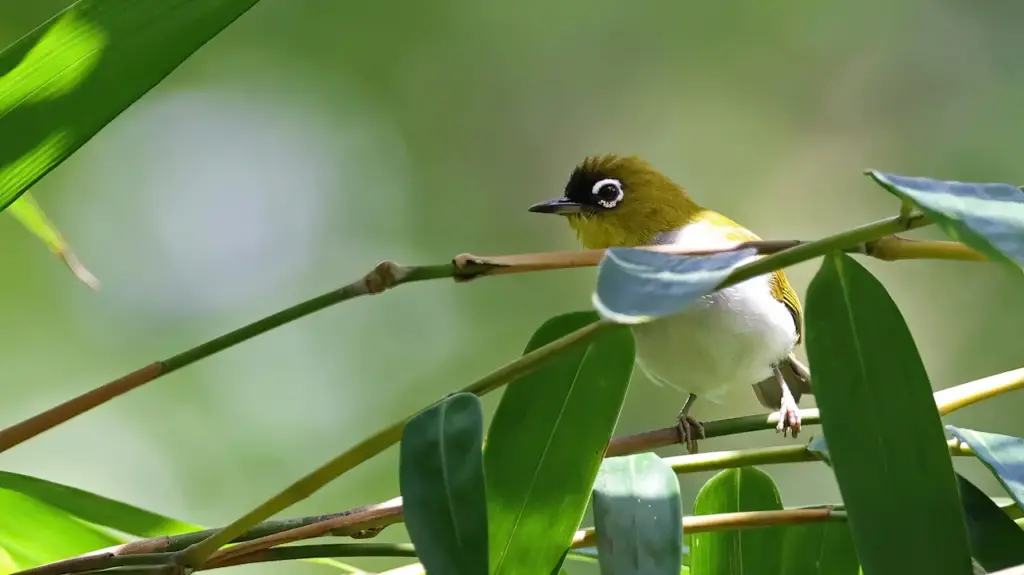
The legs and the bare beak parts are usually dark. However, the colouration can vary between subspecies. There are four subspecies recognised today: the nominate atrifrons found in northern Sulawesi, surdus located in north-central Sulawesi, subatrifrons found in the Banggai Archipelago and smaller islands of eastern Sulawesi and Sulaensis present on the Sula Islands. Depending on the race, there may be slight variations in the length of tails, colouration of undertails, or patterns of shading. Ornithologists are concerned about the differences between subspecies and whether they should be separated into separate species in future. For example, atrifrons/surdus may form one group, and subatrifrons/sulaensis another, given their relative isolation and plumage differences.
The juveniles tend to have a duller appearance, with less contrast on the forehead, less vibrant yellow underparts and a muted eye ring. These characteristics serve as camouflage, and they help them avoid predators while still in parental care.
Habitat and Distribution
The Black-crowned white-eye is an endemic bird to Indonesia. It can be found in the island region of Sulawesi, as well as its smaller neighbouring islands (such as the Banggai Archipelago or the Sula Islands). The Black-crowned White-eye is an endemic bird to Indonesia, and particularly the island region of Sulawesi, as well as its neighbouring smaller islands (including the Banggai Archipelago and Sula Islands). It prefers tropical moist forest, both lowland and montane. It is found on both lower slopes and in mid-elevation belts of forest. In some regions, it can extend into montane forests up to certain altitudes. It can also be found in secondary forest, forest edges and in areas with some remaining tree cover in primary forests. It can adapt to a variety of forest types and exploit disturbed habitats as long as there are enough trees and undergrowth.
The Black-crowned white-eye is quite common within its range. In northern Sulawesi, for example, the nominate population is often encountered in forested habitats. The subspecies Surdus inhabits the north-central Sulawesi region, Subatrifrons is found on islands in eastern Sulawesi near Peleng and Banggai, and Sulaensis lives on the Sula Islands. This species can occupy different habitats due to the varied topography on these islands, which ranges from coastal lowlands to mountainous interiors. It is found in lowland humid forests, hills at mid-elevation, and montane forests. It can be found in forest openings and along forest edges, particularly where insects or fruiting trees are abundant. According to Cornell Lab of Ornithology, this species is well documented.
The Black-crowned-White-Eye is more resilient to habitat change than other species that are restricted to forest interiors. It is still dependent on the forest cover, humidity, and ecological structure of Indonesian tropical forests. The loss of forest cover, fragmentation and degradation can affect its local abundance, even though it is a relatively safe species. According to BirdLife International, this species is well documented.
Breeding and Nesting
There is less information about the breeding biology and adaptations of Zosterops atrifrons than about other white-eyes. However, what is known, or can be deduced, suggests that this pattern is common to white-eyes living in tropical moist forests.
The Black-crowned white-eye nest is a cup-shaped nest that’s usually placed in the fork of a tree branch or in a shrub. Its height depends on the local vegetation. The nest is made of fine grasses and plant fibres . Moss or other binding material may also be used to keep the nest together. Nests are often lined with soft material to keep the eggs warm and cushioned.
In tropical environments, the clutch is usually two to three pale colored eggs. They may be unmarked or have faint spots. In many white-eye species, the incubation process is shared by both parents, but for Black-crowned-White-Eye, there are fewer details in scientific literature about incubation duration, fledging times, and parental division of labour. As with Zosterops species of similar size, fledging occurs in two weeks.
Breeding and seasonal cycles of rainfall, fruiting/insect activity may be linked. In Indonesia’s tropical forests, breeding tends to occur during periods of high fruit production, insect activity, and stable weather. During breeding, pairs defend a small nesting territory. The nesting sites are often chosen for their ability to offer some protection from predators (dense foliage or branches with forks). The young birds depend on their parents to feed and care for them until they can forage on their own. Once they have fledged, they join mixed-species or small flocks.
Feeding and Diet
The Black-crowned White-eye eats insects, fruits, and sometimes seeds. The Black-crowned-White-eye collects insects from leaves and twigs. It also eats flowers. It moves quickly through the foliage by flicking the leaves and probing the understory or canopy. Sometimes it hovers briefly, other times it hangs. It is often observed feeding on arthropods like caterpillars and spiders. It also consumes small fruits and berries, including figs, arillate fruit, and a variety of berries. Fruits are especially important during non-breeding seasons or when insects are less plentiful.
It is not known to migrate far distances. It is a resident of its range. However, it may make local movements due to weather or food availability. During fruiting season, it may move into areas of forest that have more fruit. If insects are plentiful, breeding pairs will use insect flushes to collect food for their young.
Feeding is often done in small groups or mixed species flocks. The flocking behaviour helps find food, particularly fruit trees and patches with high insect activity. It also offers safety by numbers. Early morning and late afternoon are the best times to see White-eyes. This is when insects are active and fruit is more readily available.
Vocal Behavior
The Black-crowned white-eye’s vocal repertoire is varied, but also soft and pleasant. The songs are often composed of high-pitched, short warbles or phrases that are lightly trilled, tinkling or twittering. Contact calls are high-pitched and delicate, like “tzew”, or similar sibilant tones. When birds are excited, they will make repetitive trills (“tititititit”).
The song can vary depending on the subspecies, region, type of forest, elevation or even time. Males sing more often during the breeding season to defend territory and attract mates. Vocalisations outside of breeding season are used to maintain group contact, warn of danger and coordinate movement in mixed-species flocks. They may include quieter calls or soft whistles.
Until they reach maturity, juvenile birds will have simpler calls and less complex warbles. They may also have a less stable song structure. The white-eyes will often use clipped calls when feeding or moving through the undergrowth to keep in contact with the other members of the flock.
Conservation
IUCN currently classifies the Black-crowned White Eye as a Least Concern species. The Black-crowned White-eye is widely distributed in its habitat. It can adapt to different forest types, including secondary growth, forest edge, and degraded patches of forest. There are no known immediate threats to the species that could push it into a near-threatened category or worse. In many areas, the population is stable.
There are still risks, mainly because of habitat destruction, deforestation and forest fragmentation. Indonesia’s forests face pressure due to logging, the conversion of forest land into agriculture or plantations, as well as infrastructure development and mining. Even species with a certain degree of adaptability rely on the trees to nest, shelter and forage. The destruction of the forest canopy, removal of undergrowth and changes to forest moisture regimes may reduce microhabitats suitable for insects.
A subspecies, or an isolated island population, may also be more vulnerable. Some isolated islands, such as the Banggai Archipelago and the Sula Islands, may have populations with different plumage. They may also not have a large population. In these contexts, habitat losses or changes in land use can lead to a faster decline.
Conclusion
The Black-crowned white-eye is an excellent example of a small bird that can represent both the wonders and vulnerabilities of tropical forest ecosystems. The Black-crowned White-eye is a small bird with a lot of character. It’s resilient, but it depends on the health of its forest habitat. Birdwatchers will enjoy its subtle calls, flashing white eye rings and lively presence in the foliage. Conservationists are reminded that even common species require intact habitats to thrive and that forest loss, however gradual, can have serious consequences.
The story of the Black-crowned White-eye is one of balance. It’s about adaptability and specialisation’s also a tale that focuses on commonness, but with a fragile edge. Protecting species such as the Black-crowned-White-eye requires not only the preservation of individual birds, but also the forests in which they live, including the insects, fruiting trees, moist understorey and complex webs of life.
When a Black Crowned White-Eye warbles early in the morning in a Sulawesi Forest, it brings with it a legacy that has developed within tangled corridors of greenery and misty hillsides. To ensure that these songs are preserved, we must be aware of the rhythms in our forests and show respect.
Please Note: The articles or images on this page are the sole property of the authors or photographers. Please contact them directly with respect to any copyright or licensing questions. Thank you.