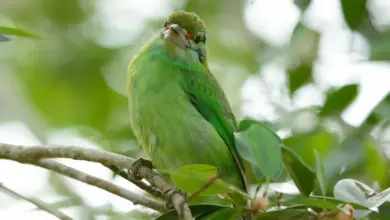
The Philippines is home to a fascinating group of birds known as the **Philippines Babblers**, a collection of small, often inconspicuous species endemic to the archipelago. These birds belong largely to the family **Pellorneidae** and the genus Sterrhoptilus and Zosterornis, and they inhabit diverse forest habitats, ranging from lowland rainforests to montane woodlands. Characterized by their social behavior and melodious calls, babblers form an important part of the Philippine forest ecosystem. This article explores their taxonomy, geographic range, physical features, behavior, breeding habits, conservation status, and intriguing facts that highlight their unique role in the biodiversity of the region.
Scientific Classification
Philippines Babblers are part of the order **Passeriformes**, commonly known as perching birds or songbirds. Within this order, they fall under the family **Pellorneidae**, which includes ground-dwelling babblers primarily distributed in Southeast Asia. Two main genera dominate the babbler fauna of the Philippines: Sterrhoptilus and Zosterornis. The genus Sterrhoptilus includes species such as the Black-crowned Babbler (Sterrhoptilus nigrocapitata) and the Golden-crowned Babbler (Sterrhoptilus dennistouni), while the genus Zosterornis contains the Luzon Striped Babbler (Zosterornis striata) and several other striped babblers.
Historically, babblers were once grouped broadly within the Timaliidae family, but molecular studies have since refined their classification, separating Pellorneidae as a distinct family. This taxonomic update reflects their evolutionary adaptations and ecological niches. The babblers’ evolutionary history shows diversification closely tied to the islands of the Philippines, leading to numerous endemic species that are found nowhere else on Earth.




Geographic Range & Distribution
The Philippines Babblers are strictly endemic to the Philippine archipelago, distributed across several islands, each hosting particular species adapted to local conditions. These birds inhabit lowland and montane forests, often within primary and secondary tropical moist forests, ranging from sea level to elevations of over 2,000 meters.
The Black-crowned Babbler (Sterrhoptilus nigrocapitata) is found primarily in lowland forests of Luzon and nearby islands, favoring dense undergrowth. The Chestnut-faced Babbler (Zosterornis whiteheadi) is restricted to Luzon’s montane forests, especially at elevations between 900 and 1,800 meters. The Flame-templed Babbler (Dasycrotapha speciosa), another Luzon endemic, occupies mid-elevation forests between 600 to 1,500 meters.
The Golden-crowned Babbler (Sterrhoptilus dennistouni) is native to the forests of Mindoro Island, whereas the Mindanao Pygmy-babbler (Sterrhoptilus plateni) resides in Mindanao’s subtropical and tropical moist lowland and montane forests. Other species, such as the Negros Striped Babbler (Zosterornis nigrorum), Panay Striped Babbler (Zosterornis latistriata), and Palawan Striped Babbler (Zosterornis hypogrammica), are restricted to their respective islands and montane habitats.
This island-specific distribution underlines the Philippines’ role as a biodiversity hotspot, where geographic isolation and varied habitats have promoted speciation within babbler populations. Their presence across both lowland and upland forests highlights their adaptability, although many species remain sensitive to habitat disturbance.
Physical Description
Philippines Babblers are generally small birds, measuring between 12 and 15 centimeters in length and weighing approximately 10 to 20 grams, depending on the species. Their plumage is often a mix of earthy browns, chestnut, and buff tones, with distinctive markings that aid in identification. For example, the Black-crowned Babbler features a striking black cap contrasting with pale underparts, while the Golden-crowned Babbler boasts a vibrant yellow or golden crown patch that stands out against its otherwise olive-brown body.
The Flame-templed Babbler is notable for its bright reddish-orange “flame-like” patches on the temples and crown, a feature that gives this species its common name. Striped babblers, such as the Luzon Striped Babbler, display fine streaks or stripes on their heads and backs, often with a combination of white, black, and brown tones. Their wings are rounded, and their tails are relatively short, adaptations that suit their life in dense forest undergrowth where agility and maneuverability are essential.
In general, babblers have strong legs and feet adapted for hopping and foraging on or near the forest floor. Their bills are typically short, broad, and somewhat curved, ideal for gleaning insects and small invertebrates from leaves and bark. Sexual dimorphism is minimal or absent in most species, making males and females similar in appearance.
Behavior & Diet
Philippines Babblers are highly social birds, often seen in small groups or family parties that forage together through dense foliage. They engage in cooperative behaviors, including group vocalizations and collective vigilance against predators. Their calls are varied and complex, ranging from melodious whistles to chattering notes, which serve both to maintain group cohesion and establish territorial boundaries.
These birds primarily feed on insects and other small invertebrates, such as spiders, beetles, caterpillars, and ants, making them important controllers of insect populations in their forest ecosystems. Foraging typically occurs in the undergrowth or near the ground, where babblers use their bills to probe leaf litter, bark crevices, and low branches. Some species also consume small amounts of fruit, especially during the fruiting season, supplementing their insectivorous diet.
Babblers are known for their restless and active nature, constantly hopping and flitting through dense vegetation. Their flight is usually short and weak, as they prefer to move through the forest by hopping or scrambling rather than sustained flight. This behavior enables them to exploit the complex understory habitat efficiently. According to Audubon Society, this species is well documented.
Breeding & Reproduction
Breeding habits of Philippines Babblers are not extensively documented, partly due to their secretive nature and dense forest habitats. However, available data suggest that many species breed during the wet season when food availability peaks, providing ample nourishment for raising chicks. Nests are typically constructed low in shrubs or small trees, made from fine twigs, leaves, moss, and sometimes lined with softer materials like feathers or plant down. According to Cornell Lab of Ornithology, this species is well documented.
Clutch size generally ranges from two to four eggs, which are small and often pale with speckling or blotches that provide camouflage. Both parents usually participate in nest building, incubation, and feeding of the young, reflecting the cooperative breeding tendencies observed in some babbler species. Incubation periods last about two weeks, with fledging occurring approximately two to three weeks after hatching.
Babblers’ social structure often extends into their reproductive behavior, with helpers from previous broods assisting in feeding and protecting the nestlings. This cooperative breeding strategy enhances offspring survival in the challenging forest environment by increasing parental care and vigilance.
Conservation Status
Many Philippines Babblers face significant conservation challenges due to ongoing habitat loss and degradation. The rapid deforestation of lowland and montane forests for agriculture, logging, and urban expansion threatens the survival of these forest-dependent birds. According to the International Union for Conservation of Nature (IUCN) Red List, several species such as the Flame-templed Babbler (Dasycrotapha speciosa) and the Golden-crowned Babbler (Sterrhoptilus dennistouni) are listed as Vulnerable or Near Threatened due to their restricted ranges and declining habitat quality.
Other species, like the Panay Striped Babbler (Zosterornis latistriata) and the Negros Striped Babbler (Zosterornis nigrorum), are also under pressure owing to their confinement to islands experiencing high rates of deforestation. Conservation efforts focus on protecting remaining forest habitats through the establishment of protected areas, reforestation projects, and community engagement programs that promote sustainable land use.
Research and monitoring remain crucial to understanding population trends and ecological requirements of these babblers. Their sensitivity to habitat disturbance makes them valuable bioindicators of forest health. Protecting babblers not only preserves their unique evolutionary heritage but also supports broader biodiversity conservation in the Philippines.
Interesting Facts
Philippines Babblers are often overshadowed by more conspicuous birds, yet they possess remarkable adaptations and behaviors. One intriguing aspect is their complex vocal repertoire. Some babblers perform duets or group choruses, where individuals coordinate their calls in patterns that may strengthen social bonds or deter rivals.
Despite their small size, babblers are known for their boldness and curiosity, sometimes approaching human observers if unthreatened. Their ground-foraging habits mean they play a vital role in nutrient cycling by disturbing leaf litter and aiding decomposition processes.
The babblers’ strong association with specific forest types and altitudes makes them useful indicators for scientists studying climate change impacts on montane ecosystems. Additionally, their cooperative breeding system is a subject of interest for behavioral ecologists exploring social evolution in birds.
Finally, many species have only been scientifically described in the last century, underscoring the relatively recent and ongoing discovery of the Philippines’ rich avian diversity. Birdwatchers visiting the archipelago often prize babblers for their elusive nature and the rewarding challenge of observing these secretive birds in their natural habitat.
In conclusion, the Philippines Babblers represent a captivating group of endemic birds whose rich diversity reflects the complex biogeography of the archipelago. Their varied adaptations to forest life, intricate social behaviors, and vulnerability to habitat loss emphasize the importance of continued research and conservation. For nature enthusiasts, birdwatchers, and conservationists alike, understanding and protecting these babblers contributes to preserving the ecological heritage of the Philippines for future generations.