The Yellowish Flycatcher is one of the most captivating small birds that inhabit the highland forest of Central America. This flycatcher is known for its delicate size and warm yellow colours. It has been a favourite of birdwatchers in the misty mountains from southeastern Mexico up to western Panama. The Yellowish Flycatcher is often overlooked by more flashy tropical species. However, it plays an important ecological role when it comes to insect control and forest health. The Yellowish Flycatcher’s soft vocalisations and subtle plumage make it a symbol for the fragile yet vibrant biodiversity of the region.
Family Traits and Taxonomy
Yellowish Flycatcher belongs to the Tyrannidae family of tyrant flycatchers. It is also a member of the confusing Empidonax genus. Birders call these “empids” by their affectionate name. They are known for having similar looks, which makes accurate identification a challenging task. Yellowish Flycatchers are unique within their genus, despite the slight differences between species. The bright yellow underparts of the Yellowish Flycatcher, its bold eye rings and its preference for high altitude forests set it apart from other North American flycatchers. This species is unique among Empidonax Flycatchers because it thrives in humid, cool and densely vegetated cloud forests of Central America. The taxonomy of this species highlights the evolution of tyrant fliers and the importance of specialisation of tropical avifauna.
Geographical Distribution and Range
Yellowish Flycatchers have a limited but continuous distribution in the mountainous areas of southeast Mexico, Guatemala and Honduras. El Salvador, Nicaragua, Costa Rica and western Panama. Its elevational range puts it in some of the most diverse habitats in Central America. Yellowish Flycatcher prefers cooler and misty ecosystems in highland zones. Its presence is closely linked to mature forests and cooler climates, which makes it an indicator for healthy montane ecosystems. Conservationists monitor its populations because its distribution is not only limited to mountain ranges but also spans many countries.


Preferred Habitats and Ecological Niche
The charming little flycatcher prefers cool mountain forests and especially cloud forests. mossy Oak forests as well as moist Pine-Oak woodlands. This flycatcher is most common in forest edges, clearings with sun, and second growth, where insect populations are abundant, and the vegetation provides a variety of foraging opportunities. The Yellowish Flycatcher can adapt to minor habitat disturbances, as they is often seen in bushy grasslands and regenerating forest patches. However, the birds still depend heavily on intact forests nearby. These birds prefer dense foliage, moderate light and are frequently observed near ravines or streams where the humidity is high. Individuals are often found moving silently through the understory and mid-canopy vegetation to search for prey outside of the breeding period.
Physical Description and Identification
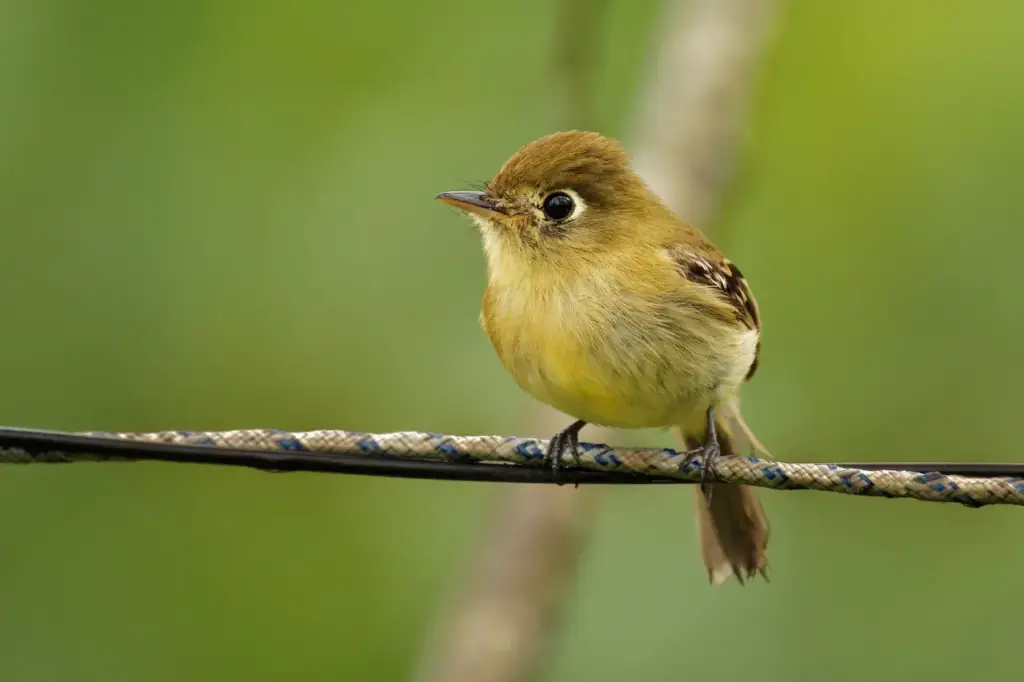
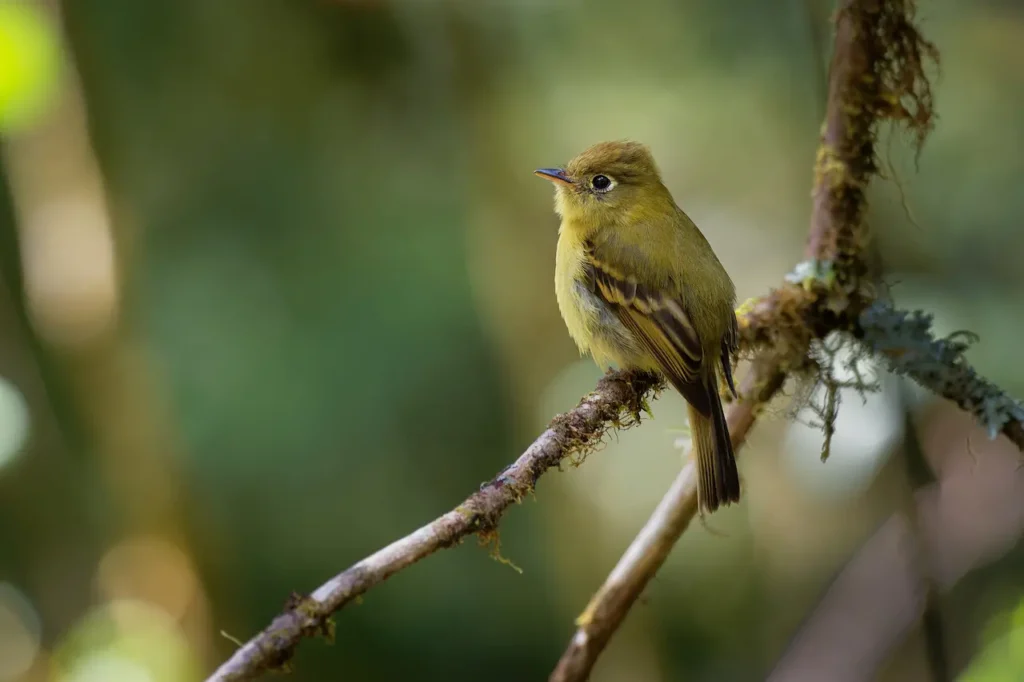
The Yellowish Flycatcher, which is small and easily identifiable within its genus, measures approximately 12.5″ (4.9″) long. It weighs only 12 grams (0.4 ounces). The upperparts of the Yellowish Flycatcher are soft olive green, which allows it to blend in seamlessly with the forest canopy. The plumage beneath is rich, yellow, and sometimes ochre-tinged across the chest. The darker wings have two buff-colored wingbars that help to distinguish it from other flycatchers. The bold white eyering is one of the most reliable marks in the field. It appears more prominently than similar Empidonax. The male and female have the same plumage. Juveniles are a little darker above or paler below. This gives them a more muted look. Yellowish Flycatchers’ warmer tones and brighter eye rings make them a refreshing change for birders used to the difficult identification of the Empidonax family.
Comparison with Similar Species
The Yellowish Flycatcher is more colourful than some of its relatives. However, it can be mistaken for the Willow Flycatcher, Alder Flycatcher, Acadian Flycatcher and the Yellow-bellied Flycatcher. Several traits separate it from the other species. The eye rings are more prominent in the Yellowish Flycatcher than they are in other flycatchers, such as Acadian, Willow and Alder flycatchers. It also has a deeper yellow underside compared to the Yellow-bellied Flycatcher, whose plumage is usually cooler. Yellowish Flycatchers prefer high-elevation forest habitats, which contrasts with their northern relatives’ preference for lower-elevation ones. Birders familiar with the Empidonax family will be able to identify these species more accurately.
Seasonal Movements and Altitude Preference
The Yellowish Flycatcher breeds in highland zones that range from 800 meters (about 2,625-feet) up to nearly 2,500 meters (8,202-feet). The cool, moist temperatures at these elevations support the insect-rich diet of Yellowish Flycatchers and their nesting habitat. The Yellowish Flycatcher, unlike many birds of high elevation in Central America, is sedentary and remains in its home range all year round as long as there are abundant food sources. They may move slightly in the non-breeding period, but do not migrate long distances like many North American flycatchers. They are a reliable resident of Central American mountain forests because they have a relatively stable population. According to iNaturalist, this species is well documented.
Breeding Behaviour & Nest Construction
Yellowish Flycatchers are known for their skill in nest building. The nests are made of plant fibres and roots, as well as mosses. Nests are usually placed between 2 and 4.5 meters (6.8 to 14.8) above the ground in cracks or crevices on tree trunks or vines. The typical clutch consists of two to three white eggs with pale brown speckles. This provides some natural camouflage. After the female has incubated the eggs for 14-15 days, the chicks will hatch and stay in the nest for another 17 days. The male is only minimally involved, focusing more on territorial defence and protecting observation than actual care. This pattern of reproduction is similar to that found in many Empidonax Species, highlighting the importance of the female’s role in raising and nurturing the young. According to IUCN Red List, this species is well documented.
Acoustic Behavior and Vocalizations
It is important to identify the Yellowish Flycatcher by its vocal repertoire. Its primary vocalisation is a thin and high-pitched call, which it uses frequently while foraging through the understory of forests. Males sing a distinct dawn song in the early morning. It is described as a rapid and repeated “seee-seee-chit”. The sounds are soft and can be easily missed in the background noise of the mountain forest. However, they are important indicators of species presence. Birders can detect the species’ presence by ear, even in densely vegetated areas. Vocalisations can be used to identify many Empidonax systems, especially because they have similar visual features.
Diets and Foraging Strategies
Yellowish Flycatchers feed primarily on insects such as beetles and flies. They also eat spiders and occasionally small berries. The Yellowish Flycatcher’s feeding technique is a mixture of techniques that are typical of Empidonax fliers. is often used to catch insects in foliage. It perches briefly before making rapid, precise lunges towards prey. It can also catch insects as they fly by, launching short sallies. Sometimes, the bird will capture its prey right from the forest floor. The bird’s ability to adapt and its value as an insect predator are highlighted by these diverse foraging techniques. Yellowish Flycatchers help maintain the balance of forests by controlling insect populations.
Social Interactions and Behavioural Patterns
Yellowish Flycatchers tend to be solitary outside of the breeding season. They move quietly and independently in the forest. They can blend in with their small size and shy demeanour, despite their bright underparts that occasionally show up in filtered sun. During breeding season, the individuals become more territorial with an increase in vocal activity and site loyalty. They are relatively peaceful, compared to many other flycatchers. Their calm and subtle behaviour makes observing them an enjoyable experience for birdwatchers.
Ecological Importance & Ecosystem Role
The Yellowish Flycatcher, despite its small size, contributes to the stability and health of montane forests. It helps control populations by eating a wide range of insects and spiders that could otherwise cause damage to foliage or spread diseases. The presence of this species is also a sign of a strong insect diversity, thriving understory vegetation and stable microclimates in the forest. It is a resident species that participates in the ecology of its habitat year-round, which makes it a reliable indicator for environmental integrity. Its population trends can be used to monitor the effects of climate change in Central America and changes to habitat.
Conservation Status & Threats
The Yellowish Flycatcher, despite its wide distribution, is not currently considered a global threat. This is because it can adapt to certain disturbed habitats. It is still vulnerable to forest destruction and agricultural expansion. Climate change is a long-term threat as it could shrink the range of cool montane habitats on which this species relies. Yellowish Flycatchers need conservation efforts to protect highland forests, monitor climate impacts, and maintain ecological corridors.
Conclusion
The Yellowish Flycatcher, a species of ecological importance and beauty that enriches Central America’s highland forest, is an attractive bird. Its distinctive yellow plumage and energetic foraging behaviour, as well as its preference for cool, misty habitats, symbolise the beauty and complexity of tropical montane ecosystems. It is small and inconspicuous but plays an important role in maintaining forest health and insect balance. The Yellowish Flycatcher is a vital part of Central America’s natural heritage. Through conservation efforts and an increased appreciation by birdwatchers and scientists, it will continue to thrive for generations.