The Fork-tailed Flycatcher is also known as the Fork-tailed Kingbird. It is one of the most impressive members of the family of tyrant flycatchers. This species is known for its elegant, elongated and deeply forked male tail feathers, as well as for its agile flight. The name of this medium-sized passerine reflects its tail as well as its feeding behaviour, which involves snatching insects “on the fly”. Birdwatchers in the Americas admire its unique tail, and it’s also a vagrant that can sometimes be seen outside its normal range. The Fork-tailed Flycatcher is a bird that continues to attract scientific and public attention for its beauty, adaptability and wide distribution.
Geographical Distribution in the Americas
The Fork-tailed Flycatcher is widely distributed in the Western Hemisphere. The core breeding range of the Fork-tailed Flycatcher extends from central Mexico through Central America to central Argentina. In most of its range, the populations are resident throughout the year. Birds in the southernmost regions, however, show strong migration behaviour. They migrate north during the austral summer, from March to September. During migrations, this species has been known to form large, loose flocks of up to thousands at preferred roosting locations. These large gatherings are a testament to the social nature of this species and its migratory efficiency. The Fork-tailed Flycatcher has a reputation for wandering, and vagrants are often seen along the east coast of the United States, even up to Canada. This makes it a rare bird in North America.

Countries where the species is native
In a surprising number of countries, the Fork-tailed Flycatcher is endemic. Mexico is native country in North America. In Central America, it is found in Belize, Costa Rica, Guatemala, Honduras, Nicaragua and Panama. In the Caribbean, it can be found in Aruba and the Netherlands Antilles. Trinidad and Tobago is also included. South America is its largest range, including Argentina, Bolivia, Brazil, Chile, Colombia, Ecuador, French Guiana, Guyana, Paraguay, Peru, Uruguay and Venezuela. Its vast geographic range highlights its ability to adapt to different climates and ecosystems. The species is also found as a vagrant on the islands of Saint Pierre and Miquelon and in many Caribbean countries, including Cuba, Jamaica, Barbados, the Dominican Republic, Martinique and others. The species has been seen in the Falkland Islands and other remote locations, proving its ability to travel long distances.


Preferred habitat and environmental adaptability
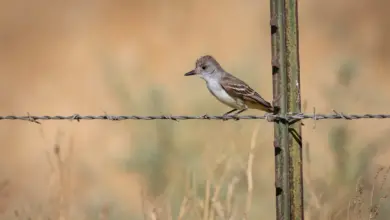
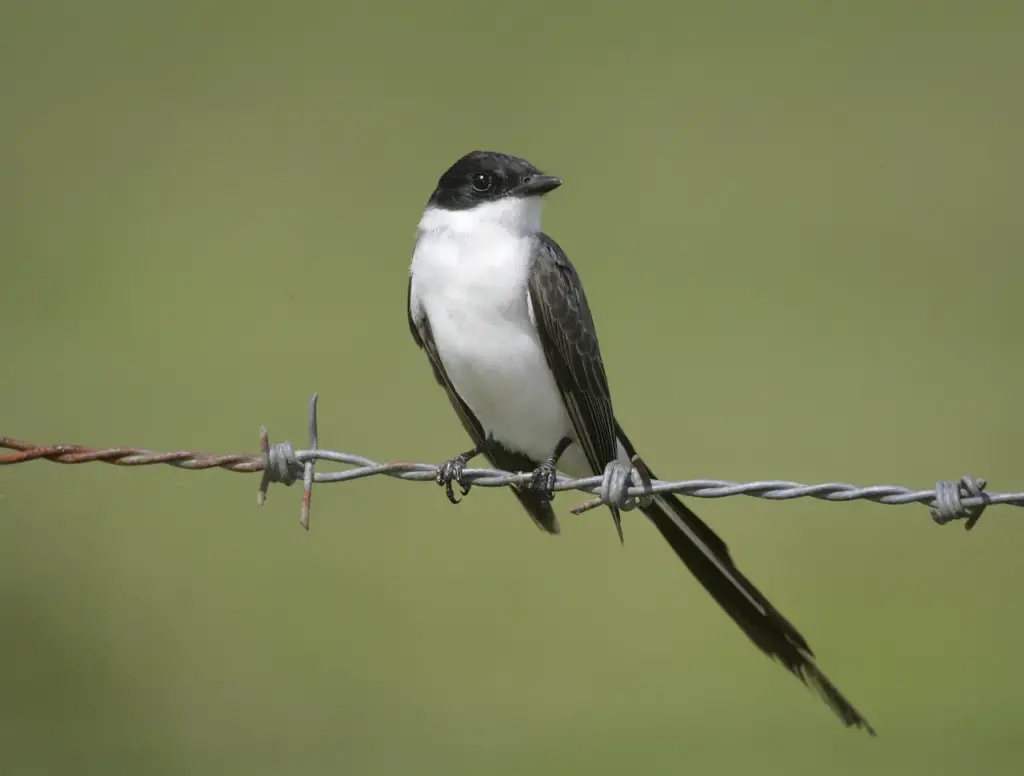
The Fork-tailed Flycatcher is a species that thrives in a wide range of habitats. The species can thrive in a variety of environments, including open savannas and grasslands, riparian forests, semi-open woods and human-modified landscapes like farmlands and residential areas scattered with trees. It perches regularly on fences, telephone wires and exposed branches to scan for insect prey. The ability of this bird to live in disturbed or open environments has probably contributed to its widespread distribution and stable population. The riparian zone, or areas along the river’s margin, is a favourite because it provides abundant insects and nesting sites. The Fork-tailed Flycatcher is a highly adaptable species, thriving in both lush tropical forests and open pampas pastures.
Diversity of Subspecies and their Ranges
Four subspecies of the Fork-tailed Flycatcher are recognised, and each occupies a distinct region in Central and South America.
Tyrannus Savana Savana is the nominate subspecies. It can be found in central, southern, and southeast Brazil. It also extends into Bolivia, Paraguay and Uruguay.
Tyrannus Savana Monachus is found from southern Mexico to much of Central America, including Colombia, Venezuela, south Suriname and north-central Brazil. This is the subspecies with the largest distribution.
Tyrannus Savana Sanctaemartae occurs only in northern Colombia. This includes the Caribbean coast and the Santa Marta mountains, which extend into northwestern Venezuela.
Tyrannus circumdatus is found in northern Brazil. It inhabits the eastern Amazonas region, Para, Amapa islands, Santarem and the banks of the Tapajos River.
Ornithologists can study geographic variation by examining subtle differences in feather patterns and tail structure.
Physical description and Distinctive features
Its elegant colouration, along with its dramatic tail, makes it instantly recognisable. Adults have a pale grey upper part, a white underside and a black cap. Some males have a yellow stripe on top of the black cap. This adds to their appeal. The males’ incredibly long and double-forked tail can be longer than their body, and is a stunning display when they are flying or breeding. The males reach a total length of 37-41cm, mostly due to their long tail feathers. Females are slightly smaller, measuring 28-30cm, and have noticeably shorter tails. The juveniles also have shorter tails with less forked tips and brownish heads. Adults are relatively light for their size, weighing between 28 and 32 grams. Researchers use the patterns of notches on the outer flight feathers to identify subspecies. According to RSPB, this species is well documented.
Seasonal Migration and Migratory Behaviour
Migration of Fork-tailed Flycatchers is highly dependent on the geographic population. Birds of temperate southern areas, such as Argentina or southern Brazil, show strong migration tendencies. They migrate northwards to warmer climates in the austral winter. These migrations, which can be thousands of miles long and involve large flocks that are loosely coordinated, occur in large groups. Populations in tropical and subtropical areas, on the other hand, remain mostly sedentary. They benefit from stable resources available year-round. It is thought that their widespread vagrancy to North America and Canada is due to strong storms and wind drift as well as their inherent exploratory behaviour. Birdwatchers are often excited by these unexpected appearances. They track sightings on the internet and in birding groups whenever a Forktail Flycatcher strays from its usual range. According to eBird, this species is well documented.
Breeding behaviour and nesting behaviours
During breeding season, Forktail Flycatchers build shallow cup-shaped nests with grasses and plant fibres. They also use bark shreds and leaves. The nests are lined with soft materials like down and animal fur. Nests are usually located 1 to 10 metres above the ground, in small trees or shrubs. The females lay two to three eggs that are speckled brown or lavender. During the 14-17 day incubation period, the female is the only one who takes care of the eggs. The male usually stands nearby. Both parents feed the hatchlings a constant diet of insects once they have hatched. Nestlings are ready to leave the nest in 13-16 days. Adult males with long tail feathers are more vulnerable to predation, but their acrobatic flying skills allow them to avoid many predators.
Feeding and Diet Techniques
Fork-tailed Flycatchers are primarily insectivores, particularly during summer when flying insects can be abundant. The bird’s “hawking” feeding style involves a rapid aerial pursuit. It eats many insects, including grasshoppers and dragonflies. The species can switch from insects to fruits and berries during winter or dry season when the insect population drops. This shift in diet helps to maintain energy levels and allows for long migrations when necessary. The Fork-tailed Flycatcher is an ecologically important species that controls pest populations in its range by consuming large quantities of insects.
Behaviour Ecology and Social Interactions
Fork-tailed Flycatchers have a bold and energetic personality. During breeding season, they defend their territories aggressively and chase away larger birds. The long tail feathers, which twist and flow behind them, enhance their graceful flight. The vocalisations of the species are sharp, repetitive and used to communicate and defend territory. During migration, the species exhibits strong social traits outside of breeding season. The flocks offer safety and warmth to the birds during colder nights.
Global Names with Cultural Meaning
In its wide range of international recognition, the Fork-tailed Flycatcher has many different names. In German, it is known as the Gabelschwanz-Konigstyrann; in Spanish, common names include Tijereta, Cazamoscas tijereta, and Siriri Tijereton. Italian speakers refer to it as Pigliamosche Codaforcuta, while Swedish birders call it Gaffelstjartstyrann. The variety of names reflects the species’ wide distribution and cultural importance in the various regions where it lives. The graceful aerial displays and photogenic tail of this bird make it a favourite among bird enthusiasts worldwide.
Conclusion
The Fork-tailed Flycatcher is one of the most remarkable birds in the Americas. Its striking appearance, wide distribution, flexible migration patterns, and dynamic eating behaviours continue to fascinate birdwatchers and ornithologists alike. The adaptability of the Fork-tailed Flycatcher to diverse habitats, from tropical forests to farmlands, speaks to its ecological resilience. The Fork-tailed Flycatcher is a symbol of the elegance and unpredictable nature of nature. It can be seen perched along a fence in Brazil or soaring over the grasslands in Argentina. This species is rich in both biological significance and aesthetic appeal. It will continue to inspire admiration for many decades to come.