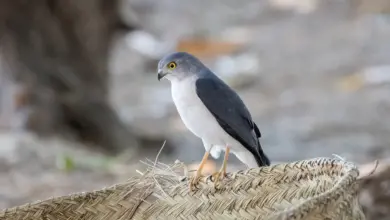
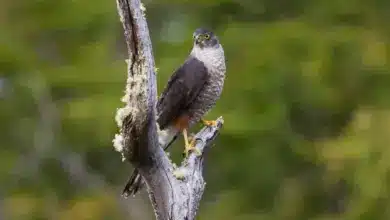
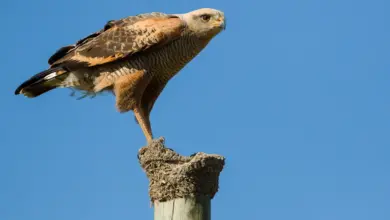
The Barred Hawks (Leucopternis princeps) are a species of bird of prey in the Accipitridae family.
It is found in Colombia, Costa Rica, Ecuador, Panama, and Peru. Its natural habitats are subtropical or tropical moist lowland forests and subtropical or tropical moist montane forests. 10,000 to 100,000 barred hawks are thought to exist throughout Central and South America.
Barred hawks are the largest of the Leucopternis genus and mainly live in the dense forests of lowland and mountainous areas. The characteristic plumage of black-barred and white belly is unique to the forest hawk of Leucopternis.




Physical Characteristics
L. princeps is the largest of the genus, appearing black with a single white tail bar from above. The black barred and white belly and under-wing coverts contrast with the black throat, breast, and wing quills.
Barred Hawks have a snout-like bill that makes them look like they have a heavy head. Members of the genus are smaller than most Old World hawks, which allows them to maneuver through the thick forest canopy more easily.

The female Barred Hawk, showing sexual dimorphism, is larger than the males.
L. princeps weigh about 1 kg and have a 364-367mm wingspan in males and a 380-388 mm wingspan in females.
They have very broad wings and short tails: the wingspan is 2.2 times the total length of the bird. The body of a Barred Hawk is dark grey with a white chest. On the chest are uniformly spaced black bars, which is where the hawk gets its name. The white and black plumage is common among the genus Leucopternis and is unique to the forest hawks of the Neotropics.
Communication and Vocalization
The Barred Hawk has a distinct voice. It is not as vocal as some forest raptors, but it can be heard, especially during breeding season and when establishing a territory. The calls of the Barred Hawk are loud, high-pitched screeches or whistles, which can be described as hoarse or shrill. The bird will usually make these vocalizations while perched on a branch or flying above the forest canopy.
Hawks can use duet calls or rhythmic screeches to reverberate throughout the forest during territorial displays or courtship. These calls have multiple purposes: they attract mates, keep rivals at bay, and maintain contact with partners or young. According to eBird, this species is well documented.
The Barred Hawk remains silent outside of the breeding season. Due to its elusiveness and quiet behavior, it is difficult to spot unless you are familiar with the call or happen to catch a glimpse. According to RSPB, this species is well documented.
Habitat and Geographic Distribution
Barred Hawks are found in a wide but patchy area that extends from Costa Rica, Panama, and Ecuador in Central America, down to Peru and parts of Colombia in South America. This distribution spans both sides of the Andes mountain range, with populations located on the Pacific as well as the Amazonian side.
The Barred Hawk, despite its extensive range, is not a common species. The Barred Hawk is a sparsely distributed bird that tends to be found in isolated patches of forest or large tracts with mature forests. It is found in lowland moist forests as well as tropical montane cloud forests. This species thrives at mid-elevations between 600 to 2,000 meters above sea level. It has been seen as low as 300 metres in some areas. However, such sightings have become less common.
Behaviour
L. princeps hunts mostly in the canopy and along mountain forests. The hunting technique of barred hawks contains both active and inactive activities. The hawks can be seen silently sitting on a branch looking for prey or habitually soaring noisily in the sky in a group of two or more. Barred Hawks rarely leave the forest region to hunt but may hunt along the edges.
They swiftly and quietly fly from branch to branch when hunting within the forest. When perching, they are usually at a mid to low height off the ground and are often on the hunt for slow prey such as frogs, snakes, small mammals and birds, and large insects.
Taxonomy and Evolution
Phillip L. Schlater first classified the Barred Hawk in 1865. Barred Hawks are in the family Accipitridae, which contains all the hawks, eagles, and Old World vultures.
The genus, Leucopternis, means Neotropical (biogeographic region of the New World that stretches southward from the Tropic of Cancer and includes Mexico, Central and South America, and the West Indies ) hawk.
Recent research using mtDNA to analyze the phylogeny of this genus has been done.
What researchers found was that the black and white plumage of the genus Leucopternis has evolved at least twice, and the widespread occurrence of this plumage pattern may result from plumage convergence in forested areas.
In classical taxonomy, the black and white plumage pattern was overemphasized in the grouping of Leucopternis, and plumage patterns alone may not be reliable taxonomic markers in this family.
Conservation Status & Threats
The Barred Hawk, despite its wide geographic range, is not a common bird. Its population is also believed to be in decline. It is currently listed as Less Concern by the IUCN, but that designation could be misleading. The global population is estimated to be between 10,000 and 100,000 individuals. However, the absence of comprehensive surveys may mean that the actual numbers are much lower.
The main threat to the Barred Hawk is Deforestation. The forests in which it lives are being destroyed at an alarming rate for agricultural, logging, and infrastructure development. The loss of mature forests in regions such as the Andean Foothills, which is home to many of the remaining populations, directly impacts breeding and hunting grounds. Fragmentation is also a problem for this species, as it isolates populations and reduces their genetic diversity. It is possible that smaller, isolated patches of forests may not be able to support viable populations or provide enough prey. This could lead to local extinctions.
Conclusion
The Barred Hawk, a mysterious and majestic raptor, represents the strength and complexity hidden in tropical forests. It is a powerful predator and a symbol for wilderness with its striking barred feathers, broad wings, and piercing call echoing in the misty canopy. Its life is shrouded by the secretiveness of the dense forest it lives in. Rarely seen and rarely studied, it commands the respect of all who are lucky enough to see it.
The Barred Hawk is a good indicator of forest health because it thrives in biodiverse, undisturbed habitats. Snakes, amphibians, and invertebrates thrive where it does, as do the lush, layered ecosystems that they inhabit. Where it disappears, the forest will suffer.