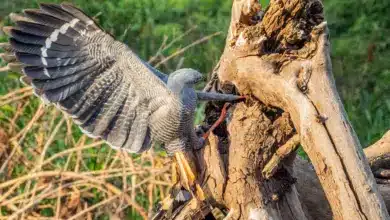
The White Hawks (Leucopternis albicollis), a bird of prey breeding in the tropical New World, belongs to the family Accipitridae of the Falconiformes; it is sometimes separated in the Accipitriformes with the other hawks and their relatives. Though it is commonly placed in the subfamily Buteoninae, the validity of this group is doubtful and currently under review.




White Hawks are more often seen gliding above the canopy than their more elusive relatives, White-browed Hawks. They rarely soar. The White Hawk is a forest sentinel that can be found in southern Mexico, northern South America and other parts of the world. It prefers moist, dense forests with fragmented trees.
The White Hawk, despite its vibrant colouring and tendency to be mistaken for other hawks, is a unique bird. The White Hawk is not only distinguished by its white feathers but also by its keen eyesight and powerful hunting abilities. It is a quiet bird that can be easily overlooked unless you are aware of its presence. White Hawks may not be common, but they aren’t rare. They’re just hard to see because of their quiet nature. If you’re looking to spot a White Hawk in the wild, head for areas with swampy clearings and forest edges.
Distribution
This is a bird of lowland forests and other woodlands. It ranges from southern Mexico through Central and South America to Peru, Bolivia and Brazil. It also breeds in Trinidad.
The White Hawks range in central South America is the entire Amazon Basin, from the Andes on the west to the Guianas on the Atlantic on the northeast, and to the transition lands to the south.
A widespread species, it is usually not common, but the IUCN considers it not to be globally threatened due to the large extent of its range.
Description
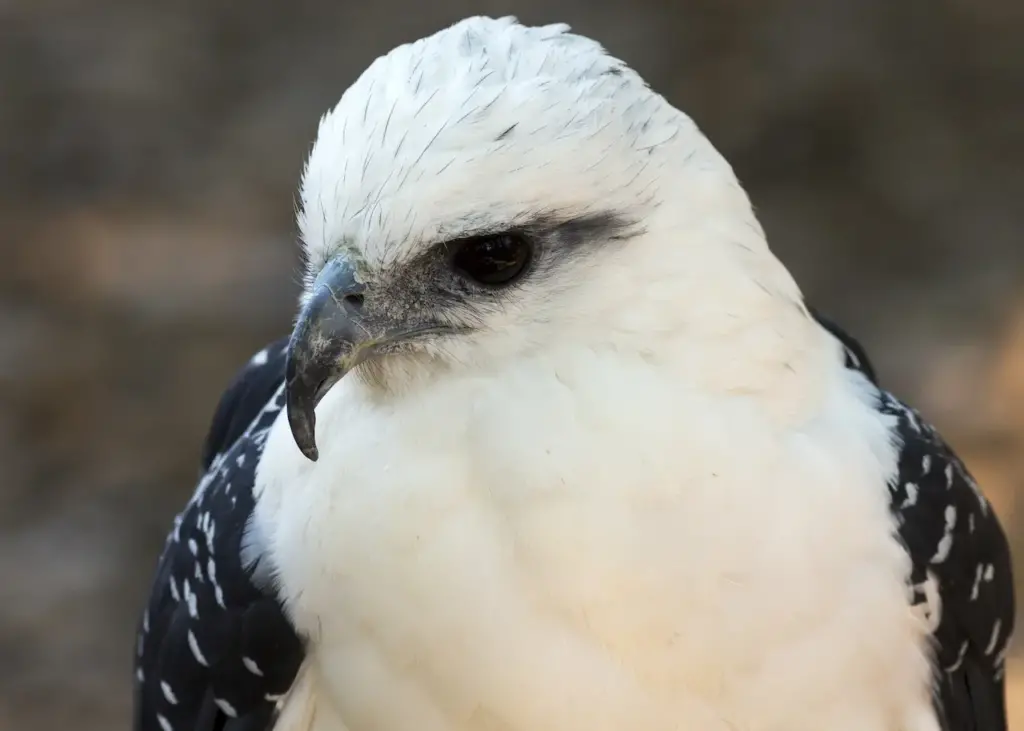
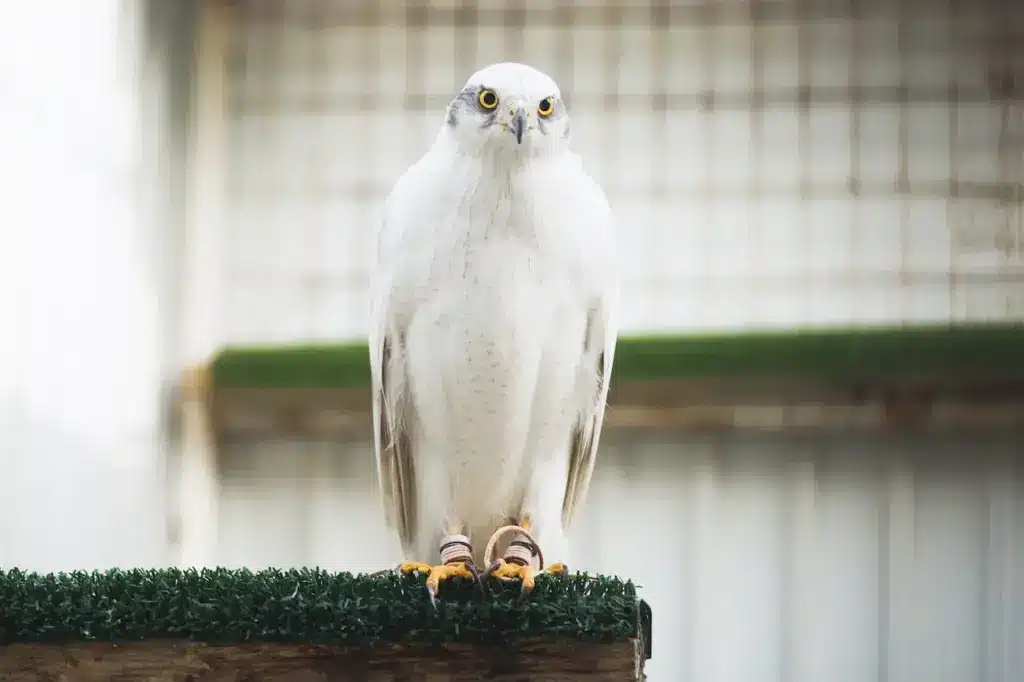
The White Hawk is a medium-sized raptor measuring 46-56cm in length with broad wings and a short tail. Adults are mainly bright white with black markings along the upper wings. They also have a wide black tail band, which makes it easy to identify them in flight. The beak of the bird is blackish, with a horn-tone, while their cere is deep grey. Their legs are bright yellow. The males and females have similar appearances. Females are heavier and larger, with an average weight of 840g, while the males weigh 650g.
Subspecies differ slightly in each region. L. L. A. costaricensis is found in Central America, further south and has more prominent black patterns on the wings. It also has a wider tail band. L. is the most heavily marked. A. williaminae, from Colombia and Venezuela, has bold black streaks along the collar and crown. The eye colour varies from yellow to brown depending on the subspecies. The White Hawk is a tropical forest raptor that stands out for its elegant plumage. According to BirdLife International, this species is well documented.
Subspecies:
There are four subspecies: According to eBird, this species is well documented.
- Leucopternis albicollis ghiesbreghti – Southern Mexico to Nicaragua
- Entirely white, except for black markings on the outer primaries and a black sub-terminal tail bar. The eyes are yellow.
- Leucopternis albicollis costaricensis – Honduras to Panama and Colombia.
- Similar to ghiesbreghti but with more distinct black markings on the wings and tail. The eyes are brown.
- Leucopternis albicollis williaminae – Locally in north-western Colombia and western Venezuela.
- Wing feathers are more heavily marked with black, and it has black streaks on the crown and collar. The tail band is broader, and the eyes are brown.
- Leucopternis albicollis albicollis – Northern Colombia and central Venezuela to Brazil.
- Smaller than the northern forms, and the wings are mostly black, with white markings. The black tail band extends to the base of the tail, and the eyes are brown.
All subspecies look mainly white from below.
The identity of the birds discovered in 2000/2001 in the Serranía de las Quinchas of central Colombia is unclear.
Calls / Vocalisations
The call of the White Hawks is a plaintive kerwee.
Diet / Feeding
It may be elegant, but the White Hawk is a highly skilled and efficient predator. The White Hawk’s main diet is small reptiles. This includes tree snakes and other lizards. They make up 70% of the hawk’s meals. The hawk’s beak and talons are powerful enough to subdue these reptiles, which can reach up to 38 cm in length. White Hawks hunt primarily from perches, scanning the forest floor and low branches. They then swoop down quickly to capture their prey.
White Hawks are opportunistic, but they eat a lot of reptiles. About 13% of the White Hawk’s diet is made up of large insects, amphibians like frogs and tadpoles. It will occasionally catch a smaller bird, especially if it is weak, young or injured. This only accounts for 7% of the White Hawk’s diet. It’s amazing to see that White Hawks will follow groups of coatis or monkeys, and wait for them to disturb potential prey. This tactic allows them to conserve energy, making them one of their most strategic hunters.
It associates with foraging groups of Tufted Capuchin monkeys (Cebus apella) and South American Coatis (Nasua nasua) to snatch prey startled by these animals.
Habitat
The White Hawk is usually found in tropical moist environments with a lot of forest, but also some openness to allow for easier hunting. The habitat is lush, and they prefer short or mild seasons. They tend to avoid dense, unbroken rainforests, probably because they make hunting harder. They thrive instead near forest edges, thinned out woodlands, or in swampy or riverine zones, where visibility is improved and prey is easier to access.
Birders who are hoping to see one should look for them along the edges of rainforests, secondary forests and in wetlands or streams where amphibians are common. They are difficult to spot because of their quiet nature, and they prefer to perch silently. However, the brilliant white feathers on their wings or perched against darker trunks can be a giveaway. Chances are, if you’re in tropical climates and see a flash of white wing gliding across the canopy, you have just spotted a White Hawk.
Nesting / Breeding
It builds a large stick platform nest in a tree and usually lays one dark-blotched blue-white egg. An attended nest was observed in Ecuador in mid-August.
Copyright: Wikipedia. This article is licensed under the GNU Free Documentation License. It uses material from Wikipedia.org … Additional information and photos added by Avianweb.
Please Note: The articles or images on this page are the sole property of the authors or photographers. Please contact them directly with respect to any copyright or licensing questions. Thank you.