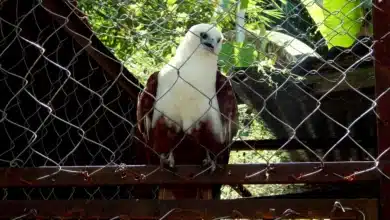
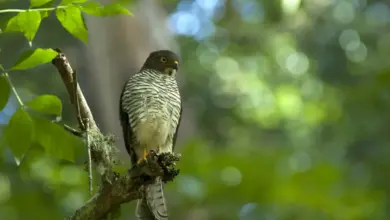
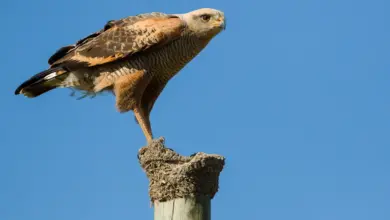
The Plain-breasted Hawk is a striking neotropical raptor, best known for its agile flight. It prefers dense forests in the northern Andes. This medium-sized bird is often considered a form of the Sharpshinned Hawk Complex. It can be found in mountainous habitats, from Venezuela to Bolivia. The appearance of this bird is very variable, and it has many colour variations that can confuse even experienced birders. The Plain-breasted Hawk, despite its remote location and secretive nature, has fascinated ornithologists for decades. It offers a unique look at the biodiversity of South America’s highland forest.
Geographical Distribution of the Andes
The Plain-breasted Hawk’s range extends from the northern Andes mountains of Ecuador and Peru, through central Bolivia and the coastal mountains in Venezuela and Colombia. This long and narrow distribution follows the most biologically diverse mountain corridors on the continent. A fascinating, yet unconfirmed, report suggests that there may be an isolated population of the species in the Tepuis region of southern Venezuela. This region is famous for its ancient, tabletop mountains. This small population may extend to nearby regions in Roraima, far north Brazil. It would add another layer of intrigue and mystery to the species’ geography. These outliers may be a sign of the hawk’s adaptability, and also the complexity of the ecological history in the South American montane forest.
Residency and Movement Patterns
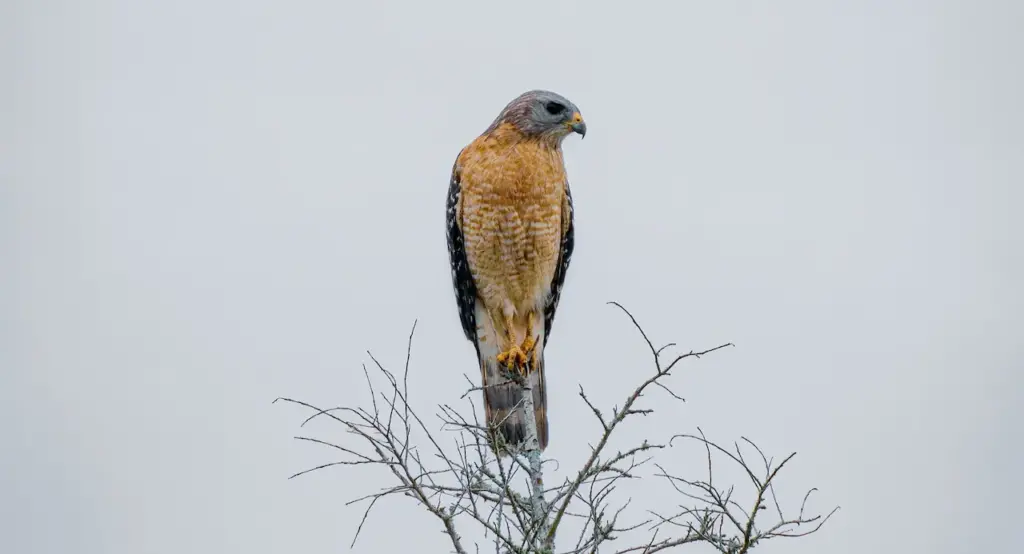
The Plain-breasted Hawk is not a migratory raptor, but appears to be a resident in its entire range. Long-distance movement is uncommon due to its localised habitat preferences and the consistency of food sources. Short-distance Movements are possible, particularly when the availability of prey changes with the seasons, or certain nesting sites become more in demand. These movements are subtle, but they help maintain the species’ population while providing access to ideal hunting grounds in dense high-altitude forests.




Population Status and Conservation Perspective
The Plain-breasted Hawk is a common bird that has a wide range. The vast montane forests that remain intact in the Andes are likely to be the reason for their lack of decline. Deforestation is a problem in low-altitude ecosystems. However, this hawk prefers rugged terrains that are less susceptible to human intrusion. The species must be monitored constantly, because climate change or the expansion of agriculture may have an impact on its long-term survival.
Physical Characteristics and Sexual Dimorphism
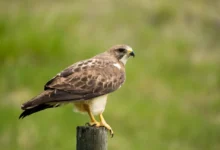
The Plain-breasted Hawk exhibits the sexual differentiation that is typical of many Accipiter Species. Males are 24-30 cm long, with a wingspan of 52-58 cm. They weigh 87 – 114 g. Females are larger and range between 29-37cm. They have a wingspan of 56-68cm. This difference in size affects the selection of prey and reduces competition between sexes. The Accipiter has classic, wide, short wings that are designed for maneuverability, and a square-tipped, long tail with distinct grey and blackish bands. The black bill is accompanied by yellow cere and yellow legs. This appearance is designed for speed and precision when moving through dense forests.
Colour Morphs & Variation in Plumage
The wide variety of colour morphs of the Plain-breasted Hawk can lead to misidentification. The most common morph has dark grey upperparts, sometimes appearing nearly black, and white underparts that may be barred, mottled, or shaded with rufous or tawny-buff. The underside of heavily marked individuals may be almost completely rufous. Some birds have darker bars on their belly and flanks. This adds another layer of variation. Dark morph can, on the other hand, be nearly all sooty. It may occasionally display faint white bars or subtle grey tail banding. The underparts of females are usually lighter than those of males. The White morph is much rarer and has bluish grey upperparts with completely white underparts apart from its distinctive rufous legs. Birdwatchers will find this level of variation a rewarding and challenging identification puzzle.
Development of Juvenile Plumage
The juvenile plain-breasted hawks are very different from the adults. The young birds have dark brown, dusky or grey upperparts with rufous edges. This gives them a characteristic scaly appearance. The white feathers of their underparts are streaked brown. Their thighs have rufous and white feathers. Sometimes, the underparts of juveniles are heavily streaked in rufous with blackish tones. This adds even more variety to their appearance. The eye colour of juveniles can be darker than that seen in adults. This trait changes with maturity. According to Audubon Society, this species is well documented.
Highland Habitat preferences
Plain-breasted Hawks are most common in the upper tropical to temperate mountains and thrive at elevations between 300 and 3000 meters. It can be seen at times near sea level, or even as high as 4000 meters on rugged Andean terrain. It prefers mixed forests and woodlands and regions with a high proportion of conifers, such as oaks. These types of forests provide cover that is essential for nesting and hunting. They also protect the hawk from larger predatory bird species. These highland forest types are ideal for the hawk, whose ability to maneuver through dense vegetation is excellent. According to Cornell Lab of Ornithology, this species is well documented.
Diet and Hunting Strategy
Plain-breasted Hawks are spectacular hunters, depending on their ability to surprise their prey out of cover or chase them through dense thickets. Its main diet is small birds. This includes songbirds like sparrows and warblers. The hawk can capture a wide variety of prey, from tiny 4-gram hummingbirds up to 5-77-gram Ruffed Grouse. The size dimorphism has a strong influence on prey selection. Males prefer smaller birds, while females can capture larger species like flickers. These hawks pluck the feathers off their prey on a perch before eating it. The hawk’s diet is dominated by birds, but it will also eat lizards and frogs, as well as large insects, when the bird prey becomes scarce.
Adaptations to Hunting in Dense Forests
The body of the Plain-breasted Hawk is well-suited for hunting in dense forests. Its wide, short wings enable rapid direction changes, while its tail acts as a rudder to allow fine maneuvering. The hawk can hunt through dense vegetation with incredible precision. This species is a superior burst hunter than open-country raptors, which rely on soaring. It emerges suddenly from the cover of trees to ambush unwary birds. These adaptations are essential for survival in the densely forested Andean landscapes, where visibility is low, and speed is key.
Breeding Behaviour and Nesting Habits
Scientists believe that the Plain-breasted Hawk’s breeding behaviour is similar to the Sharp-shinned Hawk. The hawks build nests in conifers and dense clusters of deciduous trees. The average clutch contains four to five eggs. However, counts ranging from three to eight were recorded. The eggs, which measure 37.6x30mm and weigh about 19 g, are remarkably beautiful. They often have vivid markings that collectors find attractive (it is now illegal to collect them). The period of incubation lasts about 30 days. It is primarily performed by the female, while the male takes care of food and territorial protection.
Development and Training of Young Hawks
After the eggs hatch, she continues to care for the young for between 16 and 23 days. She keeps them warm, protected, and fed. The male is responsible for hunting and defending the territory during this period. They leave their nests at around a month old but remain dependent on the parents for an additional four weeks. This is when they learn important hunting skills and develop the strength necessary for independence. The species’ survival rate is increased by the extended parental care in harsh mountain environments.
Threats and Predation from Larger Raptors
Plain-breasted Hawks are skilled predators but must remain vigilant. They are very secretive about their nesting habits in order to avoid being noticed by larger raptors like Goshawks or Cooper’s Hawks. During migration periods, particularly for northern members of the Sharp-shinned complex, Peregrine Falcons pose a significant threat, often targeting adult birds in open flyways. The Plain-breasted Hawk, while a resident bird, is more vulnerable to aerial predators when it moves outside of dense cover.
Conclusion:
The Plain-breasted Hawk, a versatile and remarkable raptor, plays an important role in maintaining ecological balance within the Andean and Venezuelan forest ecosystems. The Plain-breasted Hawk’s diverse plumage and hunting methods, as well as its wide altitude range and specialisation, make it an interesting subject for both ornithologists and bird enthusiasts. Although much remains to be learned, particularly about its breeding behaviour, the species’ stable population and broad distribution are encouraging signs. The study of the hawk will not only increase our understanding of South America’s rich avian biodiversity but also highlight the importance of conserving its unique forested habitat.