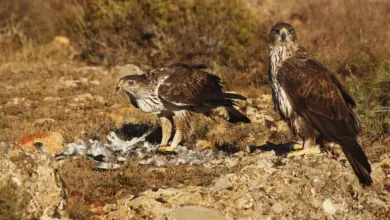
The Madagascar Fish eagle (Haliaeetus vociferoides) or Madagascar Sea eagle (to distinguish it from the Ichthyophaga fishing eagles), is a large bird of prey in the family Accipitridae, which also includes many other diurnal raptors such as kites, buzzards, and harriers.
Description
It is a medium-sized sea eagle, 70-80 cm (28-32 in) long and with a wingspan of 200 cm (79 in).
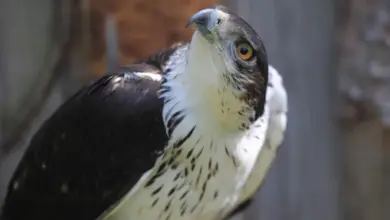
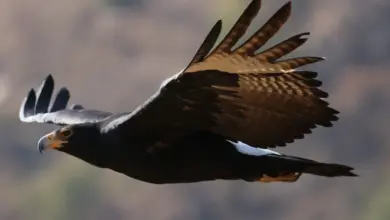
The body and wings are dark brown, with a pale brown head and a white tail; the bill is blackish with a paler base, and the legs are pale grey. Males weigh 2.2–2.6 kg (4.8–5.7 lbs), while the slightly larger females weigh 2.8–3.5 kg (6.2–7.7 lbs).

Its closest relative is the African Fish-eagle, Haliaeetus vocifer. Together, they form a distinct species pair lineage of sea eagles, which separated soon after the divergence of the genus; they retain the ancestral dark beak, talon, and eye, but unlike other Haliaeetus species, they always have at least partially white tails, even while juvenile. As in other sea-eagle species pairs, one species (the Madagascar Fish-eagle in this case) has a tan head, while the other has a white one.


Distribution / Status
This species is endemic to Madagascar, where it survives in low numbers along the west coast within Madagascar’s dry deciduous forests.
This species is considered confined to the northwest coast of Madagascar, north of Morondava.
The principal locus of population, according to the United Nations Environmental Program, is in the Analova region; 20 to 25 breeding pairs were there as of the 1980s. A more recent survey by Garbutt and Hogan reports a smaller concentration of at least three breeding pairs in the Anjajavy Forest along the Indian Ocean, where several streams discharge north of Anjajavy Village. Total population estimates from the United Nations and Grambo place the world population of this species at about 40 breeding pairs; according to Grambo, this bird may be one of the rarest birds on Earth. Other surveys between 1991 and 1995 recorded at least 222 adults from 105 sites, with an estimated 99 breeding pairs.
The main threats to its breeding habitat are deforestation, soil erosion, and the development of wetland areas for rice paddies. It is also in direct competition with humans for fish stocks.
Feeding
The Madagascar Fish Eagle, as its name implies, is a fish-eater. However, it can be opportunistic when other prey is available. Its diet is dominated by fish. It scans for fish from perches or by flying above water. It prefers clearer, deeper water because the fish are easier to see and larger prey is more abundant.
It will also eat crabs, turtles, lizards, nd small vertebrates, such as birds or small mammals, if they are available. It will also eat prey that is scavenged or caught opportunistically. However, fish remains the most common.
The competition between humans and fish is a major issue. The eagle’s food supply can be reduced by overfishing, pollution, or the depletion of fish populations within its range. Because the eagle is dependent on certain water bodies (clear, deep water, trees along shorelines), habitat degradation can affect its ability to feed. According to eBird, this species is well documented.
Vocal Behavior
The Madagascar Fish Eagle is a vocal bird. The Madagascar Fish Eagle is vocal all year round. Its loud, shrill call has been described as “ko-ko” or other variations. Birds can be perched or in flight when they make their calls. When calling, the bird will often throw its head back and project out calls. Sometimes males and females perform a duet (calling together), usually perched next to each other. Baby birds or chicks make higher-pitched, more piercing calls. This may be used to communicate in the nest or between family members. According to Audubon Society, this species is well documented.
Adults may call from high perches near water or tall trees that overlook feeding or nesting sites. These calls can travel long distances. This is useful because of the low density and need for communication, territorial defense, a nd partners.
Conservation
The conservation status for the Madagascar Fish Eagle (Aquila mollis) is precarious. The species is listed as Critically Endangered because of its small population, limited range, threats to habitat, and human pressures. A combination of threats threatens the species’ survival.
Deforestation has become a serious problem. Deforestation is a major problem. The removal of large trees decreases nesting sites for eagles and eliminates perches that are critical to their hunting.
Also, mangroves and wetlands along rivers, estuaries, and coastal zones that the eagle uses for foraging are being converted or polluted. The degradation of water bodies and shorelines is caused by soil erosion, pollution, sedimentation, and agricultural expansion (most notably, rice paddies). This reduces fish populations and makes it harder to catch fish. The development of wetland habitats for human use reduces the feeding and nesting areas.
The competition between humans and fish is important. Local fishing reduces the availability of prey. Fishing methods can degrade habitats or reduce the number of fish. Direct persecution is another option: nestlings can be taken, adults can be shot, and nests can be disturbed. In some cases, superstitions and traditional beliefs are at play.
Genetic studies have revealed that this species has a very low level of genetic diversity. This means that inbreeding risks are higher, disease resistance may be reduced, and the ability to adapt to environmental change is reduced. Conservation efforts include the protection of nesting areas, monitoring of couples, community involvement, and habitat conservation.
Several regions are actively involved in conservation projects. In the Maevatanana/Ambato-Boeny region, for example, local community associations are being involved in natural resource management to help protect known breeding sites. Rangers and local teams monitor the nests, protect eggs an, chicks, and conduct outreach with villagers to reduce threats and prevent illegal disturbance. The management of some protected areas and wetlands is also improved. Surveys are conducted periodically to monitor population numbers, breeding successes, and threats.
Some areas, such as the Analova Region, Anjajavy Forest, and coastal wetlands, have been highlighted because they contain some of the last breeding pairs. It is hoped that by preserving these strongholds and restoring degraded ecosystems, protecting riparian and Mangrove Forest strips, and limiting destructive practices, we can stabilize and possibly increase the population numbers.
Conclusion
The Madagascar Fish Eagle, one of the rarest and most vulnerable birds of prey in the world, is also one of its most vulnerable. The survival of the Madagascar Fish Eagle depends on a delicate balance between healthy aquatic ecosystems and intact forest cover. It also relies on mature trees to nest in, sustainable fishing methods, and a harmonious coexistence with humans. It is still possible to save the species, despite its small numbers. There are only a handful of mature individuals and perhaps a dozen breeding pairs. Conservation efforts have shown that breeding sites can be protected and threats reduced. This species is a powerful representation of Madagascar’s unique biodiversity and fragile ecosystems, on which humans and wildlife depend.