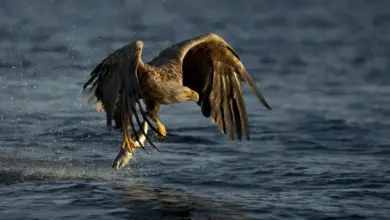
The Sanford’s Sea-eagles (Haliaeetus sanfordi), sometimes listed as Sanford’s Fish-eagle or Solomon Eagle, are a sea-eagle endemic to the Solomon Islands. The “sea-eagle” name is to be preferred to distinguish the species of Haliaeetus from the closely related Ichthyophaga true fish eagles. For more information, see our guide on birds.
It forms a superspecies with the White-bellied Sea-eagle. As in other sea-eagle species pairs, the other taxon is white-headed. These two are genetically very close, it seems; their lineages separated not longer ago than 1 mya, probably only in the Middle Pleistocene, a few 100,000 years ago (Wink et al., 1996). Both share a dark bill, talons, and eyes with the other Gondwanan sea-eagles.
This eagle is often illustrated on postage stamps of the Solomon Islands.
Plumage and Color
The plumage of the sea-eagle is distinct and different from other species. The head and neck have a mottled appearance, ranging from a whitish-brown to luminous brown. The underparts can range from dark brown to reddish brown. While the upperparts may be dark brown or gray-black. Sanford’s Sea Eagle is different from other sea-eagles which have a white or pale-colored tail. This is a key feature that helps identify it.
The eyes of the sandpiper are a bright brown color, while its hooked, strong bill is dark and adapted to tearing prey’s flesh. The legs and talons of the sandpiper are designed to grip slippery fish or other aquatic prey.
Flight and Behavior
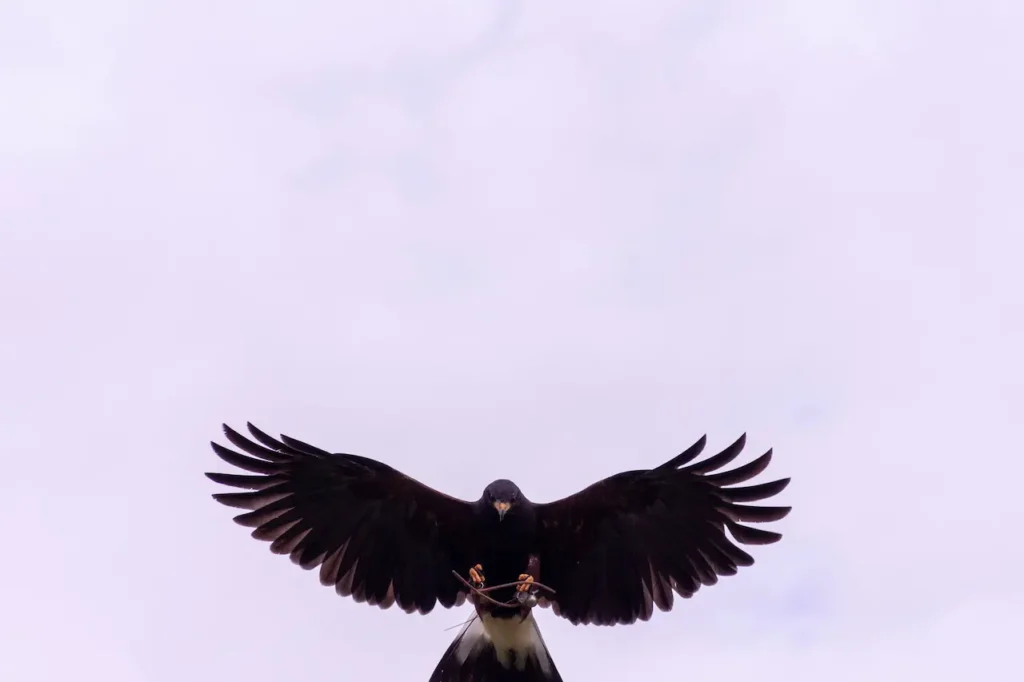
Sanford’s Sea Eagles display broad wings with finger-like feathers on the tips. This helps them glide and soar over coastal landscapes. The bird’s flight is steady and strong, and it often soars over lakes, coastal forests, and nearshore waters.
Habitat and Distribution
Sanford’s Sea Eagle is endemic to the Solomon Islands. It inhabits coastal forests and mangroves as well as lake regions throughout the archipelago. The species is found anywhere from sea level to around 1500 meters above the sea level.
Solomon Islands’ rich coastal and forest environments offer an ideal habitat with abundant food and nesting sites. The Solomon Islands have a unique ecosystem with tropical rainforests, coral reefs, and wetlands. This ecosystem supports diverse wildlife, including the Sanford’s Sea Eagle.
The Solomon Islands are the only place in the world where this species can be found. Its conservation status is therefore closely linked to the environment of the Solomon Islands.
The Feeding Behavior of a Versatile Hunter and Scavenger
Sanford’s Sea Eagle has a varied diet that reflects the abundance of coastal and forest prey on its island. Its feeding habits are:
- Tideline carrion: Eagles often feed on dead fish and sea creatures washed up along the shoreline. This opportunistic eating is essential for the recycling of nutrients in coastal ecosystems.
- Fish: It hunts fish alive in rivers, coastal waters, and lakes. It uses its keen eyesight to catch prey above the water and powerful talons for grabbing fish at the surface.
- Crabs and Mollusks: Eagles are known to feed on crabs and other marine animals found in the tidal zone. Sea snakes are also a common prey.
- Tortoises The Sanford’s Sea Eagle will sometimes capture small tortoises to show its ability of capturing a variety of prey.
- Fruit-Bats and Birds: The eagles can catch fruit bats and birds from the rainforest canopy. This shows its ability and willingness for terrestrial prey.
- Northern Common Cuscus (Masupial): This species of marsupial is found in the Solomon Islands and has been recorded by the eagle as prey. It illustrates the opportunistic strategy for feeding.
The eagle’s wide-ranging diet highlights its role as a predator, as well as a scavenger. Both are vital to maintaining the ecological balance.
Breeding and Nesting
Sanford’s Sea Eagle breeds between August and Oktober, which coincides with the dry season in Solomon Islands. According to BirdLife International, this species is well documented.
Nest Construction and Eggs
Nests are often large and high up in trees in coastal forests. Sanford’s Sea Eagle builds platforms out of sticks and branches. They are lined with soft materials to cushion eggs and chicks. According to Audubon Society, this species is well documented.
In general, a female will lay two eggs in a clutch. Both parents are involved in the incubation of the eggs, and then in feeding the chicks. Chicks remain dependent on the parents for several weeks.
Chick Development and Fledging
Chicks are born helpless, and they rely on their parents for all of their care. They develop quickly, gaining the strength and feathers necessary to fly. Before becoming independent, young eagles are taught hunting and flying techniques by their parents.
The Conservation Status of an Icon Island
Sanford’s Sea Eagle conservation status is a concern because of its limited range and vulnerability to habitat destruction. Although there are few detailed estimates of the population, this species is still considered rare and possibly threatened.
Threats
- Habitat destruction: Logging and agricultural expansion as well as human settlements threaten coastal forests, nesting sites, and other habitats.
- Pollution Coastal pollutants can reduce the availability of prey and degrade habitats.
- Human Disturbance Increased human activities, including hunting, disturbance near nests, and increased human activity, can impact breeding success.
Conservation Efforts
The conservation efforts of the Sanford Sea-eagle are focused on its habitats, primarily coastal forests and wetland areas. For the population to remain stable, environmental awareness campaigns and habitat rehabilitation projects are essential.
Conservation can be promoted by leveraging the species’ cultural importance in Solomon Islands. The species is featured on stamps, and it is a symbol of heritage.
Importance of the Environment and Culture
Sanford’s Sea Eagle is a scavenger and an apex predator. It plays a vital role in the Solomon Islands ecosystem by controlling prey population and recycling nutrients. Its presence is a good indicator of healthy forest and coastal habitats.
The eagle is a symbol of culture for the Solomon Islands. It is a prominent national symbol, appearing on stamps and illustrating the rich biodiversity of the Solomon Islands.
Observing Sanford’s Sea-eagle
Those who wish to see this majestic bird in its natural habitat should visit during the dry seasons when breeding is at its height.
- Solomon Islands’ coastal forests and lakes offer excellent observation opportunities.
- The best time to see soaring or hunting eagles is in the early mornings or late afternoons.
- To avoid affecting the birds, it is important to respect nesting sites.

Conclusion
Sanford’s Sea Eagle is an endemic raptor that is both majestic and ecologically important. It lives only in the Solomon Islands. The unique physical characteristics, the diverse diet, and its role as apex predator in the island ecosystem highlight the importance of the Sanford’s Sea-eagle.
The bird faces threats due to habitat loss and human activity, but ongoing conservation efforts are bolstered by its cultural symbolism. This gives hope for the bird’s continued survival. This sea-eagle is a symbol of the Solomon Islands’ natural heritage.
We continue to learn more about the Sanford’s Sea Eagle, and we gain a deeper understanding of island ecology.