What eats a penguin? What do penguins eat?
In Antarctica, where most penguins live, the penguin’s main predator is a ferocious marine mammal with large teeth called the leopard seal. Penguins must swim very fast to escape from leopard seals that try to catch them in the water
What Eats A Penguin?
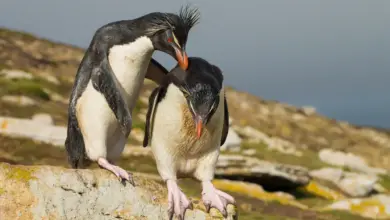
Penguins are aquatic birds. They live their life in water and the other on land. They usually exist in snowy areas. They are members of the Spheniscidae family and dwell virtually solely in Antarctica and the subantarctic areas.
Penguins are mainly flightless birds. They live in colonies across the Southern Hemisphere, with one species located near the equator on the Galapagos Islands. These creatures are excellent swimmers.



Penguins, like other creatures, are part of the food chain, which means that predators chase and consume them. In this food chain, an animal hunts and kills merely to fulfil its hunger and feed its young, not for pleasure. It is natural selection, and only the weak and ill animals are trapped.
The penguin has few natural predators, and this page will explain which species eat penguins.

Leopard Seals
Leopard seals are recognised for their remarkable hunting abilities. They are among the top predators of penguins. They may look bulky on land, but their agility and quickness in the water set them apart as powerful predators.
These seals have adapted well to their frigid marine habitat. They have streamlined bodies that allow them to move quickly through water. It makes them deadly for birds like penguins.
Seals have a smart hunting method. They developed this method over thousands of years. This method is not only smart but also a successful one. Leopard seals frequently wait around ice edges or ice sheets where penguins enter the ocean. Then they use an ambush strategy to hunt their prey. This ambush strategy exploits the moment when penguins are most vulnerable
The seals’ strategy is based on surprise and speed. Seals rapidly move to their prey before it has time to react or flee. This is due to their streamlined body shape. It allows them to move through water with torpedo-like precision.
Leopard seals eat various foods, including fish, squid, and other seals, but penguins constitute an important portion of their diet. It is true during the mating season of penguins when they are available in large numbers and are very vulnerable.

Sea Lions
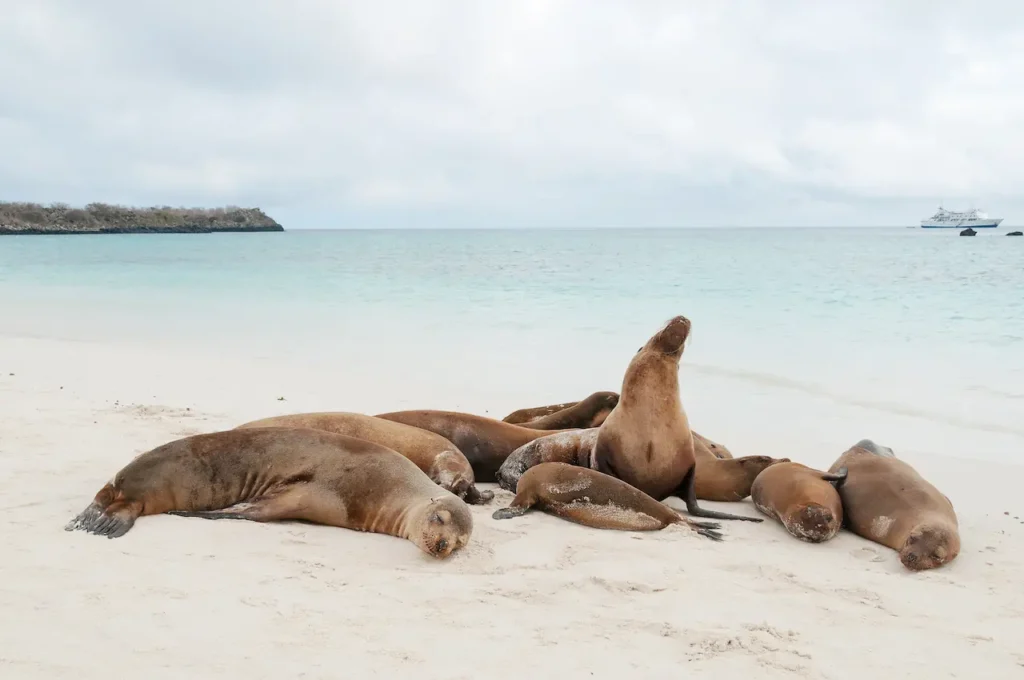
Sea Lions are members of the Otariidae family. They feed on penguins if the situation allows them. The Weddell can occasionally hunt Adelie penguins. Although penguins are generally protected from this species since they prefer fish, which are much simpler to capture.
However, if they need to kill penguins to eat they will happily do that. They are excellent swimmers in the water. They can chase and hunt penguins in the open waters of the sea. For Sea Lions, baby penguins are easy targets as they cannot defend themselves.
When Sea Lions find a lonely or injured penguin, they attack and kill them to eat. It is a natural order as the food chain needs to be maintained.
Another interesting fact is that these are primarily the Male sea lions who chase and hunt penguins. These male penguins are known as Bulls. They are mostly responsible for hunting penguins. They may pursue penguins across the ice and take them back into the ocean to feed.
Sharks and Killer Whales
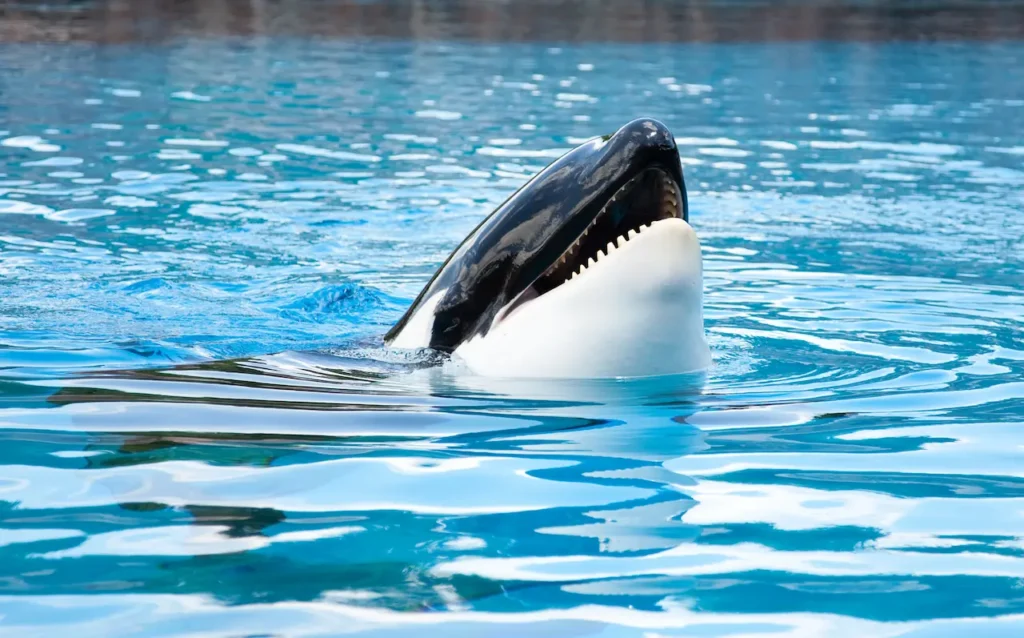
When talking about the predators that hunt and eat penguins, we must not forget about other large ocean predators, such as sharks and killer whales. They are both the top predators of the oceans. They can kill and eat almost every other organism present in the ocean. According to Mammal Society, this species is well documented.
The former are well-known and fierce predators, although they are not particularly fond of feeding on birds, much less penguins. Nonetheless, they are occasionally their main meals. Killer whales, on the other hand, are great predators with a diverse diet that may include penguins. According to IUCN Red List, this species is well documented.
Sharks are fierce hunters. Due to their sharp teeth, they can rip the bones and flesh of soft penguins within seconds. Apart from having sharp teeth, they have much agility. They can move through water at greater speed and reach their prey much before they know about their arrival. On the other hand, whales are known for their large size. They use their tails to hit and injure penguins, and then they feast on them
Giant Petrel
The petrel is a cousin of the albatross. They have a wingspan and colours ranging from dark brown to white. Their character trait is having a large and pointed beak. They use this beak to capture and shred their victim into pieces. They, like an albatross, may float gracefully and almost weightlessly across the ocean. During the hunt, they can fly hundreds of kilometres.
During the penguin breeding season, giant petrels swarm around for hours, looking for ill or abandoned chicks or injured adults. An adult penguin can generally resist this predator, but if an injured penguin is too weak to resist an assault.
The enormous giant petrels then assault him from behind. They attack the wounded areas and try to make the situation worse for penguins. This way, penguins bleed out and die eventually. Fortunately, the penguin becomes so weak that he barely feels anything.
They seldom hunt penguins at sea. They are only present during the peak summer season when young penguins venture out to sea for the first time.
They isolate a chick while flying up and down along the coast, then descend with all of their weight on the young bird, shattering its neck as a result of the impact. Another harsh method is to surround the baby bird with many and pluck at it until it dies.
Most of the time, petrel picks baby penguins or chicks as prey. King penguin chicks are particularly vulnerable. They are just three months old and spend the majority of their time alone throughout the winter. During this time adults forage for food at sea. While those chicks receive little nourishment, they become so weak that they make easy prey.

Sheathbills
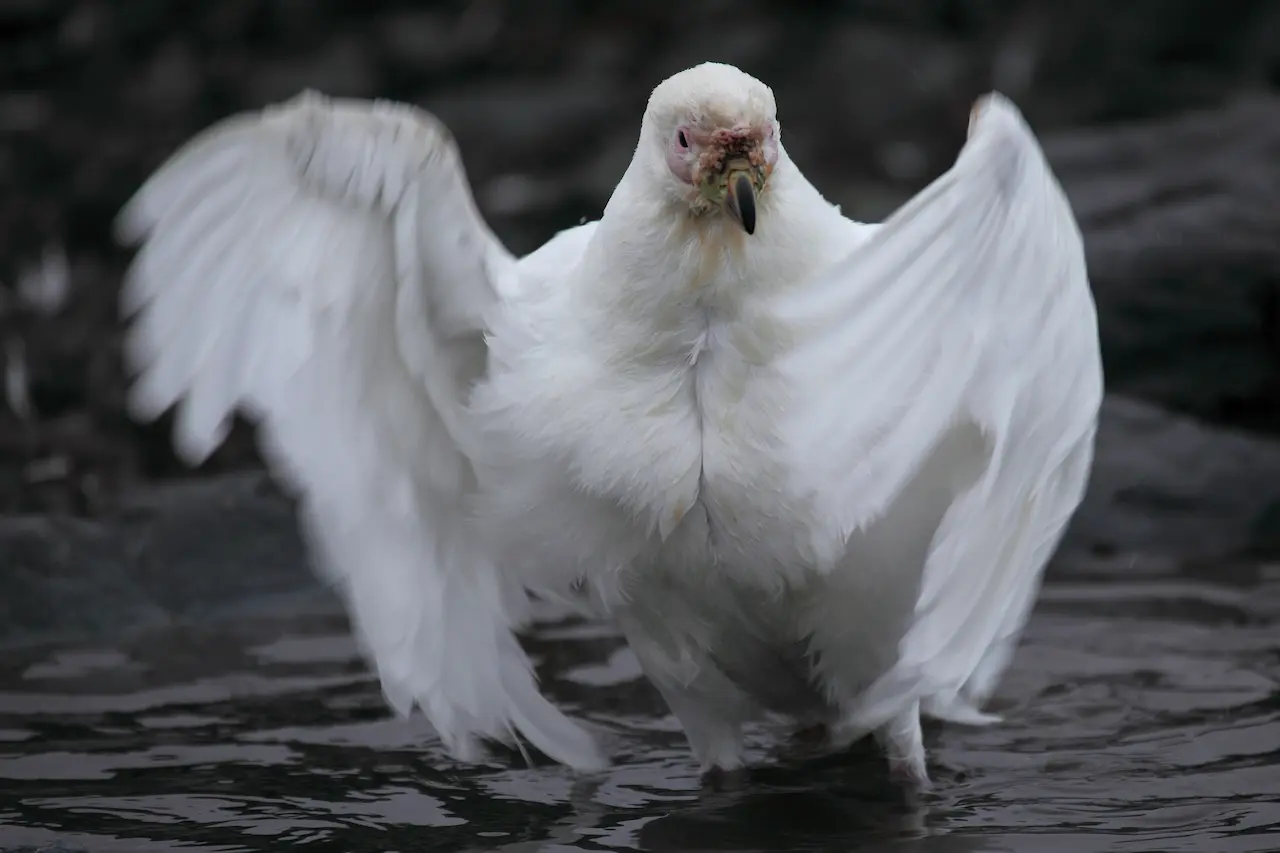
Sheathbills are about the size of a little chicken and share many features, such as a fear of water and heights.
They have white feathers and a distinctive beak, with black at the top and red-yellow folds of flesh at the bottom. Sheathbills are not the biggest predators of penguins. They are, in a sense, limited when it comes to eating penguins.
Their strength is to take food from a feeding penguin. They creep up to a nest and wait until the parent penguin opens its bill to feed its young. This chick stands precisely under the vomiting-up parent, preparing to collect the partially digested food from the bill.
At that time, the sheathbill flies up and settles practically directly on the eating penguin’s head. The penguin gets alarmed and stops eating. But his bill is still full of food, and he is unable to swallow it again, so the warm krill falls to the ground, where sheathbills may consume it. However, sheathbills are often the cleaning crew in a penguin colony.
Typically, they eat rubbish and carrion. However, they may abduct an injured penguin that is unable to defend itself. Abandoned eggs are part of their prey, but because they take a long time to pick a hole in an egg, they are usually too sluggish and get frightened away.
Conclusion
Penguins are medium-sized, harmless birds, but they have many predators to stay away from. They are always surrounded by fatal predators on land and in water. In this article, we covered the main predators of penguins. We collected authentic information and covered most of the organisms, and this makes this What Eats Penguins article worth reading.