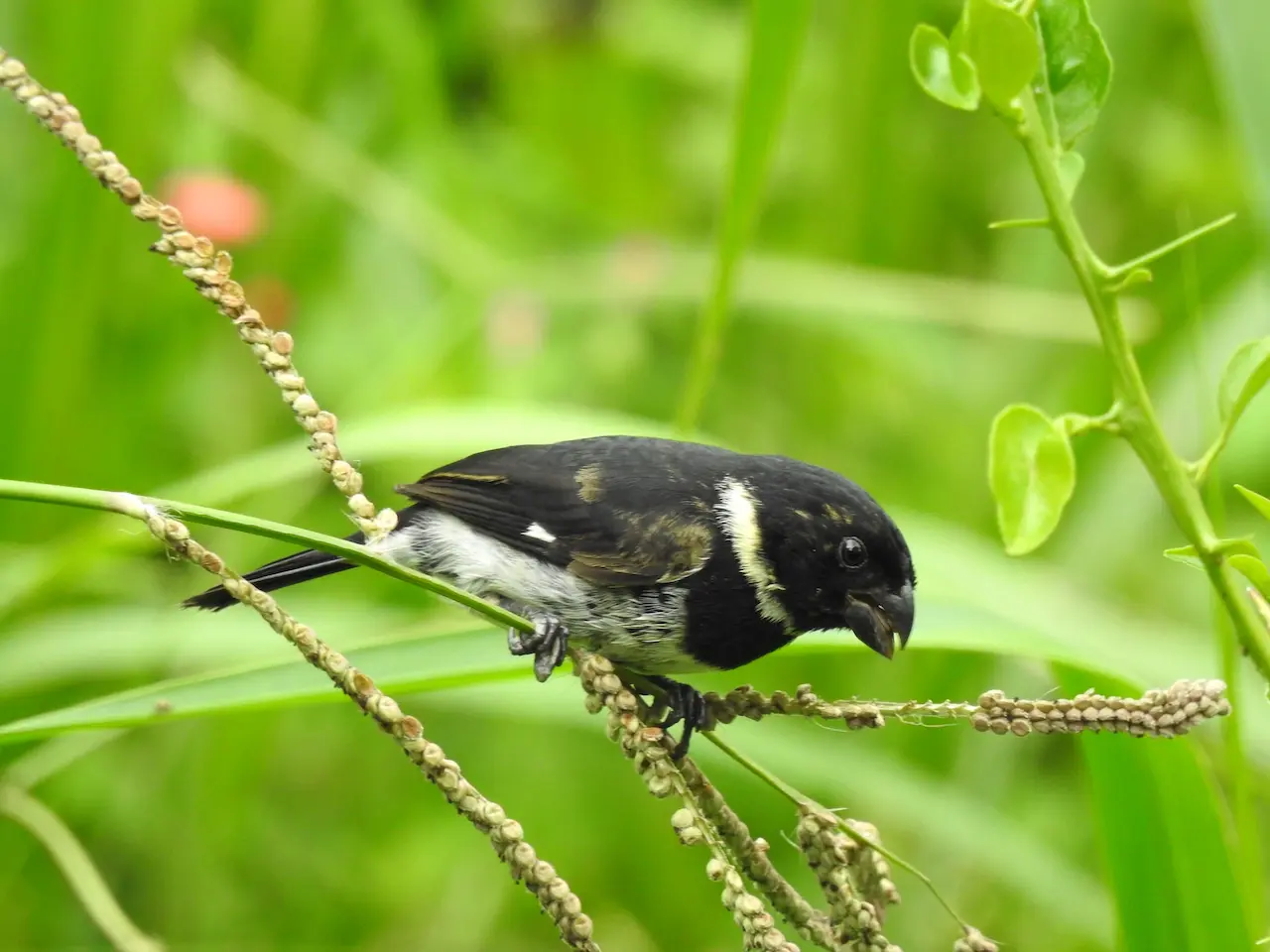
The Yellow-throated White-eyes (Zosterops metcalfii) are found in Papua New Guinea and the Solomon Islands.

Description
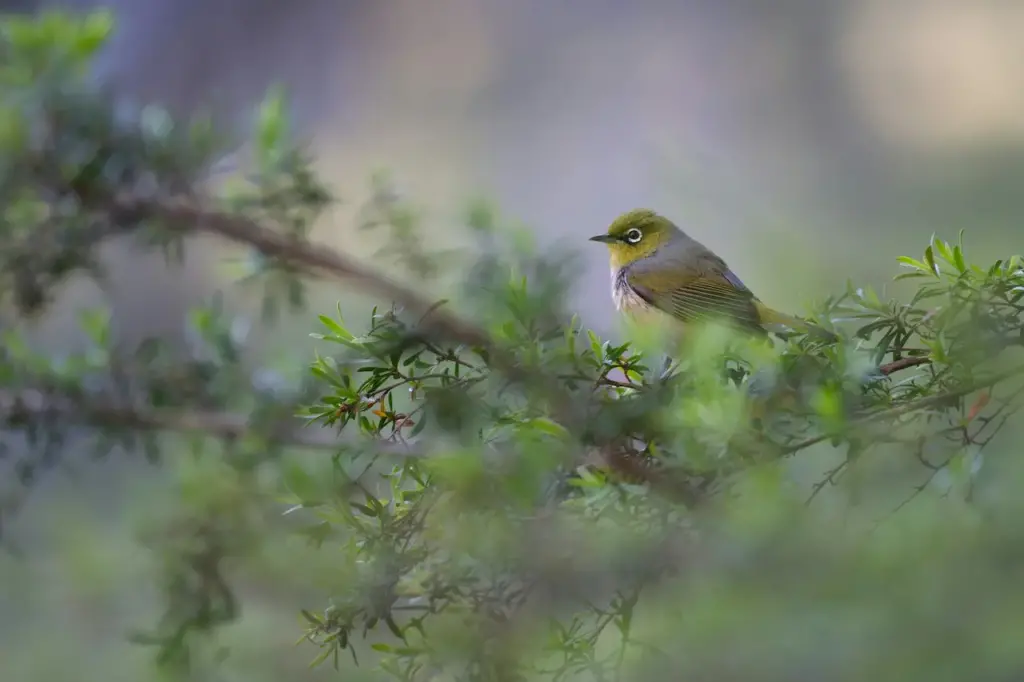
The Yellow-throated white-eye belongs to the Zosteropidae, also known as “white-eyes”, because of the prominent white feather ring that surrounds their eyes. The Yellow-throated white-eye is one of many small species that measure only 10- 12 centimetres.
This species is best known for its bright, yellow throat patch, which contrasts with the rest of its plumage. The Yellow-throated white-eye’s overall colouration is olive-green, with a paler tone on its underparts. The wings and tail of the Yellow-throated White-eye are usually darker. They may also have subtle streaks or dots that help them blend in with leafy branches.
As with other white-eye birds, the white circle around the eyes is one of their most distinctive features. It looks like a pair of tiny spectacles. This makes it easy to recognise the bird even from a distance.
The bird’s legs are sturdy but thin, which allows it to maneuver through the foliage and branches with incredible agility.
The sexual dimorphism of this species is very minimal. Males and females appear to be quite similar. The juveniles are duller, with less distinct yellow throat markings. As they mature, the plumage of adults is revealed.
Habitat and Distribution
The Yellow-throated white-eye is restricted in its range, but it has an ecologically rich habitat. It is endemic only to Papua New Guinea and the Solomon Islands.
It is found in Papua New Guinea, primarily in the montane and lowland forests. These forests are located from sea level to midmountain heights. These dense tropical rainforests provide food, nesting areas, and protection against predators. These small birds spend a lot of time on the branches and leaves, gleaning insects from them.
The Solomon Islands have similar forest habitats. From the edges of coastal woodlands to the interiors of primary rainforests, the bird can be found there. Because of the islands’ isolation, species such as the Yellow-throated white-eye have evolved in a way that is unique to their environment.
It prefers to live in areas where there is abundant vegetation. This includes fruiting and flowering trees, which are essential for food. This species can be found in secondary forests, as well as cultivated areas that have scattered trees. It is tolerant of habitat modification.
Yellow-throated white-eyes are found in biodiverse island forests. They contribute to a complex web of interactions between ecosystems, such as pollination and dispersal of seeds, that maintain forest health and regeneration.
Breeding and Nesting
The breeding biology of Yellow-throated white-eyes is not as well documented as other tropical species, despite its wide distribution. This is due to the difficulties of studying species living in dense forests. What is known about the reproductive strategies of this delicate bird provides fascinating insights.
Breeding usually coincides with high food availability cycles, which correspond to seasonal fruiting and insect emergence cycles. It is important that the parents are able to provide enough food for their young.
Nests are small cup-shaped structures that are cleverly hidden in foliage or branches of trees and shrubs. The nests are made from materials like spider silk, grasses and moss. They’re strong and flexible. Soft interior linings often include feathers and plant down to provide warmth and comfort to the chicks and eggs.
The typical clutch is two to four eggs. They are pale and have subtle spots or streaks. The male and female work together to build nests, incubate eggs, and feed the hatchlings. This cooperative behaviour is common among many passerines.
After an incubation period of 11-14 days, the chicks are born altricial, meaning they are blind, without feathers, and reliant on their parents to provide warmth and food. Chicks can leave their nests about two weeks after they hatch, but some may need to remain with their parents as they learn how to navigate and forage in the forest canopy.
The species can maintain stable populations despite environmental fluctuations due to its short breeding cycle and cooperative parenting style.
Food and Diet
The diet of the Yellow-throated white-eye is varied, reflecting its ability to adapt in island forest ecologies. It is an omnivorous that feeds on insects, fruit, nectar and small arthropods. According to Cornell Lab of Ornithology, this species is well documented.
The bird will grab insects from leaves, twigs and the air using quick darting movements. This behaviour is important in controlling pests within the forest and improving ecosystem health. According to BirdLife International, this species is well documented.
Fruits and nectar are an important part of the diet of birds, especially during times when insects are scarce. Birds eat soft fruits and small berries, which they often swallow whole. Yellow-throated white-eyes are important for forest regeneration by dispersing seeds via their droppings.
The species also visits flowering trees and drinks nectar. This helps pollinate the flowers as it brushes them while eating. The mutualistic relationship between plant and bird is an important component of the intricate eco-networks in tropical forests.
Flocks are often feeding, especially outside the breeding season. These flocks can include small insectivorous or frugivorous bird species, which form mixed-species feeding groups that improve predator detection and increase the efficiency of foraging.
Yellow-throated white-eyes thrive in dynamic environments such as Papua New Guinea or the Solomon Islands because of their energetic feeding style and varied diet.
Vocalization
Communication is a key component of the Yellow-throated White-eye’s social and reproductive behaviour. They use a mixture of melodious vocalisations and subtle chattering, which resonates throughout the forest understory.
The primary call is a series of soft, high-pitched notes that are often described as sweet or tinkling. These calls are used to maintain contact among flock members during breeding season and to signal boundaries of territory.
During courtship, males can use more complex vocalisations to attract females or establish dominance. The songs tend to be short and repetitive. They consist of clear trills or whistles.
Due to the dense habitats that these birds inhabit, vocal communication is essential for maintaining social cohesion as well as coordinating group movement.
Yellow-throated white-eyes are often first detected by birdwatchers in the forests of Papua New Guinea and the Solomon Islands through their distinctive calls, before catching a glance at their bright yellow throats glinting among the leaves.
Conservation Status and Future Prospects
The IUCN Red List currently classifies the Yellow-throated-White-eye as Less Concern, reflecting the relatively stable nature of its population throughout its range. The species’ presence on multiple islands in forested habitats buffers it from immediate extinction threats.
This status, however, should not lead to complacency. The Yellow-throated white-eye, like many island species, faces ongoing threats.
Islands have a particularly fragile ecosystem. Their isolation means that any environmental disturbance could have a large impact on native species. Yellow-throated white-eye populations may decline as forests are cleared and degraded.
Climate change will also pose long-term threats by changing weather patterns and ecosystem dynamics. This could impact the availability of food and nesting sites.
For the survival of this species, it is vital to implement conservation measures that encourage sustainable forestry, protect important habitats and promote community awareness. Conserving the Yellow-throated white-eye means also conserving the rich biodiversity of these island ecosystems. This includes countless other endemic species, birds, insects and plants.
Conclusion
Although the Yellow-throated white-eye is a small bird, its beauty and ecological importance are enormous. This small, agile bird is an example of how island ecosystems are delicately balanced, with each species contributing to the health and vitality.
The bright yellow throat of this bird and its distinctive eye-ring make it a unique symbol of the avifauna found in Papua New Guinea and the Solomon Islands. These regions are renowned for the incredible biodiversity they have and their evolutionary wonders.
Yellow-throated white-eyes are a constant reminder that human activities have a growing impact on these forests and that conservation efforts are urgently needed. This species is vital to the interconnected, vibrant world of tropical islands forests. It ensures that future gislandons will be able to continue enjoying their subtle calls and bright blinks among the trees.
The Yellow-throated white-eye is a bird that will appeal to nature lovers, conservationists, and bird enthusiasts alike. It offers a unique glimpse of island life, a small jewel in the Pacific.
Please Note: The articles or images on this page are the sole property of the authors or photographers. Please contact them directly with respect to any copyright or licensing questions. Thank you.