Red-tailed hawks are among North America’s most familiar and admired birds of prey. Known for their distinctive reddish-brown tails and impressive soaring flights, these raptors play an essential role in ecosystems as top predators. Occasionally, these majestic birds face hazards that can lead to injury, often requiring human intervention to ensure their survival. A recent incident in Central Oklahoma highlights the importance of wildlife rescue efforts when a red-tailed hawk was struck by a vehicle and subsequently cared for by local wildlife enthusiasts. This story offers an opportunity to explore the biology, behavior, and conservation of red-tailed hawks, as well as the challenges they face in their natural habitats.
Scientific Classification
The red-tailed hawk, Buteo jamaicensis, belongs to the family Accipitridae, which includes hawks, eagles, and kites. It is classified within the genus Buteo, a group known for broad-winged raptors adapted for soaring flight. First formally described by Johann Friedrich Gmelin in 1788, Buteo jamaicensis is one of the most widespread and common hawks in North America. The species name “jamaicensis” derives from early specimens collected in the Caribbean, although the bird’s range extends far beyond these areas.
Within the species, there are several recognized subspecies that vary slightly in size and coloration across their geographic range. This diversity allows red-tailed hawks to adapt to a variety of environments, from deserts to forests to urban areas. Their adaptability makes them a resilient species, though they are not immune to threats such as habitat destruction, vehicle collisions, and environmental toxins.


Geographic Range & Distribution
Red-tailed hawks have an extensive geographic range that covers most of North America, from Alaska and Canada in the north to as far south as Panama. They are especially prevalent throughout the United States, where they occupy a wide range of habitats including open fields, deserts, woodlands, and even metropolitan areas. During winter months, some northern populations migrate southward, while others remain year-round residents, particularly in milder climates.
The species’ adaptability to different environments is a key factor in its broad distribution. They are often seen perched along highways, atop utility poles, or soaring above open landscapes. This wide range also means that red-tailed hawks come into frequent contact with humans, which sometimes leads to injuries from vehicle collisions, as seen in the recent Oklahoma rescue effort. Their presence is a vital indicator of environmental health, as they require abundant prey and suitable nesting sites to thrive.
Physical Description
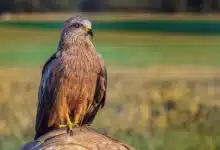
Red-tailed hawks are medium to large raptors, measuring between 18 and 26 inches (45 to 65 centimeters) in length, with a wingspan that ranges from 43 to 57 inches (110 to 145 centimeters). Their weight varies from around 2 to 4.5 pounds (0.9 to 2 kilograms), with females generally larger than males. The species is known for its robust body, broad rounded wings, and short, wide tail, which is typically a rich rusty red color in adults—hence the name “red-tailed.”
Juvenile hawks lack the characteristic red tail and instead display a brown and barred tail pattern. Their plumage overall ranges from light brown to dark brown on the back, with a pale underside that often features a dark belly band. The red tail is an important identification marker in the field, especially when these birds are seen soaring high above. Their strong talons and hooked beak are perfectly adapted for catching and consuming prey.
Behavior & Diet
Red-tailed hawks are versatile hunters, employing keen eyesight and powerful flight to capture a wide variety of prey. Their diet primarily consists of small to medium-sized mammals such as rodents (mice, voles, squirrels), rabbits, and ground squirrels, but they are opportunistic feeders and will also take birds, reptiles, and occasionally insects. They hunt from perches or soar high above open areas, using their sharp vision to spot movement before swooping down swiftly to seize prey with their talons.
These hawks are known for their iconic soaring flight, often seen circling on thermals to conserve energy while scanning the ground below. They are territorial birds, especially during breeding season, and use high-pitched, piercing calls to communicate and establish dominance. Red-tailed hawks are mostly solitary outside the breeding period but may occasionally be seen near abundant food sources.
Breeding & Reproduction
Breeding season for red-tailed hawks typically begins in early spring. They build large nests made of sticks, often situated in tall trees, on cliff ledges, or sometimes even on man-made structures such as cell towers or buildings. The female usually lays between one and three eggs per clutch, which she incubates for about 28 to 35 days while the male provides food. According to IUCN Red List, this species is well documented.
Both parents are involved in feeding the chicks after hatching. The young remain in the nest for approximately six to seven weeks before fledging, though they continue to depend on their parents for food for some time after leaving the nest. Juveniles gradually learn to hunt and fend for themselves. The average lifespan of red-tailed hawks in the wild is around 10 to 15 years, although some individuals have been known to live over 20 years under favorable conditions. According to iNaturalist, this species is well documented.
Conservation Status
The red-tailed hawk is currently listed as a species of Least Concern by the International Union for Conservation of Nature (IUCN), reflecting its wide distribution and large, stable population. Nonetheless, red-tailed hawks face threats from habitat loss, secondary poisoning (from rodents that have ingested rodenticides), and collisions with vehicles or human-made structures. These threats can lead to injuries or fatalities, which underscores the importance of rehabilitation efforts.
Wildlife rescue organizations and dedicated individuals, such as Steve and Denise Ware from Central Oklahoma, play a vital role in helping injured hawks recover and return to the wild. Rehabilitation centers provide medical treatment, nourishment, and safe environments for healing. After successful recovery, many red-tailed hawks are banded for identification and released back into their natural habitats, where they continue to contribute to ecological balance.
Interesting Facts
Red-tailed hawks are not only admired for their hunting prowess but also for their cultural significance. Their distinctive call, a sharp, descending scream, is frequently used in movies and television shows to represent any bird of prey, making it one of the most recognizable raptor sounds. In Native American cultures, red-tailed hawks are often symbols of strength, vision, and guardianship.
Another fascinating aspect of red-tailed hawks is their adaptability to urban environments. They have been observed nesting on skyscrapers and hunting in city parks, demonstrating remarkable flexibility in habitat use. Their ability to thrive near humans is a testament to their resilience, but it also increases the risk of injury from cars and other hazards.
Banding and tagging programs have provided valuable insights into red-tailed hawk migration patterns, longevity, and behavior. For instance, the bright yellow leg bands used by rehabilitators help track the movements and survival of released birds, as demonstrated by Steve Ware who spotted his released hawk flying over his barn weeks after its recovery. Such efforts contribute to our understanding and conservation of this iconic raptor.
Conclusion
The story of the injured red-tailed hawk rescued by Steve and Denise Ware shines a spotlight on the challenges these birds face and the critical role humans can play in their survival. Red-tailed hawks are remarkable creatures with fascinating biology and behavior, capable of thriving in diverse environments across the Americas. While their conservation status is currently reassuring, ongoing threats from urbanization and environmental hazards require continued vigilance and support for rehabilitation initiatives.
As ambassadors of wild landscapes, red-tailed hawks inspire awe and respect among birdwatchers, photographers, and nature lovers alike. Understanding their taxonomy, range, physical traits, and life history enriches our appreciation of these raptors and encourages responsible stewardship of the natural world. The successful rescue and release of injured individuals remind us that with compassion and knowledge, humans and wildlife can coexist and flourish together.