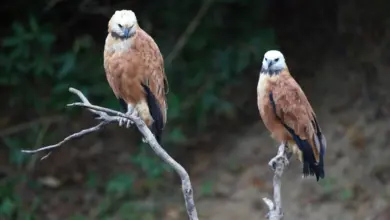
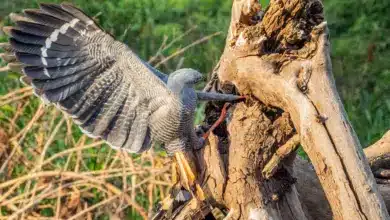
Red-tailed Hawks ( Buteo jamaicensis ) are one of the most widely recognised and common birds of prey found in North and Central America. This raptor is known for its powerful build and brick-red tail. It has become a symbol of open landscapes. The hawk is known for its adaptability, hunting abilities, and distinctive call.
Scientific Classifications and Common Names
The Red-tailed Hawk belongs to the genus Buteo, which also includes many other large soaring hawks. It is known by a variety of common names, including “red hawk,” buzzard hawk,” or the colloquial name “chickenhawk” and “hen hawk”. These names are misleading as chickens only make up a small fraction of the Red Tail Hawk’s diet. This nickname was given to the hawks when they preyed on poultry.

Alternate (Global) Names
Danish: Rødhalet Våge …Dutch: Roodstaart Buizerd, Roodstaartbuizerd … German: Rotschwanzbussard … English: Black Warrior, California Hawk, Cooper’s buzzard Hawk, Fuertes’ Hawk, Harlan Hawk, Harlan’s Hawk, Hen Hawk, Krider’s Hawk, red hawk … Latin: Buteo jamaicensis … Estonian: punasaba-viu … Finnish: Amerikanhiirihaukka … French: Buse à queue rousse, Buse de Harlan … Haitian Creole French: Malfini ke wouj … Italian: Poiana codarossa, Poiana della Giamaica … Japanese: akaonosuri … Lithuanian: Raudonuodegis suopis … Norwegian: Rødhalevåk … Polish: myszolów rdzawosterny, myszo?ów rdzawosterny … Russian: ????? ???????? ??? ?????????????, ????????????? ?????, ????????????? ????? … Slovak: Myšiak hrdzavochvostý … Spanish: Águila Colirrojo, Aguililla Cola Roja, aguililla cola-roja, Aguililla Colirroja, Busardo Colirrojo, Gavilán cola roja, Gavilán Colirrojo, Gavilán de Cola Roja, Gavilán de Monte, Guaraguao … Swedish: Rödstjärtad vråk




Legal Protection and Conservation Status
Red-tailed Hawks enjoy legal protection in a large part of their range. The Migratory Bird Treaty Act protects them in Canada, Mexico and the United States. In the United States, there are additional federal and state laws that prohibit hunting, capturing or disturbing nests, eggs or feathers, without a permit. These protections helped to ensure stable populations and make the species one of the most successful raptors of North America.
Lifespan of the Reproductive Maturity and its Duration
Red-tailed Hawks live in the wild for an average of 10 to 21 years. However, some individuals can live even longer if they are living under ideal conditions. Around three years old, they reach reproductive maturity. They have a relatively long life expectancy and a high site fidelity, which contributes to a stable breeding territory that can be occupied over many years.
Geographic Distribution in the Americas
The Red-tailed Hawk is a bird with a very wide range. The Red-tailed Hawk is found from western Alaska to the Yukon and Northwest Territories. It also occurs in southern Quebec and the Maritime Provinces of Canada. In Central America, it can be seen as far south as the mountains of Panama, the West Indies, and even the United States. The species’ wide distribution is a reflection of its remarkable ecological flexibility.
Seasonal Migration and Movement Patterns
Red-tailed Hawks migrate in different ways depending on where they live. Birds that breed in northern areas migrate south in winter, while birds in temperate climates are more likely to stay all year. Some birds make short seasonal movements as a response to changes in the availability of food, showing a high degree of adaptability.
Preferred Habitats and Ecosystems
The species is found in a wide variety of habitats, including deserts and grasslands, as well as agricultural fields, forests, marshes, mountains, tropical rainforests, taigas, and urban areas. Red-tailed Hawks can be seen perched on fence posts, utility poles and roadside structures, overlooking areas where prey is plentiful.
Red-tailed Hawks and Urban Environments
Red-tailed Hawks can adapt successfully to the city. The most famous example is “Pale Male,” a Red Tailed Hawk who nested in New York City Central Park. It was made popular by the book Red Tails in Love, written by Marie Winn. The urban environment provides plenty of prey, such as pigeons and rodents. Tall buildings can also mimic the natural nesting sites on cliffs.
The Overall Size and Sexual Dimorphism
Red-tailed Hawks have a large and stocky body with a noticeable sexual dimorphism. The females of birds of prey are usually about 25% heavier than the males. The size difference between males and females allows the females to defend their nests, incubate eggs, and incubate them effectively. Males are often more focused on hunting during the breeding season.
The Measurements of Length, Weight, and Wingspan
Red-tailed Hawks are approximately 18-26 inches long (45-65 cm). Females can reach up to 26 inches in length, while males typically range between 18 and 22 inches. Weight varies between 1.5 and 4.4 pounds (690-2000 grams) while wingspan is 38 to 56 inches (1.1 to 1.44 meters). This allows for efficient soaring.
Distinctive Anatomy & Physical Features
The hawk has broad, rounded wing tips and a square-shaped, short tail. The hawk has a small, dark, hooked, adapted beak for tearing through flesh. It also has strong, yellow feet and legs with sharp talons. Its cere, legs and feet are all bright yellow.

The Colour and Variation of the Plumage
Red-tailed Hawks display significant variation in their plumage throughout their range. The majority of individuals have a light plumage, although dark and intermediate (rufous morphs) are also seen. All morphs have a dark band at the leading edge, also known as the patagial mark, that is used to identify them in flight. According to RSPB, this species is well documented.
Light Morph Characteristics
The underparts of the Light-morph Red-tailed Hawks are pale, ranging in colour from buff to white. Adults have a dark “bellyband” that crosses the abdomen. The tail is brick-red. The underwings of adults are pale, with dark carpal bands, dark wingtips, and subtle barring in the flight feathers. According to Audubon Society, this species is well documented.
Dark and Intermediate Morphs
Individuals of the dark morph are uniformly brown, both above and below. The undersides of their flight feathers have a paler colour. The underparts of intermediate or rufous morph birds are a richer, reddish brown colour. The belly band is often absent or very faint. These variations are genetically determined and more common among Western populations.
The Juvenile and Immature Plumage
The juvenile Red-tailed Hawks do not have the red tail that is so iconic. Instead, they display brown tails with many dark bands. The plumage of juvenile Red-tailed Hawks is duller and heavily streaked. Their wings and tail are also narrower, giving them a thinner appearance. The eyes of young birds are yellowish, but they darken to a reddish brown as they grow older.
Identification of Similar Species
Several hawk species are similar to the Red-tailed Hawk. These include the Ferruginous Hawk (also known as the Ferruginous Hawk), Swainson’s Hawk (also known as the Swainson’s Hawk), Rough-legged Buzzard (also called the Rough-legged Buzzard), Broad-winged Hawk (also known as the Broad-tailed Hawk), Short-tailed Hawk and White-tailed Hawk. The size, colouration of the legs, tail pattern and underwing markings are all important differences that help birders differentiate them.
Monogamous Breeding Behaviour
Red-tailed Hawks often mate for their entire lives. The pair will usually remain together until one of the partners dies. They will defend the same nesting site year after year.
Aerial Acrobatics and Courtship Displays
During the breeding period, which usually begins in early spring, couples engage in dramatic aerial displays. This includes wide-circling flights and steep dives with climbs. These displays reinforce pair bonds and indicate territory ownership.
Nesting Sites Construction
Nests are often built on tall trees or cliffs. They can also be found in man-made structures, such as buildings and towers. Construction is done by both sexes using twigs and sticks lined with bark, pine needles and agricultural waste. Nests can be reused over many years and expanded.
Egg Laying and Incubation
The female usually lays between one and three eggs that are bluish white with brown spots. However, clutch size may vary depending on the latitude and availability of food. The eggs are laid every two days, and the incubation period ranges from 28 to 35 days. The female is responsible for incubation, and the male takes care of food.
Nestlings and Fledglings
The female broods the blind, helpless chicks while the male hunts. They can fly at 42-46 days, but they remain dependent on their parents for a few weeks while they learn how to hunt and navigate the air. Some juveniles remain with their parents up to six months.
Territorial and Social Behaviour
During breeding season, Red-tailed Hawks can be aggressive and territorial, defending their nests from intruders. This includes humans. They are more relaxed and tolerant when not breeding.

Hunting Strategy and Flight Performance
Red-tailed Hawks can soar high in the air, scanning for prey while circling above large areas. They hunt by diving down in a controlled manner and extending their legs before impact. Normal flight speeds are between 20 and 40 mph. However, diving can reach 120 mph.
Vocalisations & Iconic Calls
This bird call is one of the most recognised in North America. In movies, this vocalisation is often used to create a wilderness setting. When begging for food, they also make croaking noises.
The Iconic Raptor
Red-tailed Hawks are a symbol for resilience, adaptability and beauty. The Red-tailed Hawk is one of the most popular birds of prey throughout the Americas due to its wide distribution, diverse habitats and striking appearance. The Red-tailed Hawk is protected by law and thrives in both urban and natural landscapes. It continues to attract admiration and fascination from bird lovers and nature enthusiasts alike.