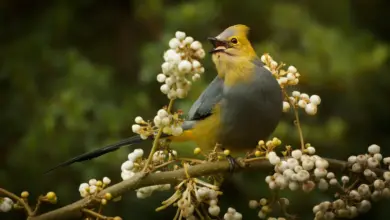
The Streaked flycatcher ( Myiodynastes Maculatus ) is an attractive and widely distributed member of the family of tyrant fliers, and it’s known for its vibrant plumage and active insect-hunting behaviour. This medium-sized bird is found in a wide range of subtropical and tropical habitats, from Mexico to Argentina. It is one of the most recognisable flycatchers. The Streaked Flycatcher is a bird that plays an important role in the ecology of forest edge environments and agroforestry. It’s known for its bright streaking, loud calls and flexible feeding strategies. Birdwatchers love this species for not only its beauty, but also its energetic presence and loud calls.
Habitat and Distribution of the Streaked Flycatcher
Streaked Flycatchers are one of the most geographically diverse Neotropical Flycatchers. The Streaked Flycatcher breeds in southern Mexico, Central America and Trinidad and Tobago. It then extends into South America and northern Argentina. The adaptability of the species has allowed it to persist in climates ranging from humid lowland forest to transitional habitats within subtropical zones. The southern subspecies of M. M. solitarius is a subspecies that migrates seasonally. Between March and September, these birds migrate northwards to Venezuela and the Guianas, a migration strongly influenced by both food availability as well as breeding cycles. The Streaked flycatcher is found in all parts of its range. It prefers forest edges, secondary vegetation, and open woodland. The species is often found in cocoa plantations, agricultural landscapes and other areas where tall trees make ideal perches. The species’ affinity for semi-open habitats makes it easy to see, especially in areas where forests and cultivated land meet.

Physical Description and Identifying Features
The Streaked Flycatcher measures approximately 22 centimetres and weighs 43 grams. The thick, black bill of the Streaked Flycatcher immediately sets it apart from other, smaller flycatcher species. Its common name is due to the intricate pattern of its plumage. The brown head of the bird has a hidden patch of yellow on top. This characteristic is only visible when it raises its crown. The white supercilium or stripe that appears above the eye creates an interesting contrast to the dusky eye mask. This gives the bird a bold expression. The brown upperparts have darker streaks across the back, which enhances its ability to camouflage among branches. The wings have a mixture of white and rufous edges. While the tail and rump feature large chestnut margins, they are visible when flying. The underparts of the flycatcher are yellowish white and decorated with brown streaks. This pattern complements that on its upper body. The males and females are remarkably similar, a trait shared by many flycatcher species. However, juveniles tend towards a browner colouration, as opposed to the near-black shades of adults. The M. The M.


Breeding Behaviour and Nesting Habits
The breeding season of the Streaked Flycatcher is a display of both a diligent nest-building process and loving parental care. The female is responsible for building the nest. It is usually an open cup constructed of grasses, twigs and other plant material. Streaked Flycatchers nest in tree hollows, unlike many other birds that nest on branches and foliage. In some places, they nest within bromeliads to take advantage of their protective architecture. The female will then lay two or three eggs of creamy white, delicately marked by reddish brown spots. The female is responsible for the incubation of these eggs, which takes 16-17 days. Both male and female parents are responsible for feeding the chicks after hatching. In this stage, the chicks eat mainly protein-rich insects that are essential to their rapid growth. Before they leave the nest, chicks stay in it for 18 to 21 days. Even after they leave the nest, they may continue to be cared for by their parents until they can feed themselves independently. The close relationship between parents and offspring is a sign of the species’ commitment to its survival. According to Bug Guide, this species is well documented.
Feeding and Dietary Strategies for the Streaked Flycatcher
Streaked Flycatchers have a varied and opportunistic food diet that allows them to adapt well within different ecological zones. It eats large insects, such as beetles and grasshoppers. The species’ carnivorous versatility gives it an important ecological function as a controller for insect populations. Fruit is a large part of their diet during winter, particularly for the southern subspecies that migrates. This shift in diet not only helps the bird meet its nutritional requirements, but it also allows the Streaked Flycatcher to act as a seed-disperser within forest ecosystems. The Streaked Flycatcher is known for its “sallying” feeding technique. From a perch high up, usually on a tree branch or atop a tall tree, the bird will survey its surroundings and then launch outwards to catch flying insects in mid-air. The Streaked Flycatcher uses a similar aerial hunting technique to many other tyrant fliers, but it is more dramatic due to the larger size of this species and its powerful wings. The bird uses its precision to pluck fruits and berries from the tree. This shows its ability to adapt to seasonal resources. According to iNaturalist, this species is well documented.
Calls, Vocalisations and Calls of the Streaked Flycatcher
Streaked Flycatchers have a vocal repertoire that is as distinct as their plumage. This makes it easy to identify, even when they are not visible. The Streaked Flycatcher is an extremely loud and conspicuous species. It’s call, described as “sqEEE zip”, is loud and ringing and echoes through open woodlands and forest edges. This two-part, sharp vocalisation serves multiple purposes, including territorial communication, mate attracting, and alerting birds nearby of its presence. The call is loud and carries over a long distance, helping birdwatchers to locate the species in dense vegetation. Streaked Flycatchers use a variety of sounds, including chirps and whistles, to communicate with their mates and fledglings. Its vocal behaviour increases during the breeding season, when protecting nesting sites is a priority. The Streaked Flycatcher is a vocal bird that contributes to the vibrant acoustic environment in Neotropical forests.

The Ecological Importance and Conservation Outlook
The Streaked Flycatcher is vital to maintaining healthy forest edge ecosystems. It plays an important role in controlling insect populations and dispersing seeds. The species’ preference for semi-open environments, such as cocoa plantations and human-modified habitats, indicates that it has adapted to moderate habitat change. The Streaked Flycatcher, unlike many other birds that are sensitive to deforestatio,n thrives best in fragmented landscapes with tall trees for nesting and perching. Adaptability is a key factor in the species’ ability to maintain stable populations throughout its range. Nevertheless, the loss of natural forest and increased agricultural intensification continue to pose threats in some regions. The Streaked Flycatcher is not endangered at this time, but it relies heavily upon the availability of nesting cavities and perches. This means that long-term conservation will require sustainable agroforestry and the preservation of mixed forest habitats. For breeding success to last, it is important to protect tree hollows.
Conclusion
Streaked Flycatchers are a striking species that is ecologically and visually important throughout the Neotropics. The Streaked Flycatcher’s striking streaking, energetic behaviour and distinctive calls are what make it so popular among birdwatchers. Its adaptability and widespread distribution also highlight its resilience to a changing environment. This bird is a living example of the vitality that tropical ecosystems possess. It can be seen perched on a branch waiting for insects, calling out loudly in a forest, or caring for its nestlings. Understanding the habits, habitats and life cycle of this species not only increases appreciation for the species but also highlights the interconnectedness of the ecosystems it inhabits. The Streaked Flycatcher is a fascinating subject for anyone who has an interest in tropical wildlife or biodiversity conservation.