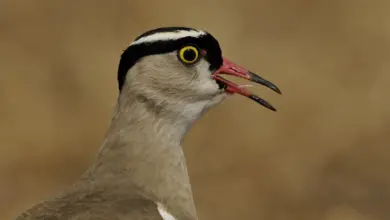
The Spotted Kestrel is also known as the Moluccan Kestrel. It can be found in some of the most diverse ecologies of Australasia and Indomalaya. The Spotted Kestrel is a predator that thrives in both natural and man-made environments. It’s known for its sharp hunting instincts and agility. This species is not as well-known as the Common Kestrel and the American Kestrel, but it has a significant ecological impact in the islands and landscapes of Wallacea. A biogeographical region renowned for the unique mix of Asian and Australasian fauna. The Spotted Kestrel is a bird that prefers open, tree-covered areas, but can adapt to logging road edges, village edges and partly degraded habitats. This trait has allowed it to survive in dynamic ecosystems.


Evolutionary Background, Taxonomy and Naming
The Spotted Kestrel is a member of the Falco genus, which includes other raptors such as kestrels and falcons. They are known for their agility and speed. The Falco Moluccensis refers to the Moluccan Islands as one of the main regions where this species is found. The Spotted Kestrel is related to several other kestrels in the Indo-Pacific, but it has distinct characteristics that set it apart from them. The plumage of the Spotted Kestrel, its habitat preferences and hunting habits are all influenced by Wallacean ecology, a region formed by deep ocean trenches and ancient climate changes. These evolutionary processes contributed to the evolution of species such as the Spotted Kestrel. It exhibits adaptations that are suited to tropical, forest edge, and grassland habitats.
Distribution in Australasia, Indomalaya and Wallacea
The distribution of the Spotted Kestrel is the largest among the small falcons found in the Indo-Pacific. The Spotted Kestrel is found throughout Australasia and Indomalaya. It also occurs in a large part of Wallacea, a transitional area that includes islands located between the Asian continental shelf and the Australian continental shelf. The species’ unique distribution allows it to adapt to many different environmental conditions, from coastal plains to highland forest and from savannas or fragmented woodlands. Wallacea is known as a patchwork of islands, including Sulawesi and the Moluccas. It also includes Lombok, Timor and Flores. Many of these islands support a healthy Spotted Kestrel population. This bird’s existence in these biogeographical areas is a testament to its adaptability, as it can thrive in varying climates and vegetation. The Spotted Kestrel is a constant presence in its entire range, whether it’s living on the edge of a forest or in a settled agricultural landscape.
Preferred habitat in Grasslands
The classic habitat of the Spotted Kestrel is open grassland with scattered trees. It also includes lightly wooded areas, such as cultivation zones and the border where primary forest meets the open land. These habitats offer a mix of perches for hunting, open areas for spotting the prey and sheltered edges to nest and roost. It is attracted to habitats with tall savanna grasses or savanna terrains. The species’ habitat preferences are similar to those of other kestrels, who rely on semiopen spaces for their hunting style, hovering, perching and swooping vertically down to catch prey. These habitats offer visibility and airflow, which support the kestrel’s wind-hovering style.
Adaptation of Disturbed and Human-Influenced Environments
The ability of the Spotted Kestrel to exploit landscapes that have been modified by humans is one of its most distinctive traits. The Spotted Kestrel is often found along roads where forest clearings create temporary open spaces that are rich in insect life. These roads cut through dense forests, providing a corridor for the kestrel, allowing it to perch and survey vast areas. It also enters clearings in forested areas. This is especially true where the vegetation has been thinned out by human activity or natural events. The Spotted Kestrel also inhabits areas near rural gardens and small towns where open spaces attract small prey and lizards. This flexibility contrasts with habitat-specific raptors and shows the kestrel’s ability to coexist with growing human settlements. This adaptability is likely to be a factor in its stable population in many areas of its range. According to iNaturalist, this species is well documented.
Physical description and identifying features
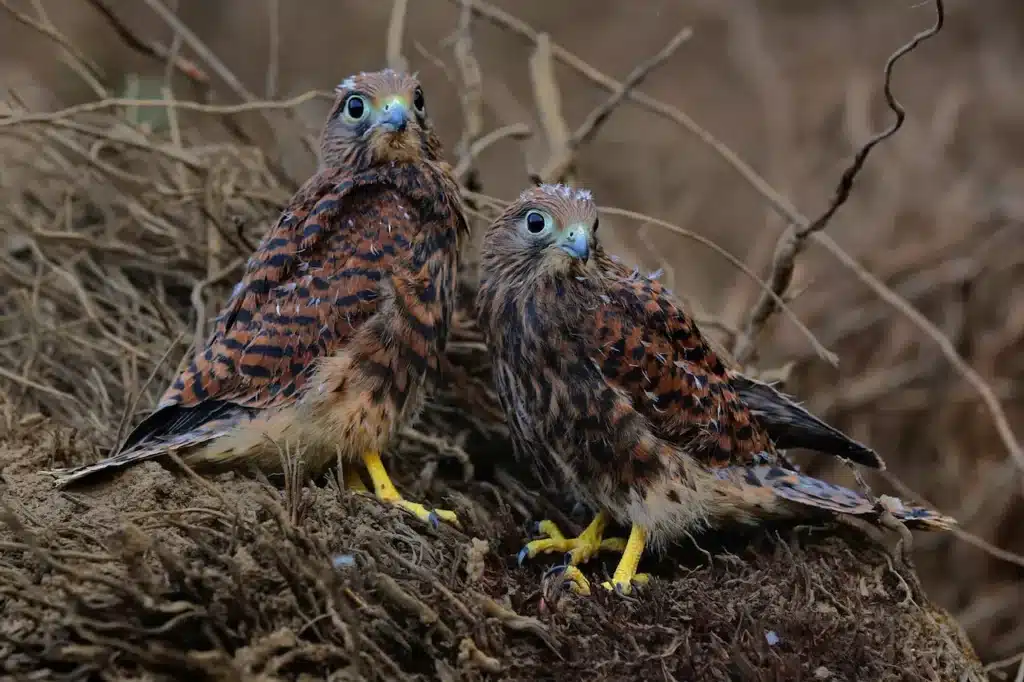
The Spotted Kestrel’s appearance varies slightly depending on where it lives, but the species has a classic kestrel shape. It is a medium-sized bird with long, pointed wings and a long, sharp beak. Its plumage is usually brown with dark spots on the wings and the back. This is what gives it its name. The ventral side can display lighter colours with spots or streaks, depending on the age and location. The head is often adorned with subtle facial patterns that are typical of kestrels. These patterns, however, are less prominent than those of some of their relatives. The kestrel is easily identifiable due to its compact size, hovering behaviour, and preference of perches like utility poles and tree branches. The juveniles tend to have more patterns than the adults, which helps them blend in with grassy areas. According to Bug Guide, this species is well documented.
Daily Behaviour and Activity Patterns
The Spotted Kestrel exhibits a variety of behaviours that are typical of small falcons. These include active hunting throughout the day, territorial perching and frequent hovering over open ground. The Spotted Kestrel is a diurnal bird, peaking in activity at dawn and dusk when the prey are most active. Individuals will often sit quietly and scan for movements before attacking. Often observed alone, this species can also be seen in loose pairs. This is especially true during the breeding season and in areas where prey is plentiful. The flight of the kestrel is marked by its agile wingbeats and gliding periods, as well as its ability to hover in mid-air and search for prey. This behaviour is unique and classic. It can pinpoint small mammals even in dense undergrowth or tall grass using this hovering technique.
Diet and Hunting Techniques
The Spotted Kestrel is a diverse predator that feeds on small mammals, birds, lizards and insects. It contributes to the ecosystem balance in its entire range. The diet of the Spotted Kestrel is mainly composed of rodents that it hunts in fields and grasslands. It also includes small birds, especially those found at forest edges, and ground-dwelling animals. Skinks and other lizards are a large part of the diet, particularly on islands with a high reptile population. Insects such as grasshoppers and beetles provide essential protein for breeding and juvenile development. In order to hunt, the kestrel uses a combination of perching and hovering. It will often scan the ground before swooping down with precision. Its ability to adapt its diet allows it to survive in tropical areas where prey availability is subject to seasonal variations.
Breeding Behaviour & Nesting Ecology
Although detailed studies of the Spotted Kestrel’s breeding behaviour are few compared to those of other kestrels, the observations available suggest patterns that are consistent with the Falco family. When nesting sites are limited, the kestrels nest in tree crevices or man-made structures, such as buildings or utility installations. The pair bonds are strong, especially during breeding season when males feed the females and chicks. Nesting takes place during times of abundant prey, which can vary geographically in its vast range. Both parents are involved in the feeding and defence of their brood. The chicks are very fast-growing, requiring constant supplies of insects and other small vertebrates. They fledge within a few weeks. Early flight training involves learning to hunt and follow the adults.
Ecological Importance of Grassland Ecosystems and Forest-Edge Ecologies
The Spotted Kestrel plays a crucial role in maintaining the ecological balance of grasslands, savannas and forest edges in its range. It helps control populations by feeding on insects and rodents. This is especially true in agricultural areas. Predation of small birds and reptiles by the Spotted Kestrel contributes to natural dynamics in prey communities. The Spotted Kestrel is a species that can adapt to changing landscapes and survive. It’s a good indicator of ecosystem health. The areas that support kestrels often have a healthy prey base, enough open space, and adequate perching sites. Their presence helps to stabilise food webs in areas under pressure from agricultural development and deforestation.

Conservation Status & Threats
The Spotted Kestrel’s range is so large that it cannot be classified as endangered. This is largely because of its ability to adapt to different habitats and also its wide geographic distribution. Like many other birds that depend on the open spaces adjacent to forests, this bird faces challenges such as habitat degradation, pesticides, and land conversion. The quality of the open grassland habitat could decline as urbanisation and agricultural practices increase. Logging activities, which benefit the species through clearings, can also remove older trees that are vital to nesting. Conservation monitoring is necessary to ensure populations are stable and threats like deforestation and chemical pollution do not negatively impact the kestrel.
Conclusion
The Spotted Kestrel, a falcon with a high ecological value and resilience, thrives in some of Australasia’s most biodiverse regions. This versatile predator can adapt to a wide range of environments, from grasslands with scattered trees to village edges and forest clearings. The spotted kestrel’s diverse diet and habitat preferences, along with its hunting strategies and behaviour, make it a valuable contributor to the local ecosystems. Understanding and appreciating species such as the Spotted Kestrel is important to conservation efforts and ecological awareness, especially in an era when human activity continues shaping the natural world. The Spotted Kestrel is a small yet fascinating raptor that boasts a distinctive appearance and plays a vital role in its ecosystem.