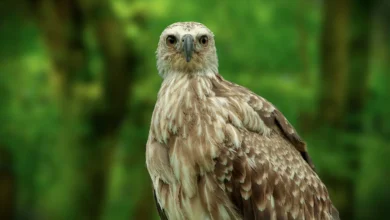
The Small Sparrowhawk (Accipiter nanus) is a diminutive but captivating bird of prey native to the Indonesian archipelago. Known also as the Sulawesi Dwarf Sparrowhawk or Celebes Little Sparrowhawk, this raptor is a specialist of montane and hilly forests, where it quietly patrols the forest canopy in search of prey. Despite its small size and elusive nature, the Small Sparrowhawk plays a crucial role in its ecosystem as a predator of insects and small vertebrates. However, ongoing habitat destruction poses a significant threat to its survival, making it a species of conservation concern. This article explores the biology, ecology, and conservation status of this fascinating bird, providing a detailed overview for nature enthusiasts, birdwatchers, and researchers alike.
Scientific Classification
The Small Sparrowhawk belongs to the genus Accipiter, a diverse group of birds commonly referred to as hawks or sparrowhawks. Its full scientific name is Accipiter nanus, with “nanus” aptly describing its small stature. This species is part of the family Accipitridae, which includes hawks, eagles, kites, and harriers. The genus Accipiter is characterized by birds adapted for agile flight through dense vegetation, with short, rounded wings and long tails to enhance maneuverability.
Within the genus, Accipiter nanus is distinguished by its unique habitat preferences and morphological features. It shares taxonomic ties with other Southeast Asian sparrowhawks but is geographically isolated on the islands of Sulawesi and Buton in Indonesia. Taxonomically, the Small Sparrowhawk is sometimes confused with other small raptors in the region, yet it maintains distinct plumage and behavioral traits that set it apart. Its classification reflects its evolutionary adaptation to a specialized niche within montane forest ecosystems.


Geographic Range & Distribution
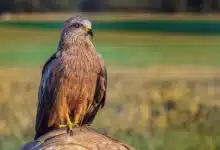
The Small Sparrowhawk is endemic to Indonesia, primarily inhabiting the island of Sulawesi and the smaller adjacent island of Buton. This limited range is notable for its specificity; the species is absent from the southwestern parts of Sulawesi, favoring instead the central and northern montane regions. Its elevational range extends from approximately 550 meters (1,800 feet) up to 2,000 meters (6,600 feet), where it occupies dense montane and hilly forest habitats.
Within this relatively narrow distribution, the Small Sparrowhawk is a resident species, meaning it does not undertake significant migrations. It remains within its home range year-round, which underscores the importance of stable forest environments for its survival. The bird is most frequently recorded in protected areas such as Lore Lindu National Park in central Sulawesi, one of the few remaining tracts of intact montane forest on the island. However, the species’ overall distribution is patchy and fragmented, primarily due to ongoing deforestation driven by agricultural expansion, logging, and human settlement.
Physical Description
The Small Sparrowhawk is a compact raptor measuring between 23 and 28 centimeters (9 to 11 inches) in total length, including the tail. This size places it among the smallest members of the genus Accipiter. Males and females are similar in appearance, though females are generally slightly larger, a common trait among birds of prey. Weights are modest, typically ranging from 90 to 130 grams (3.2 to 4.6 ounces).
Its plumage is distinctive: the upperparts are a uniform lead-grey, providing excellent camouflage among shaded forest canopies. The underparts display a warm reddish hue that fades to white toward the abdomen, with the thighs distinctly white. This coloration helps break up the bird’s outline when viewed from below. The toes are notably long, an adaptation that may aid in grasping small, agile prey. The wings are short and rounded, enhancing maneuverability in dense foliage, while the tail is relatively long and barred, assisting in precise aerial control during pursuit.
The Small Sparrowhawk’s eyes are sharp and yellow, providing keen vision for spotting prey among the complex forest environment. Its beak is hooked and powerful relative to its size, perfectly adapted for tearing flesh. Overall, this bird’s morphology reflects its niche as a stealthy, agile predator in montane forests.
Behavior & Diet
The Small Sparrowhawk is a solitary hunter, most often observed alone, though pairs may occasionally be seen, particularly during the breeding season. It exhibits a secretive nature, often remaining concealed within dense canopy layers. Its flight is characterized by rapid, agile bursts interspersed with brief glides, allowing it to navigate through thick vegetation with remarkable speed and precision.
Dietarily, the Small Sparrowhawk is a versatile predator with a preference for insects and small vertebrates. Its primary prey includes larger insects such as grasshoppers, cicadas, and beetles, which it often captures by diving swiftly toward the ground or snatching them from foliage. This hunting technique involves a rapid stoop from a perch, followed by a quick grab before the prey can escape. The bird also occasionally preys on snails and small birds, demonstrating opportunistic feeding behavior.
The Small Sparrowhawk’s long toes and sharp talons are well-suited for capturing and handling a variety of prey types. Unlike larger hawks that may rely more heavily on mammals or larger birds, this species exploits the abundant insect fauna of its montane habitats, playing an important role in controlling insect populations. Its hunting strategy and prey choices reflect an adaptation to the specific ecological conditions of Sulawesi’s mountainous forests.
Breeding & Reproduction
Information on the breeding habits of the Small Sparrowhawk is limited due to its elusive nature and the difficulty of studying birds in dense montane forests. However, available observations indicate that the species constructs platform nests, typically positioned high in the forks of trees. These nests are made from sticks and lined with softer materials such as leaves and moss, providing a secure site for raising young. According to Cornell Lab of Ornithology, this species is well documented.
Breeding appears to be seasonal but not strictly tied to a particular month, likely influenced by local climatic conditions and food availability. Pairs are believed to be monogamous during the breeding season, with both parents participating in raising the chicks. Clutch size is small, generally comprising two to three eggs, which are incubated for several weeks before hatching. According to eBird, this species is well documented.
Once hatched, the chicks remain in the nest for an extended period, dependent on parental care and feeding. Fledging success is closely linked to the availability of prey and the integrity of forest habitats. Given the species’ limited range and specialized nesting requirements, habitat disturbance poses a significant challenge for reproductive success, emphasizing the need for continued conservation efforts.
Conservation Status
The Small Sparrowhawk is currently classified as Near Threatened on the International Union for Conservation of Nature (IUCN) Red List. This status reflects the species’ restricted range, small population size, and ongoing threats from habitat loss. The primary driver of population decline is deforestation linked to logging, agricultural encroachment, and infrastructure development in Sulawesi and Buton.
Despite being recorded in protected areas such as Lore Lindu National Park, the Small Sparrowhawk’s habitat outside these reserves continues to shrink, leading to fragmentation and degradation of suitable environments. This fragmentation can isolate populations, reducing genetic diversity and increasing vulnerability to environmental changes. Moreover, the species’ reliance on montane forests at specific elevations limits its ability to adapt to habitat shifts.
Conservation efforts focus on habitat protection and management, as well as further research to better understand the bird’s ecology and population trends. Raising awareness among local communities and integrating conservation into land-use planning are crucial for ensuring the Small Sparrowhawk’s long-term survival. The species serves as an important indicator of montane forest health in Sulawesi, underscoring the broader significance of preserving these unique ecosystems.
Interesting Facts
One fascinating aspect of the Small Sparrowhawk is its remarkable agility, which allows it to dart through dense forest understory with precision that rivals larger raptors in more open environments. Its small size and quick flight make it a challenging subject for birdwatchers and wildlife photographers, who prize glimpses of this elusive bird.
Unlike many hawks that primarily hunt birds or mammals, the Small Sparrowhawk’s diet is heavily insectivorous, showcasing an unusual ecological niche among accipiters. This dietary preference contributes to its role in controlling insect populations, which can have cascading effects on forest health.
Another point of interest is its vocalization, which consists of high-pitched, rapid calls often heard but rarely seen. These calls are believed to play a role in territory defense and communication between mates. The species’ secretive nature and limited vocalizations add to its mystique, making it a sought-after species for ornithologists studying Sulawesi’s avifauna.
Finally, the Small Sparrowhawk’s survival is tightly linked to the health of montane forests in Sulawesi, many of which harbor a remarkable diversity of endemic species. Protecting this raptor helps conserve an entire community of plants and animals unique to this island ecosystem.
In conclusion, the Small Sparrowhawk (Accipiter nanus) is a small yet ecologically significant raptor endemic to the montane forests of Sulawesi and Buton in Indonesia. Its specialized adaptations, insectivorous diet, and elusive behavior make it a unique subject of study among Southeast Asian birds of prey. Despite facing threats from habitat loss, ongoing conservation efforts offer hope for its future. Understanding and protecting this species contributes not only to preserving biodiversity but also to maintaining the delicate balance of montane forest ecosystems where it thrives.