The Slaty-backed Gull (Larus schistisagus) has a striking appearance and a fascinating migratory pattern that spans vast oceanic ranges and coastal areas. This powerful seabird, also known as the “Pacific Gull”, is native to the northwest Pacific region. However, its migrations during non-breeding seasons have taken it to many other coastlines in North America and East Asia. The Slaty-backed Gull is known for its distinctive “strings of pearls” pattern in flight and bright yellow eyes. It has also earned a reputation for being one of the most difficult gulls to recognise. This article provides a detailed overview of the Slaty-backed Gull, including its appearance, behaviour and habitat. It also discusses conservation issues.
Physical Characteristics at a Glance
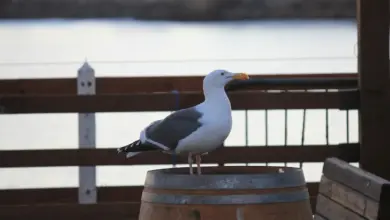
The Slaty-backed Gull is one of the largest gulls. It has a strong and durable body that makes it ideal for living along coastal cliffs and offshore islands as well as in vast open water. It is often compared with the Western Gull or Glaucous-winged Gull. Both are similar in colouration and structure. The Slaty-backed Gull is easily identifiable by its unique features.
Adults have a white tail, head and underparts that contrast with their dark slaty grey back and wings, a shade darker than the Western Gull. The contrast between the dark and light feathers gives it a clean, sharp look, particularly in bright sunlight. The wide white trailing edge on the wings is perhaps its most distinguishing feature. This bold marking is visible when the bird perches and is in flight. “strings of pearls”, a series of small white spots on the undersides of the flight feathers, adds to the visual appeal. The pattern is more noticeable when the gull flies overhead. It is a good field mark to identify.


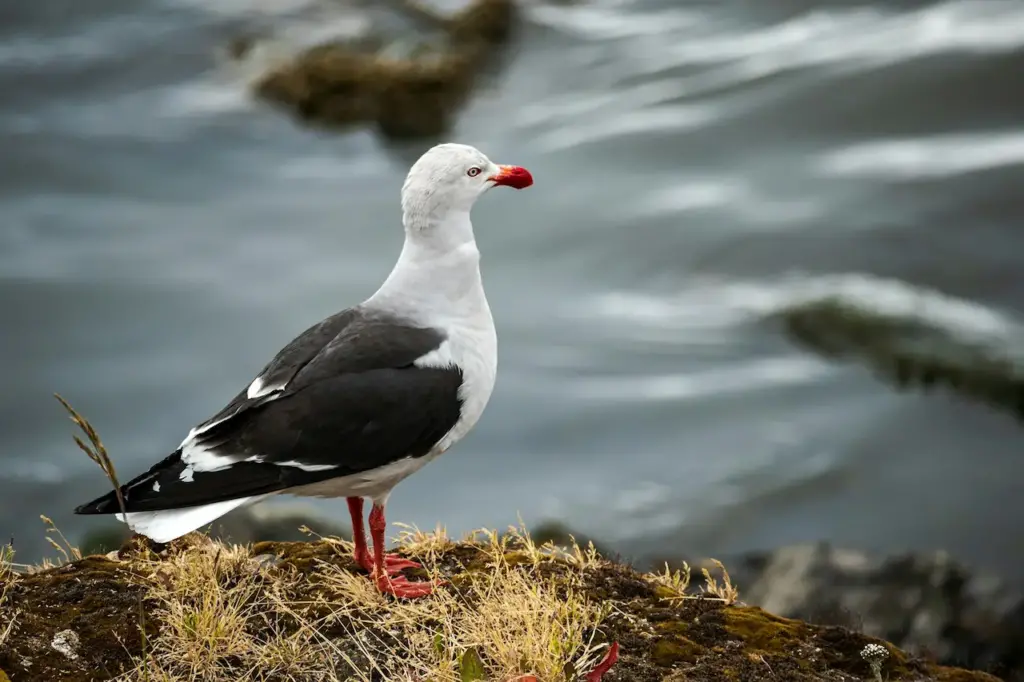
Its feet are pink, and its legs are relatively short. This gives it a compact appearance than other large seagulls. The is yellow, with an orange-red subterminal. This bill is characteristic of most gulls. However, the bright yellow eyes and white face make it more noticeable. The bird’s broad wings and barrel chest give it a strong appearance in flight.
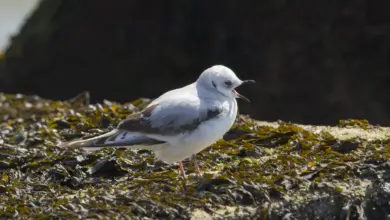
Juvenile Slaty-backed Gulls have a brown mottled plumage that is similar to the immature Great Blackback Gulls but generally paler. The gradual moulting and evolution of plumage over a period of four years make it difficult for young birds to be distinguished from other large, immature gulls. This adds to the excitement among gull lovers around the world.
The Wide-Roaming Seabird: Range and Distribution
Slaty-backed Gulls are restricted to the coasts of northeastern Asia. This includes the Russian Far East, including the Kamchatka Peninsula and the Kuril Islands. It also includes western coastal Alaska. These areas, with their rugged coastlines, remote islands and cold waters, are ideal breeding habitats. They also have minimal human disturbances and an abundance of marine resources.
During the season of non-breeding, the Slaty-backed Gull travels along the coasts and across the Pacific. Wintering in Japan, South Korea and Taiwan has been recorded. It continues to surprise birds by occasionally appearing along the Pacific Coast of the United States and Canada. There are also records in Atlantic Canada and Great Lakes.
This unexpected movement has led to increased documentation of the species beyond its traditional range. Particularly as birdwatchers’ identification skills have improved and high-quality photos are becoming more available. The Slaty-backed Gull is still a prized bird among North American birders because of its rarity, and the difficulty in identifying it among other gulls that look similar.
Habitat and Nesting Behaviour
Slaty-backed Gulls are a coastal species. They can be found in rocky shorelines and offshore islands. It nests in large colonies on rugged cliffs and remote islands, often with other seabirds such as cormorants or kittiwakes. These places offer protection from terrestrial predators, as well as proximity to food such as crustaceans, fish and marine invertebrates.
Nests are usually a shallow bowl made of seaweed and feathers. They can be built on flat rocks or ledges. Both parents are involved in nest construction, incubation and chick rearing. The clutches usually contain 2 to 3 eggs. After several weeks the young leave their nest, but remain dependent on their parents for a while after.
Slaty-backed Gull can adapt easily, outside of the breeding period, to altered environments. This includes landfills and fishing boats. They also scavenge food on urban waterfronts . Their adaptability and strength, combined with their intelligence and physical strength, allow them to take advantage of a variety of food and habitats when they migrate and during the winter.
Food and Eating Habits
The Slaty-backed Gull, like most large gulls, is an opportunistic omnivore. It feeds on a wide range of food depending on the availability. It is a skilled scavenger as well as a skilful forager.
It feeds in coastal environments on fish and molluscs. Crabs are also common. Squid is another popular prey. The gull may follow fishing boats and take advantage of bycatch or scraps that are thrown overboard. Its sharp vision and strong flight help the gull find food over vast expanses of water.
Slaty-backed Gull is often seen in urban areas, rummaging around garbage dumps and harbours to feed on organic waste, dead fish and food scraps. In winter, when prey is scarce, this scavenging behaviour is crucial to their survival. In addition, they are known to steal chicks and eggs from nesting seabirds. This highlights their dual role of predator and scavenger within the ecosystems that they inhabit.
Confusion with similar species
Even experienced birders may have difficulty identifying the Slaty-backed Gull due to its similarity to other large dark-backed gulls, such as the Western Gull. The range of these species overlaps, particularly during the winter months, and they share many plumage characteristics. According to RSPB, this species is well documented.
The Slaty-backed Gull can be identified by its slate-colored back, white trailing edge on the wings, pearl-like string under the wing and pink short legs. This species is also distinguished by its behaviour and posture. It has a high chest, a rounded appearance, and short legs. The contrasting patterns in its plumage are even more helpful when observed in flight. According to BirdLife International, this species is well documented.
Conservation Status and Concerns
Currently, the Slaty-backed Gull is not classified as a globally threatened species. Its population seems to be stable throughout its range. It can adapt to a variety of habitats, including those affected by human activity. It is classified as Less Concern, thanks to its wide distribution and diverse diet.
The Slaty-backed Gull is also threatened by localised threats.
-
Disturbance in breeding colonies caused by increased human activity (fishing, tourism, etc.)
-
Pollution – Especially plastic waste and oil spills, which contaminate coastal feeding zones
-
Ingestion of marine debris and entanglement in fishing gear
-
Habitat Loss Due to coastal development and climate-related changes in sea level
The Slaty-backed Gull population dynamics and movement are becoming more important in the light of Climate Change, and its impact on marine ecosystems. This species is a good indicator of the health of coastal ecosystems, and any changes in its abundance or distribution could indicate broader environmental shifts.

Fascination Among Birders
Birders in North America and Asia are particularly fond of the Slaty-backed Gull. The Slaty-backed Gull is a “lifer” that is highly sought after by gull watchers in the winter due to its rarity. Sightings of Slaty-backed Gull in places such as California, British Columbia and the Northeastern U.S. often cause a lot of interest and even twitching.
A Slaty-backed Gull is difficult to identify due to its complexity and the presence of hybrids. It requires not only keen eyes, but also familiarity of gull plumage at all ages.
Classes and seasons. This has made the species one of the most popular targets for winter gull watching excursions.
Final Thoughts
Slaty-backed Gulls ( Larus schistisagus ), a fascinating and formidable seabird, is a species that stands out amongst the gulls of the world for its impressive size, wide range, and distinctive marks. Its powerful build, elegant patterns on its wings, and ability to adapt to both urban and natural environments allow it to continue to grow, surprise birders and thrive throughout the Pacific Rim.
Understanding and protecting species such as the Slaty Back Gull is more important than ever. This Pacific giant, whether it’s soaring over a Japanese fishing port, scavenging on the Alaskan coastline, or thrilling birders in California during a cold winter, reminds us of the interconnectedness between our oceans and coasts.