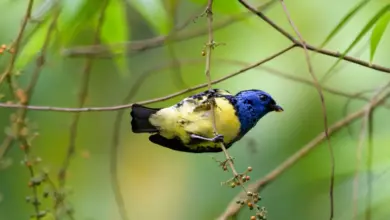
The Short-billed Pigeon, Patagioenas nigrirostris, is a striking bird species native to the tropical forests of Central and parts of South America. Known for its rich, wine-colored plumage and distinctive vocalizations, this pigeon plays an integral role in its ecosystem, particularly in seed dispersal. Despite its somewhat understated name, the Short-billed Pigeon is a fascinating subject for birdwatchers and nature enthusiasts alike, offering a glimpse into the diversity and complexity of Neotropical avifauna.
Scientific Classification
The Short-billed Pigeon belongs to the family Columbidae, which encompasses pigeons and doves. Its scientific name is Patagioenas nigrirostris, placing it within the genus Patagioenas, a group that includes several species of pigeons found throughout the Americas. The genus name stems from Greek roots meaning “to clothe” and “young,” referring to the plumage characteristics typical of these birds. The species name nigrirostris translates to “black-billed,” highlighting one of the pigeon’s defining features.
First described scientifically by George Newbold Lawrence in 1868, the Short-billed Pigeon was once grouped with the widespread band-tailed pigeon complex but has since been recognized as a distinct species based on morphological and vocal differences. It is closely related to other pigeons in the genus, including the Ruddy Pigeon (Patagioenas subvinacea), which replaces it at higher elevations. Understanding its taxonomic position helps clarify its evolutionary relationships and ecological niche within Neotropical forests.






Geographic Range & Distribution
The Short-billed Pigeon inhabits a relatively narrow band of tropical lowland forests stretching from southern Mexico through Central America to northwestern Colombia. Its range includes countries such as Guatemala, Honduras, Nicaragua, Costa Rica, Panama, and extends into Colombia’s Chocó region. This distribution is primarily confined to humid forest ecosystems, often favoring the canopy layer of lowland rainforests and semi-open woodland areas.
Unlike many other pigeon species that occupy a broad range of altitudes, the Short-billed Pigeon is typically found at elevations below 1,000 meters. At higher altitudes, its ecological role is taken over by the Ruddy Pigeon, which shares many physical traits but is adapted to montane habitats. The species’ preference for lowland forest canopy means that it is often elusive and difficult to observe, as it tends to stay high in the treetops where it feeds and nests.
Within its range, the Short-billed Pigeon is mostly resident, with no significant migratory behavior observed. However, local movements may occur in search of fruiting trees or during seasonal changes in food availability. Its presence is an important indicator of healthy forest ecosystems, as it relies on intact habitats for feeding and breeding.
Physical Description
The Short-billed Pigeon is a medium-sized pigeon, measuring approximately 26.5 centimeters (about 10.4 inches) in length and weighing around 150 grams (5.3 ounces). It is notable for its rich, wine-purple plumage that covers the head, neck, and upper breast, gradually transitioning to a browner olive tone on the back and belly. This smooth, unpatterned coloration gives the bird a sleek, elegant appearance.
The tail and primary flight feathers are a contrasting blackish color, providing a subtle but distinct visual break from the more colorful body plumage. The species’ name reflects its relatively short, stout bill, which is black and well-suited to its frugivorous diet. The legs and eyes exhibit a striking purple-red hue, a feature that enhances the bird’s overall vivid look in the dappled forest light.
Sexual dimorphism is subtle but present; females tend to be slightly duller and browner than males, lacking some of the deep purple tones. Juvenile Short-billed Pigeons display a different plumage, with a greyish-brown head, neck, and breast, accompanied by cinnamon scaling on the head and upperparts, which helps them blend into the forest canopy while they mature. These visual differences are helpful for birdwatchers seeking to identify age and sex in the field.
Behavior & Diet
The Short-billed Pigeon is typically observed in pairs or small groups, often moving quietly through the forest canopy. It is generally a shy and elusive bird, preferring to forage high in the treetops where it feeds primarily on a variety of fruits and berries. One of its favored food sources is mistletoe, a parasitic plant that produces fleshy berries rich in nutrients. By consuming these fruits, the pigeon plays a vital role in seed dispersal, helping maintain the diversity and regeneration of tropical forests.
Aside from mistletoe, the diet of the Short-billed Pigeon includes a range of small fruits, berries, and occasionally seeds. It has also been observed on forest tracks and roadsides, where it may seek out grit and small invertebrates to aid digestion, a behavior common among many pigeon species. This grit helps grind up food in the bird’s gizzard, facilitating nutrient absorption.
Its vocalizations are distinctive and often heard before the bird is seen. The Short-billed Pigeon produces a loud, resonant call described as a “cu-COO k’-COO,” which serves to communicate between mates and establish territory. The call can carry through dense forest, making it an important tool for locating these otherwise well-camouflaged birds. According to Cornell Lab of Ornithology, this species is well documented.
Breeding & Reproduction
The breeding habits of the Short-billed Pigeon are closely tied to its forest environment. It builds a rudimentary platform nest from twigs, typically placed high in a tree or amid dense vines, usually between 5 and 30 meters above the ground. The elevated nesting sites provide protection from many ground-based predators and allow the birds to remain relatively concealed. According to BirdLife International, this species is well documented.
Unlike some bird species that lay large clutches, the Short-billed Pigeon typically lays a single white egg per breeding attempt. Both parents share incubation duties, which last approximately 14 to 16 days until hatching. After hatching, the chick is fed a nutrient-rich “crop milk,” a secretion produced by both parents, which is a hallmark trait of pigeons and doves.
The nestling period lasts around two weeks, during which the young bird grows rapidly and develops the plumage necessary for fledging. Parental care continues after fledging, with the juvenile remaining dependent on adult birds for some time as it learns to forage independently. Breeding seasons may vary slightly depending on local climate and food availability but generally occur during periods when fruit is abundant, ensuring adequate nourishment for both adults and offspring.
Conservation Status
The Short-billed Pigeon is currently classified as Least Concern by the International Union for Conservation of Nature (IUCN). This status reflects its relatively wide distribution and presumed stable population throughout much of its range. However, like many forest-dependent species, it faces threats from habitat loss due to deforestation, agricultural expansion, and urban development, particularly in lowland tropical forests.
Although it is not considered globally threatened, local populations may decline where habitat destruction is severe or where hunting pressure exists. The species’ reliance on intact forest canopies makes it vulnerable to fragmentation, which can isolate populations and reduce genetic diversity over time. Conservation efforts aimed at preserving tropical forest habitats are therefore crucial for ensuring the long-term survival of the Short-billed Pigeon and countless other forest-dependent organisms.
Protected areas across its range, including national parks and reserves in Central and South America, provide important refuges. Continued monitoring of population trends and habitat quality is necessary to detect any future declines and to implement conservation strategies promptly.
Interesting Facts
One of the most fascinating aspects of the Short-billed Pigeon is its role as a seed disperser. By consuming fruits like mistletoe berries and later excreting the seeds in different locations, it contributes significantly to forest regeneration and plant diversity. This ecological service is vital in tropical ecosystems where diverse plant species depend on animals for dispersal.
Another intriguing feature is the bird’s vocal behavior. The loud “cu-COO k’-COO” call not only serves as a means of communication but also helps maintain pair bonds and territorial boundaries in dense forest environments where visual contact is limited. Experienced birdwatchers often identify the presence of the Short-billed Pigeon by this distinctive call alone.
Despite its name, the Short-billed Pigeon’s bill is robust and well-adapted for its diet, enabling it to handle various fruits and berries with ease. Additionally, the purple-red coloration of its eyes and legs is relatively uncommon among pigeons, adding to its unique appearance.
While less well-known than some of its relatives, the Short-billed Pigeon’s quiet presence and important ecological roles make it a species worth appreciating and protecting. Its reliance on healthy forest habitats also makes it an excellent indicator species for the overall health of lowland tropical ecosystems.
In conclusion, the Short-billed Pigeon (Patagioenas nigrirostris) is a captivating bird of the tropical lowland forests from southern Mexico to northwestern Colombia. With its distinctive plumage, unique calls, and important ecological functions, it exemplifies the rich biodiversity of Neotropical forests. Understanding its taxonomy, behavior, and conservation needs helps us appreciate the interconnectedness of forest life and the importance of preserving these habitats for future generations.