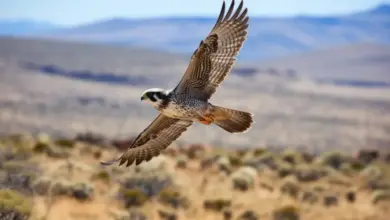
The Black-winged Kites (Elanus caeruleus) is a small bird of prey in the family Accipitridae which also includes many other diurnal raptors such as eagles, buzzards, and harriers.
This species was formerly referred to as the Black-shouldered Kite, but this name is now used for the Australian species, Elanus axillaris, at one time (along with the American White-tailed Kite E. leucurus) treated as a subspecies of E. caeruleus.
Description


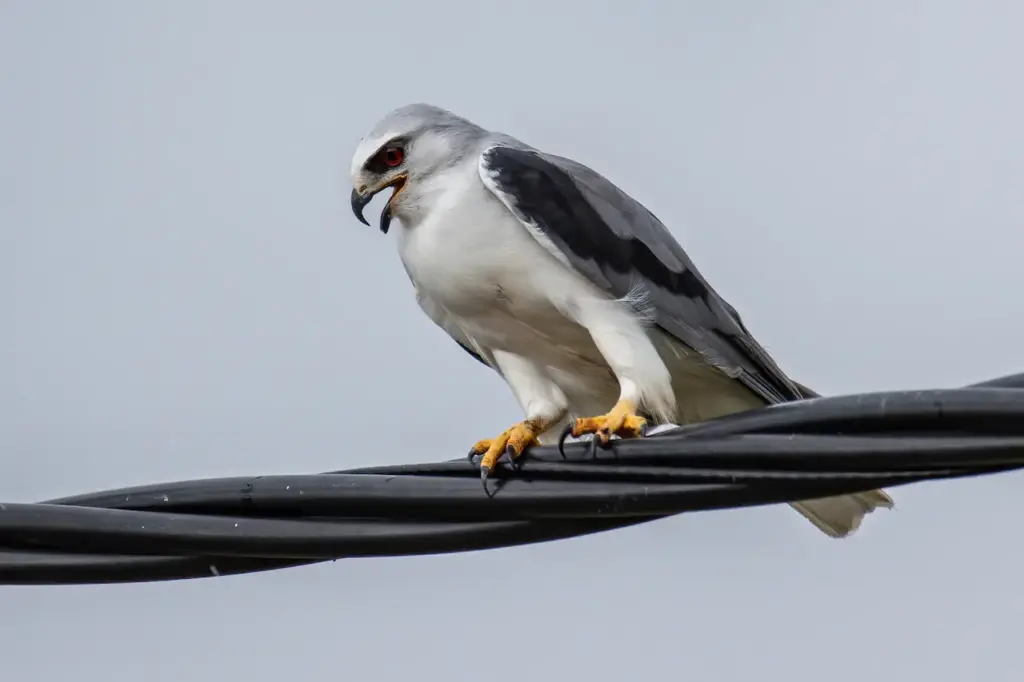
This bird is unmistakable. It has a white head with a black “mask”, and white underparts except for black tips to its narrow falcon-like wings. Upperparts are blue-grey except for black shoulder patches.
The Black-winged Kite tail is short and square, quite unlike the more familiar Milvus kites.
Habitat and Distribution
The Black-winged Kite is widely distributed, but in a patchy manner. The Black-winged Kite is widespread in sub-Saharan Africa and tropical Asia. It can also be found in southern Europe, including Spain and Portugal. It is found in a wide range of habitats and countries, including in mountainous regions. In some cases, it has been recorded at altitudes as high as 2000 meters in Sikkim. It is a resident of many places, but it can also move irruptively nomadic in response to the availability of prey.
Habitats that are preferred include open grasslands, savannas and lightly wooded areas, as well as semi-deserts and cultivated plains. These landscapes provide good visibility and allow for the presence of prey. It adapts well to the altered environments of humans, using farmland, road verges and pastures. Often perch on utility poles or wires as well as dead trees.
Some populations can move or grow locally during wetter seasons. This species is tolerant of habitat disturbance and may even benefit from it if human agriculture produces open landscapes.
Breeding and Nesting
Black-winged Kites build their nests in trees, often small or medium-sized ones. They also use palms. This is especially true in areas that overlook open fields with easy access to prey. This kite builds a flimsy and loose platform, unlike some raptors who build large nests. The nest is lined with dry grasses to cushion the eggs and nestlings. Nests are placed in the forks and crotches between tree branches where they can be seen but still have some protection.
Breeding time varies across the range. Breeding may take place in many areas of the tropical Asian and African range after rains, or when rodents (especially) are most abundant. Breeding may occur more regularly in the Palearctic fringe and often coincides with spring or early Summer. The clutch size ranges from three to four. The eggs are a pale colour with brown or red spots. Both parents incubate the eggs, but the female is more active while the male hunts to feed the nestlings and the bird that’s incubating. The incubation period lasts between thirty and thirty-five days.
The young develop quickly after hatching. After hatching, they develop flight feathers and gain strength. They fledge thirty to forty days after hatching. The juveniles continue to be dependent on their parents for a while after fledging. They will receive food as they learn how to hunt and navigate. If food is plentiful, some pairs in the range may have more than one brood per year. Once they reach adulthood, young birds can also move away from the area where they were born.
Food and Diet
The Black-winged Kite hunts opportunistically, eating small mammals, large insects, birds, lizards and, occasionally, frogs and snakes. Its feeding techniques are diverse. It uses a mixture of perching, scanning, hovering and swooping. According to iNaturalist, this species is well documented.
Its sign behaviour is hovering. The kite will hold its wings up or at an angle, facing the wind. This allows it to scan the ground for a few moments, almost motionless. It dives quickly down when it spots prey. It will also wait on a perch to catch prey as it moves near. According to Bug Guide, this species is well documented.
Kites are adapted for rodent populations that fluctuate. They can respond to a surge in prey by breeding more when there is plenty of food, expanding their range temporarily or moving to areas with prey. This flexibility is particularly valuable in agricultural regions. The species is often seen along the roadside, in fields or on edges, where the prisare more accessible.
Kites have excellent vision, which allows them to detect small movements below. When scanning, its flight is graceful and light. It then dives rapidly when attacking. Grasshoppers and crickets (large insects) are often taken during the dry season or when rodents become scarce. Prey birds are usually smaller and can be caught on the ground as well as in flight if disturbed by activity.
Vocal Behavior
The Black-winged Kite, while generally quiet and docile, does use a variety of oovocalisations in certain contexts. Outside of the breeding season, calls are usually weak or soft. Vocal activity increases during courtship and at the nest.
The calls can be soft whistles or high-pitched squeals. Nests may emit wailing “weep weep” or wailing whistles. Alarm calls are made when predators or other threats approach. They can be louder and more urgent. Soft, repeated calls such as “piiiuu” can be heard during aerial displays and in pairs interacting.
TherealsThere tionnon between family members or at communal roosts. These begging sounds are often less detailed, but they may be distinctive.
Conservation Status and Threats
It is currently not classified as endangered. The status of the Black-winged Kite in the world is Less Concern. The Black-winged Kite has a large population and a wide range. The term “least concern” does not necessarily mean that there are no concerns. There are still several factors and threats that could negatively affect the population, particularly in certain areas.
Habitat loss is a major threat. The expansion of agriculture, urbanisation, removal, pesticide pollution and land use changes all reduce the availability of prey and suitable perches and nesting sites. The nesting trees are of particular importance: if they are removed, kites may find it difficult to locate safe nesting trees.
Pesticides and rodent control techniques affect the prey base. When rodents and large insects are apopsoned or decimated in any other way, the food supply can drop, resulting in reduced reproductive success.
A disturbance in the breeding process is another risk. Nest abandonment can be caused by human disturbance, such as logging, clearing or frequent human presence, because nests are usually in exposed trees or perches. Birds that hunt near roads and fly low may collide with vehicles.
Conclusion
The Black-winged Kite has a quiet elegance and is capable of surprising adaptability. The Black-winged Kite is a raptor of quiet elegance and surprising adaptability. Its contrasted plumage, hovering skills, sharp eyes, opportunistic lifestyle, and ability to fly in the open countryside make it a fascinating bird. Although not globally threatened, the future of this bird is closely linked to that of open woodlands, grasslands and agricultural pastures. The persistence of the bird depends on whether there are enough nesting and prey opportunities.
The Black-winged Kites show us that conservation does not only mean preserving rainforests and endangered species, but it also means maintaining and valuing habitats in open areas, managing pesticides with care, conserving trees on working lands and respecting those who live and work in semi-arid and agricultural landscapes.
Take a moment next time you see a Black-winged Kite hovering over fields or perched in the sky, with its sharp mask, realise how important this sight is, not just for that scene but also for the overall balance of the land. The Black-winged Kite has more to offer than just a predatory bird. The Black-winged Kite is a symbol that nature can still be beautiful, even in the face of human changes.