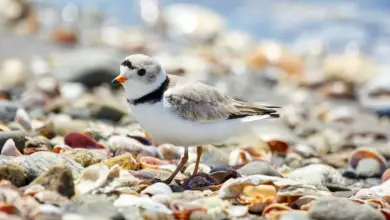
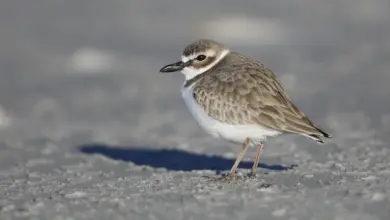
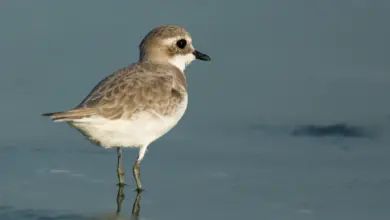
Its scientific name commemorates the French botanist Jean Baptiste Leschenault de la Tour.



The Greater Sand Plovers is one of the species to which the Agreement on the Conservation of African-Eurasian Migratory Waterbirds (AEWA) applies.
Description
This chunky plover is long-legged and thick-billed.
Breeding males have grey backs and white underparts. The breast, forehead, and nape are chestnut, and there is a black eye mask.
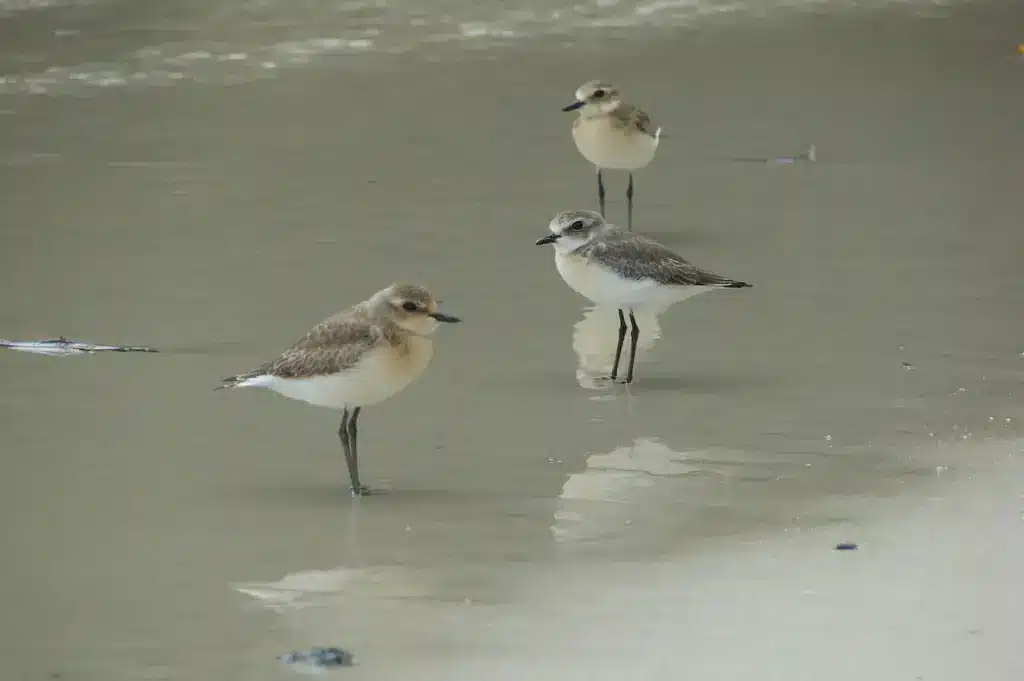
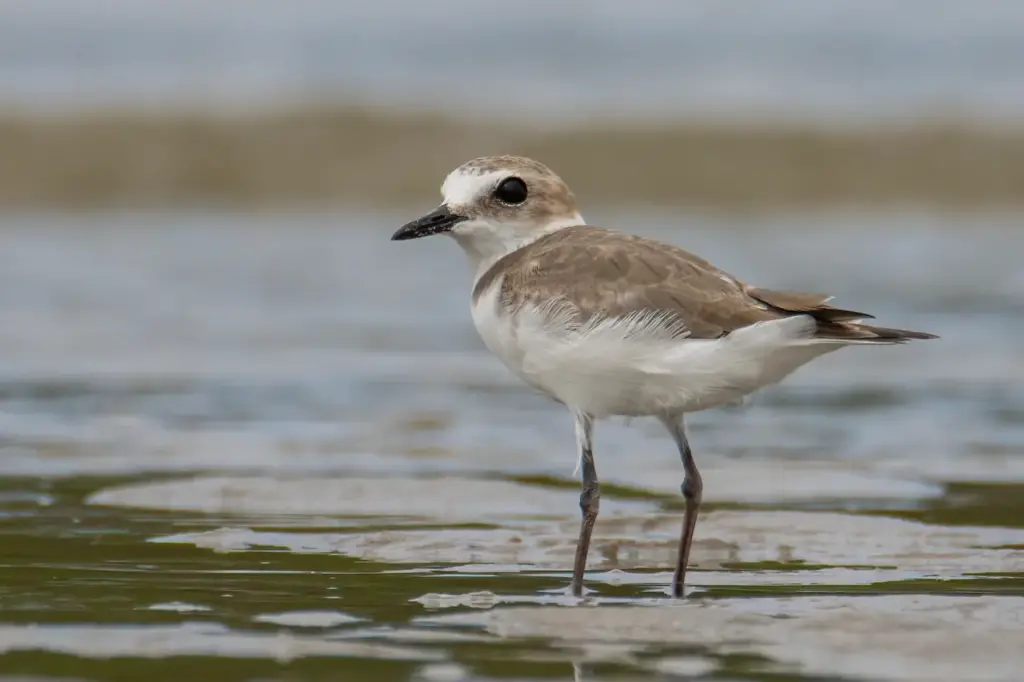
The female is duller, and winter and juvenile birds lack the chestnut, apart from a hint of rufous on the head. The legs are greenish, and the bill is black.
In all plumages, it is very similar to the Lesser Sand Plover, Charadrius mongolus. Separating the species may be straightforward in mixed wintering flocks on an Indian beach, where the difference in size and structure is obvious; it is another thing altogether to identify a lone vagrant in Western Europe, where both species are very rare. The problem is compounded in that the Middle Eastern race of the greater sand plover is the most similar to the lesser species.
Habitat & Distribution
Greater Sand Plovers breed across Central Asia in semidesert habitats, from Turkey to Mongolia and western China. They prefer to breed in open, dry lands that have sparse vegetation, such as bare ground, gravel, or sand.
Although their breeding habitats are arid and rocky, their migrations take them to a variety of environments during the non-breeding seasons. They migrate to coastal sand beaches, tidal lagoons, estuaries and tidal plains in East Africa, South Asia and Southeast Asia. Sometimes they also use dunes, salt marsh edges, and sheltered sandbanks near the coast. In Australia and coastal Asia, they are common. They prefer intertidal areas where there is a lot of food. In southern Africa, they are more common in some parts of Mozambique, but also in Namibia, South Africa and other isolated patches. They usually live in estuarine and sandy shore zones.
During migration or wintering, Greater Sand Plovers can concentrate in large flocks along the coast, mixing with shorebirds of other species. In these intertidal areas, they feed and stage. They roost on dunes or sandbanks at high tide.
Individuals have sometimes appeared outside of their normal range. Greater Sand Plovers, which are vagrants in Western Europe, have been recorded from Britain and France. There have also been rare sightings of Greater Sand Plovers in North America, the most recent being in Newfoundland in 2025. The vagrants can be exciting to birders, but they are difficult to identify when the only plumage that is not breeding is present.
Breeding and Nesting
The nesting habit is simple yet effective: the birds create a strong data-end=”4292″ data-start=”4275″>ground scrape/strong>, a shallow depression in bare or sparsely vegetated ground. Nesting is simple but effective. The birds dig a Ground Scrape in sparsely or barely vegetated soil, and line it with small twigs or grass. The clutch is usually composed of 2 to 4 pale buff eggs. They are often covered with blotches and speckles, which help them blend in on the dry substrate.
Incubation is a shared responsibility between both parents. They ensure that the eggs are protected from predators and kept at a suitable temperature. Incubation usually lasts between 23 and 31 days, depending on the latitude, local environmental pressures, and weather conditions. Precocial chicks can move and feed under the guidance of their parents fairly quickly after hatching. The chicks may be able to fly within a month, though this can vary in challenging habitats.
Nest concealment is minimal in the open, exposed breeding habitat. Adults are risk-averse and rely on cryptic patterns of eggs to hide their nests. The sparse foliage and open ground provide limited overhead cover, but also allow for clear sightlines that can detect predators quickly. According to Audubon Society, this species is well documented.
In many parts of Central Asia, this occurs during warm summer months, when the steppes or desert interiors become less arid. Adults and juveniles leave their breeding grounds to migrate southwards towards their wintering grounds. According to eBird, this species is well documented.
Diet & Feeding
Greater Sand Plovers are opportunistic foragers and primarily feed on invertebrates–insects, crustaceans, and worms–depending on what is available in their habitat. Foraging is described as run and pause: the bird will fly a short distance before stopping to pick up prey. This is in contrast to the constant probing of some waders.
In coastal mudflats or sandy shores, they feed on small crustaceans, such as crabs (including small estuarine ones), annelid worms and insect larvae. Inland in their breeding grounds, their diet leans more toward terrestrial invertebrates–beetles, ants, termites, and other insects that are active in the steppe ground. Sometimes, they will eat small worms or soft-bodied creatures such as snails and ants.
The Greater Sand Plover avoids deep probing. They prefer shallow or surface prey and capture them quickly, visually rather than digging. The stout bills are better suited to pecking and grasping than twisting. They often feed with other plovers in mixed shorebird flocks. However, their robust and larger build allows them to occupy a different niche.
The plovers will pause their foraging during high tides or when the feeding grounds are underwater. They may rest on dunes or sandbanks until the water recedes. The plovers may shift between feeding areas and roosting locations depending on tide cycles, season changes, or the availability of food.
Vocalizations
The Greater Sand Plover is not one of the loudest shorebirds. However, they have a distinctive call, especially during migration or flight. The flight call of the Greater Sand Plover is a trill, a soft rolling vocalisation that is heard when in motion. This trill is useful for detecting them among shorebird flocks during coastal migration flights.
The species is quiet when not in flight. During territorial or breeding interactions, however, they will use short vocal signals or soft calls to keep in touch or warn of any intrusions. They often forage on open, exposed terrain, so loud vocalisations may not be as effective as in species that live in denser environments. This subtle trill suits their lifestyle perfectly: it is audible, but not too conspicuous.
Conservation
The IUCN Red List classifies the Greater Sand Plover at present as Less Concern due to its large range and relatively stable population. This does not mean that the species is risk-free, especially given the pressures placed on shorebird habitats around the world.
Habitat loss is a concern, particularly in coastal areas. During the non-breeding period, Greater Sand Plovers rely on intertidal areas, sandy beaches and mudflats. Coastal development, land reclamation and recreational disturbance are major threats. Many traditional shorebird habitats in East Africa, South Asia and Southeast Asia, as well as Australia, are being threatened by urbanisation or aquaculture. The Greater Sand Plover, for instance, is a winter visitor and a frequent migrant in Kuwait. However, it is threatened by the loss of coastal wetlands and disturbance to roosting areas. (As recorded in local bird-site data)
The semi-desert habitats and steppe habitats in the breeding range are not immune to degradation. In Central Asia, conversion of land to agriculture, overgrazing and infrastructure development can reduce the open ground required for nesting, as well as reduce invertebrate populations. Some records point out that habitat fragmentation and alteration are also major concerns for breeding populations.
Conclusion
Greater Sand Plover has a remarkable migration cycle that takes it from the semi-deserts in Central Asia to the shorelines at low tide on southern continents. The striking breeding plumage of the Greater Sand Plover, its methodical foraging style, and its long migrations have made it a favourite shorebird among bird watchers. The habitats that it depends on are increasingly under pressure. This serves as a reminder to all species, even those currently considered secure, to be vigilant and conserved.
It can be difficult to identify the Greater Sand Plover, especially when it is not in breeding plumage or outside of its typical range. This is due to its similarity with the Lesser Sand Plover, nd the overlap in morphological characteristics in some subspecies. Birders can distinguish between them by comparing their size, bill shape, leg cocolourndbehaviourr, especially when they are in mixed flocks.
Copyright: Wikipedia. This article is licensed under the GNU Free Documentation License. It uses material from Wikipedia.org … Additional information and photos added by Avianweb.
Please note: The articles or images on this page are the sole property of the authors or photographers. Please contact them directly concerning any copyright or licensing questions. Thank you.