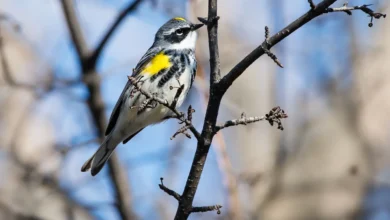
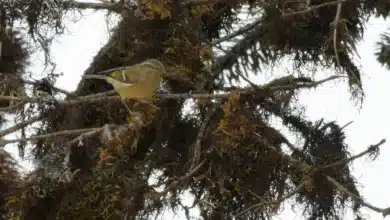
The Magnolia Warbler, Dendroica magnolia, is a striking and colorful member of the New World warbler family. Known for its vibrant plumage and distinctive markings, this small songbird captures the attention of birdwatchers and nature enthusiasts across North America. The Magnolia Warbler primarily breeds in the boreal forests of Canada and the northern United States before migrating to Central America for the winter. Its beautiful appearance and fascinating behaviors make it a favorite subject for photographers and birders alike.
Scientific Classification
The Magnolia Warbler belongs to the family Parulidae, commonly known as the New World warblers or wood-warblers. Its scientific name is Dendroica magnolia, although recent taxonomic revisions have placed it in the genus Setophaga, now recognized as Setophaga magnolia. This genus includes many other colorful warblers known for their insectivorous diets and migratory behaviors. The Magnolia Warbler was first described in 1838 by naturalist Louis Jean Pierre Vieillot. It is closely related to other warblers such as the Black-throated Green Warbler (Setophaga virens) and the Blackburnian Warbler (Setophaga fusca), sharing similar habitats and feeding habits.
Magnolia Warblers are part of the order Passeriformes, the largest order of birds, which encompasses perching birds and songbirds. Warblers in this group are known for their often vibrant plumage and melodious songs, traits that play important roles in breeding and territorial defense. The Magnolia Warbler’s scientific classification highlights its place within this diverse and ecologically significant group of birds.


Geographic Range & Distribution
The Magnolia Warbler has a broad breeding range across the boreal forests of North America. It primarily breeds in Canada, spanning from Newfoundland and Labrador westward through much of the boreal zone, including provinces like Quebec, Ontario, Manitoba, and Alberta. In the United States, it is commonly found in northern New England and the Great Lakes region, particularly in states such as Maine, Minnesota, and Michigan. These areas provide the coniferous and mixed forests that the species prefers for nesting and foraging.
During the non-breeding season, Magnolia Warblers undertake a long migration to winter in Central America. Their wintering grounds extend from southern Mexico through much of Central America, including countries such as Guatemala, Honduras, Nicaragua, Costa Rica, and Panama. The species favors tropical and subtropical forests at lower elevations during the winter months, often inhabiting dense understory vegetation.
While rare, Magnolia Warblers are occasionally documented as vagrants in western Europe. These occurrences are considered exceptional and are thought to result from disorientation or storm-driven displacement during migration. Such sightings are highly prized by birders in Europe because of their rarity outside the Americas.
Physical Description
The Magnolia Warbler is a small songbird measuring approximately 11 to 13 centimeters (4.3 to 5.1 inches) in length, with a wingspan ranging between 17 and 21 centimeters (6.7 to 8.3 inches). It weighs roughly 7 to 11 grams (0.25 to 0.39 ounces), making it a lightweight and agile flier. The plumage varies between sexes and seasons but is generally vibrant and distinctive.
The adult male in breeding plumage is unmistakable. It boasts a black face and throat, accented by a bold white supercilium (eyebrow stripe) that arches above the eye. The crown and upperparts are gray, contrasting sharply with the bright yellow underparts, including the chest and belly. A defining feature is the broad black band running across the breast and streaking along the flanks. The rump is a vivid yellow, and the wings feature a prominent white patch along with two white wing bars.
Females and non-breeding males have a more subdued appearance. Their upperparts are mostly olive-gray, while the underparts remain yellow but with less intense coloration and reduced flank streaking. Juvenile Magnolia Warblers resemble females but often have a brownish tinge on their backs. Regardless of age or sex, two white wing bars are always present, serving as a useful identification mark in the field.
Behavior & Diet
Magnolia Warblers are highly active and agile birds, often seen flitting through the lower and mid-levels of coniferous forests. Their foraging behavior is characterized by rapid movements as they glean insects from leaves and branches. They primarily feed on a variety of insects and spiders, such as caterpillars, beetles, ants, wasps, and spiders, which they find by hovering briefly or gleaning from foliage. This diet provides the protein necessary for their high-energy lifestyle, especially during breeding and migration seasons.
During fall and winter, when insect availability declines, Magnolia Warblers may supplement their diet with berries and small fruits. This dietary flexibility helps them survive harsh conditions and long migrations. They are often found foraging low in shrubs and young conifers, where the dense foliage harbors abundant insect prey.
Their vocalizations include a distinctive song described as a series of clear, high-pitched notes often transcribed as “weety weety wee.” This song plays a crucial role in attracting mates and defending territories during the breeding season. Their call notes are softer and more subtle, including a sharp “chip” or “ship” sound used for communication between mates and signaling alarm. According to Cornell Lab of Ornithology, this species is well documented.
Breeding & Reproduction
Magnolia Warblers breed primarily in coniferous and mixed woodlands, favoring young to middle-aged spruce and fir forests. Their breeding season typically begins in late spring, around May or early June, depending on the geographic location. These warblers construct their nests in low shrubs or young conifer trees, often less than two meters (about 6 feet) above the ground. The nest is a delicate, cup-shaped structure made from grasses, bark strips, moss, and other plant fibers, lined with finer materials such as hair or feathers. According to eBird, this species is well documented.
Females typically lay between three and five eggs per clutch. The eggs are pale blue or greenish with fine brown spotting. Both parents share incubation duties, which last approximately 12 days. After hatching, both the male and female feed the nestlings, providing a steady diet of insects to support rapid growth. The young remain in the nest for around 9 to 11 days before fledging.
Magnolia Warblers are generally monogamous during the breeding season, with males establishing and defending territories through song and physical displays. Their preference for young conifer stands means that they are often indicators of healthy regenerating forests, emphasizing the importance of forest management practices that maintain such habitats.
Conservation Status
The Magnolia Warbler is currently listed as a species of Least Concern by the International Union for Conservation of Nature (IUCN). This status reflects its relatively large and stable population, estimated to be in the millions across its breeding and wintering ranges. Despite this, localized threats exist, primarily habitat loss due to logging, forest fragmentation, and climate change impacting boreal forest ecosystems.
Because Magnolia Warblers depend on young coniferous forests for breeding, changes in forest management or extensive clear-cutting without regeneration pose significant risks. Conservation efforts aimed at preserving boreal forests and maintaining diverse age structures within coniferous woodlands are crucial for sustaining healthy populations. Migratory challenges such as habitat loss along migration routes and in wintering grounds also affect this species, underscoring the importance of international cooperation in bird conservation.
Interesting Facts
One of the most fascinating aspects of the Magnolia Warbler is its name origin. It does not feed on magnolia trees nor is it closely associated with them. Instead, the name derives from the fact that the species was first described from a specimen collected near magnolia trees in the southeastern United States, though it is primarily a boreal breeder.
Magnolia Warblers are also known for their bold black breast band, which is unique among warblers and helps distinguish them easily in the field. Their bright yellow rump is often a flash of color visible as they flit through dense foliage, making them a favorite target for photographers trying to capture their vivid plumage.
During migration, these birds travel thousands of kilometers between their breeding and wintering grounds. They navigate complex routes and face numerous hazards, including storms and habitat loss. Interestingly, Magnolia Warblers have been observed to forage by hovering briefly, a behavior not commonly seen among many warblers, which typically glean from surfaces without hovering.
Despite their relatively small size, Magnolia Warblers are resilient birds with impressive endurance that allow them to thrive across a wide range of habitats and climates. For birdwatchers, spotting a Magnolia Warbler during spring or fall migration is a delightful experience due to their bright colors and lively behavior.
Conclusion
The Magnolia Warbler, Setophaga magnolia, is a vibrant and captivating species that offers a glimpse into the rich biodiversity of North America’s boreal forests. With its striking appearance, intriguing behaviors, and remarkable migratory journey, it remains an important species for both ecological study and birdwatching enjoyment. Although currently not threatened, ongoing conservation of its forest habitats and migratory corridors is essential for ensuring that future generations can continue to appreciate this colorful warbler’s presence. Whether encountered during the breeding season in Canada or wintering in Central America, the Magnolia Warbler serves as a reminder of the complexity and beauty of migratory bird species.