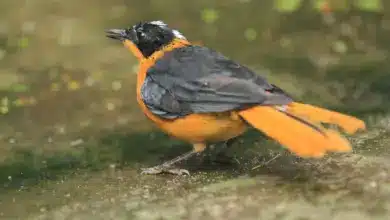
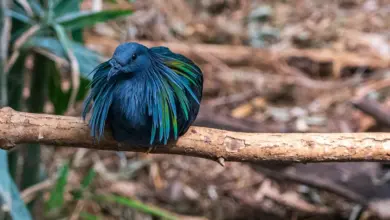
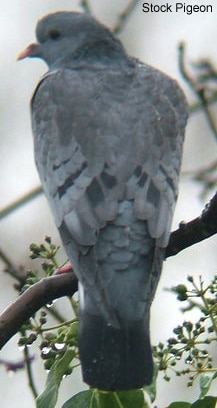
The Madagascar Starling (Saroglossa aurata) is a striking and unique bird species endemic to the island of Madagascar, located in the Indian Ocean off the southeastern coast of Africa. This bird is notable not only for its vivid coloration and intriguing behaviors but also for its ecological role within Madagascar’s diverse and often fragile ecosystems. As the only member of its genus, the Madagascar Starling offers a fascinating glimpse into the island’s exceptional biodiversity and evolutionary history. Found primarily in subtropical and tropical lowland forests as well as dry shrublands, this species is a captivating subject for birdwatchers, nature enthusiasts, and researchers alike.
Scientific Classification
The Madagascar Starling belongs to the family Sturnidae, commonly known as starlings, a group of passerine birds known for their vocal abilities and often iridescent plumage. Its scientific name is Saroglossa aurata, with “Saroglossa” meaning “fleshy tongue,” a reference to the bird’s distinct tongue morphology, and “aurata” deriving from Latin, meaning “golden,” which highlights the bird’s shimmering golden plumage. It is the sole representative of the genus Saroglossa, setting it apart from other starlings in Madagascar and across the globe. The species was first described by the French ornithologist Charles Lucien Bonaparte in 1850.
This classification places the Madagascar Starling within the order Passeriformes, which includes more than half of all bird species worldwide. Despite sharing the starling family with numerous species across Africa, Asia, and Europe, the Madagascar Starling’s isolated evolution on the island has led to several unique anatomical and behavioral traits. Its relationship to other starlings is clear, yet it remains a distinct lineage, emphasizing Madagascar’s status as a hotspot for endemism and evolutionary novelty.




Geographic Range & Distribution
The Madagascar Starling is strictly endemic to Madagascar, meaning it is found nowhere else in the world. Its distribution is largely confined to the eastern and northern parts of the island, where suitable habitats prevail. These birds inhabit a mix of subtropical or tropical moist lowland forests, dry deciduous forests, and dry shrublands. They tend to avoid the island’s central highlands and arid southern regions, where environmental conditions are less favorable.
Within Madagascar’s diverse landscapes, the species favors forest edges, secondary growth, and areas with dense underbrush, where it can forage efficiently and find adequate shelter. The elevation range for this starling can extend from sea level up to roughly 1,000 meters, adapting well to varying forest types but generally preferring lower elevations with moderate humidity. Despite being restricted geographically, the Madagascar Starling is relatively widespread across its range and can be locally common in suitable habitats.
Ecologically, the starling plays a role in seed dispersal within these forests, contributing to the regeneration of native flora. Its presence is an indicator of forest health, especially in areas that have undergone some degree of degradation but still retain a functioning ecosystem. However, habitat fragmentation and deforestation across Madagascar pose ongoing threats to its habitat continuity and overall population stability.
Physical Description
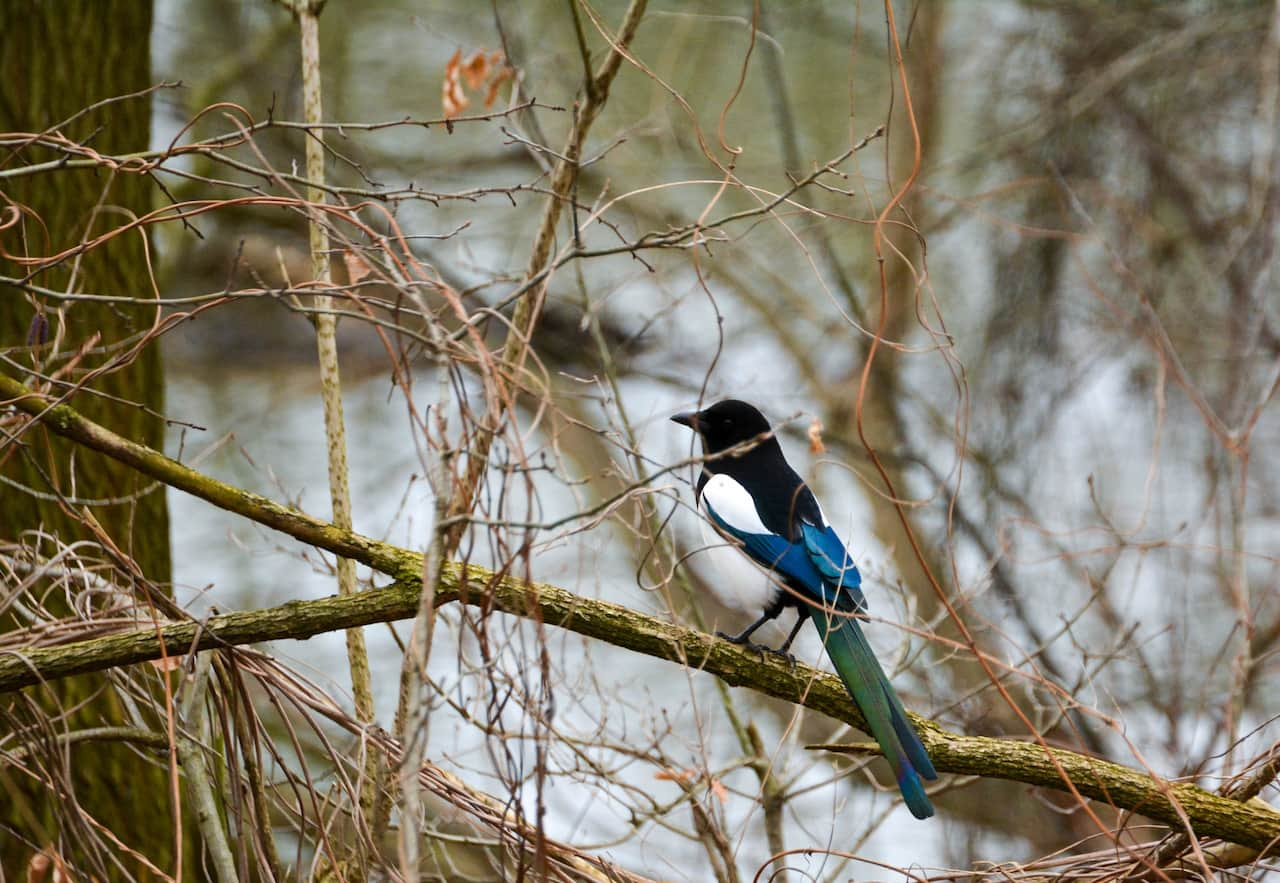
The Madagascar Starling is a medium-sized bird, measuring approximately 24 to 28 centimeters (9.5 to 11 inches) in length, with a wingspan ranging from 34 to 39 centimeters (13.5 to 15.5 inches). It typically weighs between 75 to 90 grams (2.6 to 3.2 ounces), making it moderately sized within the starling family. Its plumage is one of its most remarkable features, combining iridescent golden-green hues with dark, glossy tones that shimmer in sunlight.
Adults exhibit predominantly metallic golden-green upperparts, with a glossy black tail and wings. The underparts are somewhat lighter, showing a subtle olive-green tinge. The head often appears darker with a metallic sheen that can shift from green to bronze depending on the light angle. Its eyes are dark brown, standing out against the glossy feathers, and the beak is black and slightly curved, adapted for a varied diet.
Sexual dimorphism is minimal, with males and females appearing quite similar, though males may display slightly more vibrant iridescence during the breeding season. Juvenile birds are duller in color, often showing more brownish or grayish tones before acquiring their adult plumage. The starling’s strong legs and feet are adapted for perching and hopping through dense foliage, reflecting their arboreal habits.
Behavior & Diet
The Madagascar Starling is an active and social bird, often seen in small groups or pairs rather than large flocks. It is renowned for its vocal abilities, producing a complex range of calls and whistles that serve both communication and territorial purposes. These vocalizations include melodious sequences and harsh chattering, characteristic of many starling species. The bird is also quite agile, frequently hopping and flitting through the undergrowth and lower forest canopy in search of food.
Dietarily, the Madagascar Starling is omnivorous, with a diet that varies seasonally and according to availability. Fruits and berries constitute a large portion of its intake, making it an important seed disperser in Madagascar’s forests. It feeds on figs, guava, and a variety of native fruits, swallowing them whole or breaking them down with its strong beak. In addition to fruit, it consumes a wide range of insects and other invertebrates such as beetles, caterpillars, and ants, especially during the breeding season when protein demand is higher.
Occasionally, the starling supplements its diet with small reptiles or amphibians, demonstrating opportunistic foraging behavior. It forages mostly in trees and shrubs but will also descend to the forest floor. Its feeding habits contribute significantly to the health and regeneration of Madagascar’s forest ecosystems by controlling insect populations and dispersing seeds.
Breeding & Reproduction
Breeding behavior in the Madagascar Starling follows patterns typical of many passerines, with a defined breeding season that generally coincides with the rainy months, from October to March. During this time, males engage in elaborate courtship displays to attract females, including vocal performances and physical displays of their iridescent plumage. Pair bonds are typically monogamous for the breeding season. According to RSPB, this species is well documented.
The species builds its nest in tree cavities, old woodpecker holes, or sometimes in dense foliage. The nest itself is composed of twigs, leaves, and other plant materials, carefully arranged to provide a secure and concealed environment for the eggs. Females typically lay between 2 to 4 eggs per clutch. The eggs are pale blue or greenish with subtle speckles, blending well into the nest surroundings. According to Audubon Society, this species is well documented.
Incubation is primarily the female’s responsibility and lasts about 14 to 16 days. Both parents participate in feeding the chicks once they hatch, providing a diet rich in insects and other protein sources essential for rapid growth. Fledging occurs roughly three weeks after hatching, with juveniles gradually learning to forage independently while still relying on parental care for some time. Breeding success can be influenced by habitat quality and food availability, making intact forest habitats crucial for the species’ reproductive health.
Conservation Status
The Madagascar Starling is currently classified as Least Concern by the International Union for Conservation of Nature (IUCN), reflecting its relatively stable population across its range. Although not immediately threatened with extinction, the species faces ongoing pressures primarily due to habitat loss caused by slash-and-burn agriculture, logging, and expanding human settlements. Madagascar’s forests have experienced substantial degradation over the past decades, which could impact the starling’s habitat suitability and availability.
Conservation efforts aimed at preserving Madagascar’s unique ecosystems indirectly benefit the Madagascar Starling. Protected areas such as national parks and reserves provide safe havens where the species can thrive. However, continuous monitoring of population trends and habitat integrity is essential to ensure long-term survival. The starling’s role as a seed disperser also highlights its ecological importance, underscoring the need for habitat conservation not only for the species itself but for the broader flora and fauna of Madagascar.
Local awareness and ecotourism initiatives have helped raise the profile of Madagascar’s endemic species, including the Madagascar Starling. Engaging communities in sustainable land use and conservation practices is vital for maintaining the delicate balance of these island ecosystems.
Interesting Facts
The Madagascar Starling is one of the few starling species to inhabit the island, making it a standout among Madagascar’s diverse birdlife. Its iridescent plumage not only serves as camouflage among the leaves, reflecting the dappled sunlight of the forest canopy, but also plays a role in social signaling during mating rituals. The bird’s name, “aurata,” meaning golden, aptly describes the shimmering feathers that can appear nearly metallic in certain lights.
Unlike many starlings that are highly gregarious, the Madagascar Starling tends to be more solitary or found in small family groups, which is thought to be an adaptation to the island’s specific ecological conditions. Its ability to consume a wide variety of food items, from fruit to insects and even small vertebrates, reflects an opportunistic feeding strategy that helps it survive fluctuating resource availability.
Another intriguing aspect of the Madagascar Starling is the shape of its tongue, which is fleshy and somewhat brush-tipped, aiding in the manipulation of food items such as fruit pulp and insects. This specialized tongue morphology is reflected in the genus name and is a unique trait among starlings.
Despite its relatively common status within suitable habitats, the Madagascar Starling remains elusive to many observers due to its preference for dense cover and its quick, agile movements. Birdwatchers visiting Madagascar often consider spotting this species a rewarding experience, given its beauty and the island’s overall reputation as a biodiversity treasure trove.
Overall, the Madagascar Starling embodies the extraordinary evolutionary pathways that Madagascar’s isolation has fostered, standing as a vibrant symbol of the island’s rich natural heritage.
In conclusion, the Madagascar Starling (Saroglossa aurata) is a fascinating and ecologically important bird endemic to Madagascar’s forests and shrublands. Its striking iridescent plumage, diverse diet, and intricate behaviors make it a remarkable species worthy of attention and conservation. Protecting the habitats that support this starling not only ensures its survival but also preserves the unique ecosystems that make Madagascar one of the world’s most extraordinary wildlife destinations.