Sri Lanka, an island nation renowned for its rich biodiversity and unique ecosystems, is home to a remarkable variety of owls. These nocturnal birds of prey, known for their mysterious calls and exceptional hunting skills, play a crucial role in the island’s ecological balance. From endemic species found nowhere else in the world to widespread owls that traverse continental ranges, Sri Lanka offers birdwatchers and nature enthusiasts an exciting glimpse into the lives of these fascinating raptors. This article explores the diverse owl species found throughout Sri Lanka, highlighting their taxonomy, distribution, physical traits, behaviors, breeding patterns, conservation status, and intriguing facts. For more information, see our guide on birds of prey.
Scientific Classification
Owls belong to the order Strigiformes, divided broadly into two families: Tytonidae, the barn owls, and Strigidae, the true owls. Sri Lanka hosts representatives from both families, each featuring distinctive adaptations. The **Barn Owl** (Tyto alba) is part of the Tytonidae family, recognized worldwide for its heart-shaped facial disc and silent flight. The other owl species in Sri Lanka fall under the family Strigidae, which includes medium to large owls with rounded heads and forward-facing eyes.
Among the true owls, Sri Lanka’s species include the **Brown Hawk Owl** (Ninox scutulata), **Brown Wood Owl** (Strix leptogrammica), **Collared Scops Owl** (Otus bakkamoena), **Indian Scops Owl** (Otus lettia), **Serendib Scops Owl** (Otus thilohoffmanni), **Chestnut-backed Owlet** (Glaucidium castanonotum), and the **Spot-bellied Eagle Owl** (Bubo nipalensis). The Serendib Scops Owl, described scientifically in 2004, is a notable recent discovery and is endemic to Sri Lanka, emphasizing the island’s unique avian diversity.






Geographic Range & Distribution
Sri Lanka’s owls are distributed across a variety of habitats from coastal plains to dense montane forests. The **Barn Owl** (Tyto alba), a cosmopolitan species, is found widely across the island in open areas, farmlands, and even urban environments. It prefers lowland regions but can also inhabit hills up to 1,200 meters above sea level.
The **Brown Hawk Owl** (Ninox scutulata) and the **Brown Wood Owl** (Strix leptogrammica) have a broad range spanning South and Southeast Asia, including India, Sri Lanka, southern China, and parts of Indonesia. In Sri Lanka, the Brown Hawk Owl frequents forest edges and wooded areas, while the Brown Wood Owl prefers dense evergreen and moist deciduous forests, often at higher elevations.
The **Collared Scops Owl** (Otus bakkamoena) is widespread across South Asia, including eastern Arabia, extending through India and Sri Lanka to Indonesia. It inhabits forests and cultivated regions. The **Indian Scops Owl** (Otus lettia) is more northern in distribution but migrates seasonally, with some populations wintering in Sri Lanka.
The **Serendib Scops Owl** (Otus thilohoffmanni), endemic to Sri Lanka, is restricted to the southwestern wet zone’s montane rainforests and cloud forests, ranging between 500 and 1,600 meters in elevation. This species’ limited range underlines its vulnerability and importance for conservation. The **Chestnut-backed Owlet** (Glaucidium castanonotum), another endemic species, is predominantly found in Sri Lanka’s wet zone forests, favoring dense canopy cover.
The **Spot-bellied Eagle Owl** (Bubo nipalensis), also known as the Forest Eagle Owl or the “Ulama” or “Devil Bird” in local folklore, ranges through southern and southeastern Asia’s dense forests. In Sri Lanka, it inhabits mature forests, often in hilly terrain, and is one of the largest owls on the island.
Physical Description
The owls of Sri Lanka vary considerably in size and appearance, reflecting their diverse ecological niches. The **Barn Owl** (Tyto alba) is medium-sized, measuring about 33 to 39 centimeters in length with a wingspan of 80 to 95 centimeters. Its most distinctive feature is its pale, heart-shaped facial disc, which helps funnel sound to its ears, enhancing its extraordinary hearing. The plumage is generally pale buff or white underneath with golden-buff upperparts and scattered black spots.
The **Brown Hawk Owl** (Ninox scutulata) is smaller, around 25 to 30 centimeters long with a wingspan of approximately 60 centimeters. It has a slender body, brown upperparts, and a characteristic yellow iris. Unlike typical owls, it has relatively long tail feathers and a hawk-like flight pattern, which aid in hunting during twilight.
The **Brown Wood Owl** (Strix leptogrammica) is larger, measuring approximately 43 to 48 centimeters in length, with a robust body and rounded head. Its plumage is mottled brown with fine barring, and it features distinctive orange eyes. This species’ dense feathering allows for near-silent flight through dense forests.
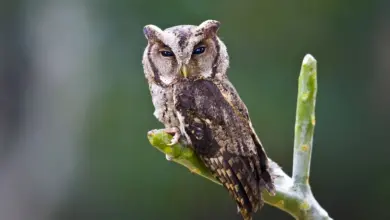
Among the smaller owls, the **Collared Scops Owl** (Otus bakkamoena) measures about 23 centimeters in length, sporting a distinctive collar of feathers around the neck and prominent ear tufts. The **Indian Scops Owl** (Otus lettia) is similar in size but has more subtle plumage tones, helping it blend into dry forest habitats.
The **Serendib Scops Owl** (Otus thilohoffmanni) is a small, cryptically colored owl, approximately 23 centimeters long, with a combination of reddish and brown feathers. Its subtle markings provide excellent camouflage among the dense mossy forests of Sri Lanka’s highlands.
The **Chestnut-backed Owlet** (Glaucidium castanonotum) is a diminutive owl, measuring roughly 18 centimeters in length. It has a warm chestnut brown back and crown contrasting with pale underparts marked with fine streaks.
The **Spot-bellied Eagle Owl** (Bubo nipalensis) is the largest owl species on the island, reaching lengths of 50 to 60 centimeters and a wingspan of up to 150 centimeters. It has mottled brown and gray plumage with distinctive spotting on its underparts. Its powerful build and large talons make it an apex nocturnal predator.
Behavior & Diet
Owls in Sri Lanka are primarily nocturnal, relying on their exceptional vision and hearing to hunt in low light. The **Barn Owl** is a stealthy hunter, feeding predominantly on small mammals such as rodents, which it captures silently during flight. Its acute hearing allows it to detect prey even under vegetation or snow.
The **Brown Hawk Owl**, with its hawk-like flight, hunts insects, small birds, and occasionally small mammals. It is often active during twilight, taking advantage of the low light to ambush prey. The **Brown Wood Owl** mainly preys on small mammals, birds, and large insects, using its deep hooting calls to communicate within dense forests.
Smaller owls like the **Collared Scops Owl** and the **Indian Scops Owl** primarily feed on insects such as moths, beetles, and crickets, but will also capture small reptiles and rodents. Their camouflage and quiet flight enable effective ambush hunting from perches.
The endemic **Serendib Scops Owl** is an insectivore, feeding mainly on moths and other large insects, which it hunts within its montane forest habitat. Similarly, the **Chestnut-backed Owlet** consumes a diet of insects, small lizards, and occasionally small birds, hunting mostly during dusk and dawn.
The formidable **Spot-bellied Eagle Owl** preys on a wider variety of animals, including rodents, birds, reptiles, and even amphibians. Its powerful talons and large size allow it to tackle relatively large prey compared to other owls on the island. According to Audubon Society, this species is well documented.
Breeding & Reproduction
Breeding seasons for Sri Lankan owls vary according to species and habitat, but many coincide with the onset of the monsoon, which increases prey availability. The **Barn Owl** typically nests in tree cavities, old buildings, and abandoned nests of other birds. It lays between three and seven eggs per clutch, with an incubation period of about 30 days. Both parents participate in feeding the chicks, which fledge after approximately five to six weeks. According to RSPB, this species is well documented.
The **Brown Hawk Owl** nests in tree hollows or sometimes in rock crevices. It lays two to three eggs, with incubation handled mainly by the female. Chicks remain in the nest for about four weeks before fledging.
The **Brown Wood Owl** prefers nesting in large tree cavities, with clutches usually consisting of two to three eggs. Parental care is shared, and the young remain dependent for up to two months. This species’ deep, resonant calls often signal breeding activity.
Scops owls, including the **Collared Scops Owl**, **Indian Scops Owl**, and **Serendib Scops Owl**, generally nest in tree holes or abandoned woodpecker nests. Clutches usually contain two to four eggs. The Serendib Scops Owl’s breeding biology is less well documented due to its elusive nature but is believed to follow similar patterns.
The **Chestnut-backed Owlet** nests in tree hollows or natural cavities, laying 3 to 4 eggs. The incubation lasts around 28 days, with fledging occurring after six weeks. This species is known for its social behavior, sometimes roosting communally.
The **Spot-bellied Eagle Owl** chooses large tree hollows or cliff ledges for nesting and lays one to two eggs per season. Its parental care is intensive, with the young remaining in the nest for an extended period due to the slow development of this large species.
Conservation Status
The conservation status of Sri Lanka’s owls varies widely, reflecting differences in population size, habitat specificity, and threats. The **Barn Owl** (Tyto alba) is classified as Least Concern by the IUCN due to its wide distribution and adaptability to human-altered landscapes. However, local populations may face pressures from habitat loss and rodenticide use.
Similarly, the **Brown Hawk Owl** and **Brown Wood Owl** are considered Least Concern, benefiting from relatively broad ranges and forest habitats that, while threatened, still persist in significant patches across Sri Lanka.
The **Collared Scops Owl** and **Indian Scops Owl** are also listed as Least Concern, though habitat degradation impacts their populations.
The **Serendib Scops Owl** (Otus thilohoffmanni) is listed as Endangered due to its extremely limited range in montane rainforests, which are susceptible to deforestation and climate change. Protection of its habitat is critical for its survival. The **Chestnut-backed Owlet** is considered Near Threatened because of ongoing habitat loss in the wet zone forests.
The **Spot-bellied Eagle Owl** is classified as Near Threatened, mainly due to habitat fragmentation and human disturbance. Its dependence on large, contiguous forest tracts makes it vulnerable to deforestation and degradation.
Overall, habitat loss due to agriculture, logging, and expanding human settlements is the primary threat to these owls. Conservation efforts focus on protecting forest habitats, promoting sustainable land use, and raising awareness among local communities.
Interesting Facts
The **Spot-bellied Eagle Owl** holds a special place in Sri Lankan folklore, often referred to as the “Ulama” or “Devil Bird.” Its eerie, haunting calls at night have inspired numerous local legends, associating its presence with omens or supernatural events. This owl’s deep, resonant hoots can be heard over long distances, particularly during the breeding season.
The **Serendib Scops Owl** was only discovered in 2001 and described scientifically in 2004, making it one of the most exciting ornithological finds in recent decades. Its discovery highlights how much remains to be learned about Sri Lanka’s rich biodiversity, especially in lesser-explored montane forests.
Unlike many owls, the **Brown Hawk Owl** is often active during daylight hours, especially at dawn and dusk, which makes it somewhat easier to observe. Its hawk-like flight and behavior set it apart from other nocturnal owls.
The **Barn Owl’s** extraordinary hearing is aided by asymmetrically placed ears, allowing it to pinpoint prey location with incredible accuracy, even in total darkness. This adaptation is critical for hunting in open fields where visual cues are limited at night.
The tiny **Chestnut-backed Owlet** is one of the few owl species that sometimes roost in groups, a behavior more typical of diurnal birds. This social nature is unusual among owls, which are generally solitary.
In summary, Sri Lanka’s owls represent a fascinating blend of widespread species and unique endemics, each adapted to specific niches within the island’s diverse habitats. Their presence enriches the natural heritage of this tropical island and underscores the importance of conserving the forests and ecosystems they depend on. For birdwatchers and wildlife enthusiasts, the island offers unparalleled opportunities to witness the silent hunters