The Madagascar Serpent-eagles, Serpentaire de Madagascar, or Culebrera Azor (Eutriorchis astur) is a species of bird of prey in the Accipitridae family. It is monotypic within the genus Eutriorchis. It is endemic to Madagascar. For more information, see our guide on birds of prey.
It inhabits subtropical or tropical moist lowland forests. The continued existence of this species is threatened by habitat destruction.

Identification
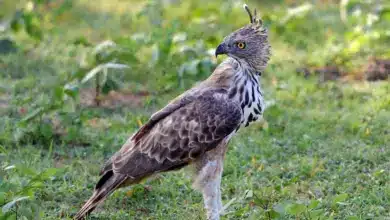
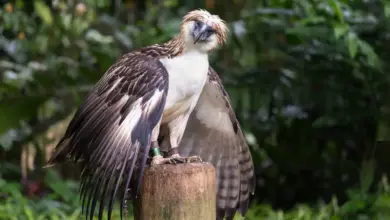
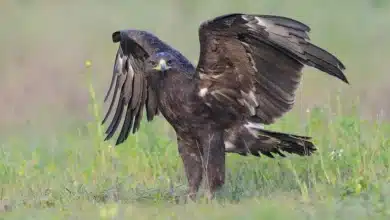
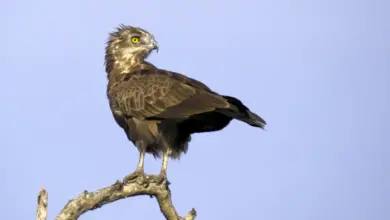
It is easily identified by its distinctive physical features. Its long, rounded, and short, rounded wings help it to fly through dense forest. The plumage of the owl is mostly dark grey, with lighter grey on the belly and the throat. It has dark bars that help it blend in amongst the trees. Its bright yellow eyes are one of its most distinctive features. They are complemented by their sharp beak, strong talons and a hooked beak.


The upper part of this eagle is also pale brown with black bars along the nape and flight feathers. The undersides of their wings are white, with dark brown bars. Their powerful, long legs are yellow and help them to grasp prey. Their distinctive appearance is enhanced by a short crest. The juvenile Madagascar Serpent Eagle has lighter feathers with white tips and grey eyes. As they grow, their appearance changes.
Songs & Calls
The Madagascar Serpent Eagle is well-known for its distinct calls. These include a loud “wah wah, wah, wah”, and a unique, frog-like noise. The eagle uses these vocalisations to communicate in the dense forest it lives in. They are therefore important for identifying this elusive raptor and studying its behaviour. Understanding these calls can help conservationists and birdwatchers monitor the species more efficiently.
Behaviour
The Madagascar Serpent Eagle is a diurnal raptor that is known for its patient and stealthy hunting style. It hunts mainly snakes, lizards and frogs. It perches quietly in the canopy of the forest before swooping to grab prey. This eagle is unlike many other birds of prey in that it spends most of its time stationary, saving energy and relying solely on its keen vision to detect motion below.
The physical features of the Madagascar Serpent Eagle include a heavy barring on its belly, breast and wings as well as a long, striped tail. Its short, but prominent, crest that it can raise and lower adds to its unique silhouette. Yellow eyes and legs help to identify this elusive bird. This eagle is difficult to spot visually due to its limited flight activity and secretive nature.
Listening for the distinctive frog-like call of the Madagascar Serpent Eagle is the best way to see it in the wild. The calls are heard most often in the early morning and late afternoon, right before the bird settles down to roost. Understanding these behaviours provides invaluable insights for both birdwatchers and researchers, and helps to support ongoing conservation efforts.
Distribution and habitat
It is the only bird in the world that is endemic to Madagascar. The eagle lives in dense, humid broad-leaved evergreen forests that are located in the northeastern, east-central and central regions of Madagascar. The eagle thrives in these forests, which provide plenty of cover, as well as abundant prey like snakes, lizards and frogs.
Most sightings occur below 550 meters (1.800 feet) and within the primary rainforest. Because it is so dependent on forest habitats, the eagle rarely ventures beyond dense forest canopy. This makes intact forest ecosystems vital for their survival. Due to its specialised habitat requirements, the Madagascar Serpent Eagle is particularly vulnerable to habitat fragmentation and deforestation. This highlights the importance of conserving Madagascar’s remaining rainforest areas to protect this unique bird. According to Cornell Lab of Ornithology, this species is well documented.
Food
The Madagascar Serpent Eagle, despite its common name, feeds primarily on prey that is not snakes. Its main diet is lizards, such as geckos and chameleons. These are plentiful in the forest habitat. The eagle also feeds on treefrogs and, less frequently, bats and insects. The eagle’s diverse diet allows it to adapt to its changing environment. According to Audubon Society, this species is well documented.
The Madagascar Serpent Eagle is a quiet hunter who perches to scan the area. It will move to another perch if it hasn’t found any prey in a few moments. It can capture prey by either grabbing it off the forest floor or by using its powerful legs to flush it out from dense foliage. By observing their scanning postures and movements through the trees, observers can spot these elusive bird species.
Conservation
This species was believed to be extinct, with the last confirmed sighting being from 1950. However, sightings in 1977 and 1988 led to hope for the species’ rediscovery. It was rediscovered in 1993 by the Peregrine Fund.
This unique bird of prey is only found on Madagascar. This eagle is known for its distinctive appearance and hunting skills. It plays a vital role in the forest ecosystems of Madagascar. The Madagascar Serpent Eagle faces many threats despite its impressive adaptations. This has led to it being classified as an endangered species. It is important to understand its habitat and challenges in order to protect this rare raptor.
Habitat loss is a major threat to the Madagascar Serpent Eagle, and this is largely due to deforestation caused by commercial logging or slash-and-burn agriculture. This reduces the forest area where the eagle nests and hunts, directly affecting its population. In some areas, human persecution may also threaten the eagle’s survival. Recent research indicates that the species may have a wider range than was previously believed. However, the population is still declining.
Experts emphasise that in order to support conservation efforts, it is important to have more accurate population estimates and a better understanding of the presence of eagles in areas less studied, particularly in the southern regions of Madagascar’s eastern forests. It is important to strengthen the management of areas that are protected and where these birds reside. Conservationists are hoping to develop more effective strategies by focusing on the above actions. This will help protect the future of the Madagascar Serpent Eagle and preserve the rich biodiversity of the island.
Etymology
The prefix eu- is Greek for “good”. Triorchis is a Latinization (Pliny the Elder) of Greek triórkhēs (τριόρχης), which Aristotle and Theophrastus used for a kind of hawk, possibly the Common Buzzard. The Greek word means “having three testicles”. This erroneous bit of anatomy has been connected with the ease of mistaking a bird’s adrenal gland for a testicle.
Astur is Latin for a kind of hawk.