Madagascar is a vast island nation situated in the Indian Ocean, approximately 400 kilometers off the southeastern coast of Africa. Renowned for its unparalleled biodiversity and high levels of endemism, Madagascar is a natural treasure trove that captivates nature enthusiasts, birdwatchers, and wildlife photographers alike. Stretching over 587,000 square kilometers, it is the fourth largest island in the world and boasts an extraordinary array of ecosystems ranging from rainforests and dry deciduous forests to spiny thickets and mangroves. This extraordinary diversity of habitats supports a unique assemblage of flora and fauna, including more than 280 bird species, with over 100 species found nowhere else on Earth. The island’s rich avifauna underscores Madagascar’s importance as a global biodiversity hotspot and a critical area for conservation efforts. Understanding the island’s ecological and biological significance requires a closer examination of its scientific classification, geographic range, physical attributes, behavioral traits, reproductive strategies, and conservation challenges.
Scientific Classification
Madagascar itself is not a species but a geographic entity hosting a remarkable diversity of life. However, the island’s biota includes many endemic species that are taxonomically distinct and have evolved in isolation over millions of years. From a geological perspective, Madagascar separated from the African continent around 160 million years ago and later from the Indian subcontinent approximately 88 million years ago. This prolonged isolation has resulted in the evolution of unique taxa across multiple animal groups. Among the birds, families such as the ground-rollers (family Brachypteraciidae), vangas (family Vangidae), and mesites (family Mesitornithidae) are endemic and showcase the island’s distinct evolutionary trajectory. For example, the Madagascar Fish Eagle (Haliaeetus vociferoides) is a critically endangered raptor species found only on this island. The island’s amphibians, lemurs (infraorder Lemuriformes), reptiles, and insects also display extraordinary endemic richness, reflecting their long-standing evolutionary history. Madagascar’s biodiversity is a living testament to speciation processes and island biogeography principles, making it an invaluable subject for scientific study and conservation biology.
Geographic Range & Distribution
Madagascar is located in the southwestern Indian Ocean, lying off the southeastern coast of mainland Africa. The island stretches about 1,600 kilometers from north to south and is roughly 570 kilometers wide at its broadest point. Its position along the Mozambique Channel places it near Mozambique and Tanzania but separated by deep oceanic waters that have long prevented faunal exchange with the continent. The island’s varied topography includes coastal plains, central highlands reaching elevations up to 2,876 meters at Maromokotro Peak, and diverse climatic zones ranging from humid tropical in the east to semi-arid and spiny desert in the south and southwest. These geographic and climatic factors contribute to the distribution of species across the island. The eastern rainforests are home to many endemic bird species like the Velvet Asity (Philepitta castanea) and the Madagascar Blue Pigeon (Columba caerulea), while the drier western forests and spiny thickets support species adapted to more arid conditions, such as the Long-tailed Ground Roller (Uratelornis chimaera). Madagascar’s geographic isolation and diverse habitats have created a mosaic of ecosystems, each supporting specialized wildlife communities with restricted ranges.

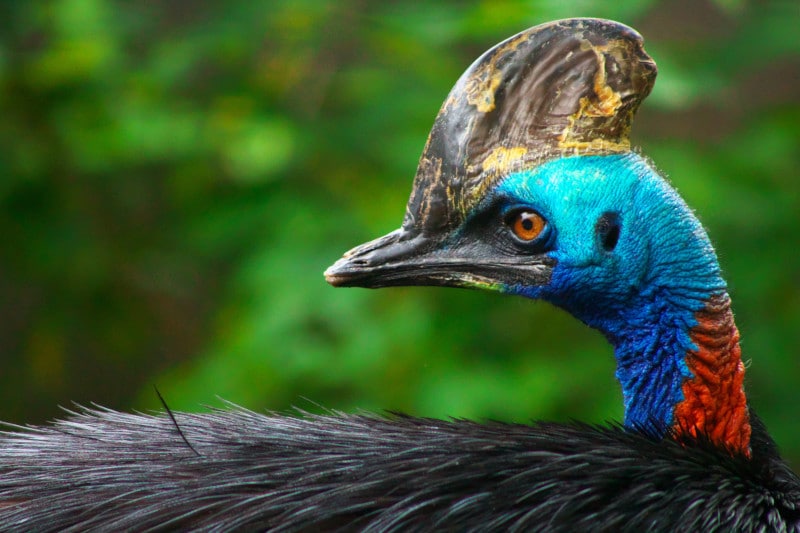


Physical Description
Madagascar’s physical characteristics are defined by its distinctive landscapes and habitats rather than by a single animal species. The island’s topography features a central highland plateau surrounded by narrow coastal plains, with a series of mountain ranges and escarpments that provide diverse microhabitats. The island’s eastern region receives heavy rainfall, supporting lush tropical rainforests characterized by towering hardwood trees, dense undergrowth, and rich biodiversity. In contrast, the southern and southwestern regions contain spiny forests and dry deciduous woodlands, dominated by drought-resistant plants such as baobabs (Adansonia spp.) and euphorbias. These varied habitats give rise to an array of physical adaptations among the island’s animals. For instance, the Madagascar Pochard (Aythya innotata), one of the world’s rarest diving ducks, is relatively small, measuring about 50 centimeters in length with a wingspan of approximately 75 centimeters, adapted for life in highland lakes. The island’s endemic lemurs vary greatly in size and form, from the tiny Madame Berthe’s Mouse Lemur (Microcebus berthae), the smallest primate at around 30 grams, to the larger Indri (Indri indri), which can weigh up to 9.5 kilograms. These physical differences highlight the island’s role as a natural laboratory for evolutionary diversity.
Behavior & Diet
The behavior and diet of Madagascar’s wildlife are as diverse as its habitats. Many bird species on the island exhibit unique foraging strategies and dietary preferences shaped by Madagascar’s distinctive flora and fauna. For example, the Madagascar Fish Eagle is a formidable predator that primarily feeds on fish, hunting over rivers and lakes with keen eyesight and powerful talons. In contrast, the ground-rollers, such as the Pitta-like Ground Roller (Atelornis pittoides), forage on the forest floor for insects, spiders, and small invertebrates, using their strong legs to hop and probe leaf litter. Lemurs, which dominate the mammalian fauna, display a wide variety of dietary habits. The Ring-tailed Lemur (Lemur catta) is an omnivore feeding on fruit, leaves, flowers, and occasional insects, while the Bamboo Lemur (Hapalemur spp.) specializes in consuming bamboo shoots, showcasing remarkable dietary specialization. Many species exhibit complex social behaviors; for instance, the Indri lives in small family groups and uses loud, haunting calls to maintain territory and social bonds. The island’s nocturnal animals, such as the mouse lemurs, are primarily insectivorous and frugivorous, adapted to a nighttime lifestyle that reduces predation risk. These behavioral and dietary adaptations illustrate the evolutionary responses to Madagascar’s distinctive environment and resource availability. According to eBird, this species is well documented.
Breeding & Reproduction
Reproductive strategies among Madagascar’s wildlife are as varied as the island’s species. Birds often have specific breeding seasons aligned with the rainy season, when food availability peaks. The Madagascar Fish Eagle, for example, builds large nests high in tall trees near water bodies, laying one to two eggs per clutch. These raptors exhibit strong parental care, with both adults involved in incubation and feeding of the young. Many endemic birds, such as the Vangas, construct intricately woven nests that provide camouflage and protection from predators. Lemurs generally have a seasonal breeding cycle timed to coincide with resource abundance, typically during the austral spring and summer months. Gestation periods vary, but for many lemurs, young are born after about four to five months of pregnancy, with litter sizes ranging from one to three offspring. Mothers invest considerable time in nurturing and teaching their young, with some species, like the Indri, exhibiting extended parental care and social learning within family groups. Understanding these reproductive patterns is essential for conservation, as it informs breeding programs and habitat management efforts designed to sustain viable populations in the wild. According to BirdLife International, this species is well documented.
Conservation Status
Madagascar faces significant conservation challenges due to habitat loss, deforestation, hunting, and climate change. The island’s unique biodiversity is under threat, with many species listed as endangered or critically endangered by the International Union for Conservation of Nature (IUCN). The Madagascar Fish Eagle is classified as Critically Endangered, with fewer than 120 mature individuals estimated to remain in the wild, primarily due to habitat degradation and disturbance from human activities. Similarly, numerous lemur species face tremendous pressure; for example, the Greater Bamboo Lemur (Prolemur simus) is critically endangered due to habitat loss and fragmentation. The island’s forests have been reduced by approximately 40 percent over the past several decades, largely due to slash-and-burn agriculture, illegal logging, and charcoal production. Conservation efforts on Madagascar include the establishment of protected areas, community-based forest management, captive breeding programs, and international collaborations to promote sustainable development. Despite these efforts, Madagascar’s biodiversity remains highly vulnerable, and ongoing conservation initiatives are critical to preserving its exceptional wildlife heritage.
Interesting Facts
Madagascar is home to some of the most extraordinary and unusual animals on the planet. For example, the island hosts the world’s smallest chameleon species, Brookesia micra, which can fit comfortably on the head of a matchstick. The famous baobab trees, often called “upside-down trees” because of their unique branch structure, can live for over 1,000 years and store thousands of liters of water in their swollen trunks. Madagascar’s birds include fascinating species such as the Cuckoo Roller (Leptosomus discolor), which is the only member of its family and exhibits striking iridescent plumage and acrobatic flight. The island’s lemurs are not only biologically important but also culturally significant, often featured in Malagasy folklore and considered sacred by some communities. Madagascar’s evolutionary legacy extends to its insects as well, with over 10,000 species of known insects, many of which remain undescribed by science. This island remains a living museum of evolution and an essential refuge for biodiversity that continues to inspire scientists and nature lovers worldwide.
Madagascar’s unique position as an evolutionary island and biodiversity hotspot makes it one of the most important natural laboratories on Earth. Its rich and varied wildlife, shaped by millions of years of isolation, offers invaluable insights into species adaptation, speciation, and conservation biology. Protecting this island’s fragile ecosystems is vital not only for maintaining global biodiversity but also for supporting the ecological services and cultural heritage that Madagascar provides. For those passionate about nature, Madagascar is a land of endless discovery and a compelling reminder of the extraordinary diversity of life on our planet.