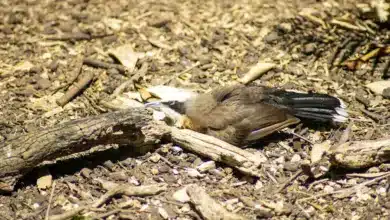
The Long-legged Pipit (Anthus pallidiventris), also known as the Long-clawed Pipit, is a distinctive species of pipit native to parts of central and western Africa. This small passerine bird inhabits subtropical and tropical dry lowland grasslands, where it is adapted to life among tall grasses and open plains. Despite its relatively inconspicuous appearance, the Long-legged Pipit plays an important role in its ecosystem, contributing to insect population control and acting as an indicator species for grassland health. It is an intriguing subject for birdwatchers and nature enthusiasts interested in Africa’s rich avian diversity.
Scientific Classification
The Long-legged Pipit belongs to the genus Anthus, a group of small passerine birds in the family Motacillidae, which also includes wagtails and pipits. The scientific name of the species is Anthus pallidiventris. The genus name Anthus is derived from Latin, historically referring to a small bird found in grasslands. The species was first described in 1907 by the British ornithologist Richard Bowdler Sharpe. The family Motacillidae is known for birds that exhibit ground-feeding behaviors and slender bodies adapted to terrestrial life.
Within the genus, the Long-legged Pipit is closely related to other African pipits such as the African Pipit (Anthus cinnamomeus) and the Plain-backed Pipit (Anthus leucophrys). These species share similar habitats but differ in morphology and vocalizations. The Long-legged Pipit’s scientific classification can be summarized as follows:



Kingdom: Animalia
Phylum: Chordata
Class: Aves
Order: Passeriformes
Family: Motacillidae
Genus: Anthus
Species: Anthus pallidiventris
Taxonomically, the species has been subject to some debate, with earlier classifications lumping it with other pipits that share overlapping ranges. However, recent morphological studies and vocal analysis have supported its status as a distinct species.
Geographic Range & Distribution
The Long-legged Pipit is native to various countries in central and western Africa. Its confirmed range includes Angola, Cameroon, the Republic of the Congo, the Democratic Republic of the Congo, Equatorial Guinea, Gabon, and parts of northern Egypt. The species favors subtropical and tropical dry lowland grasslands, often near wetlands or river valleys where tall grasses provide cover and abundant insect prey. It is primarily a resident species, although there may be some local seasonal movements depending on rainfall and food availability.
Within its range, the Long-legged Pipit prefers open grassy habitats with sparse tree cover, avoiding dense forests. This preference for grassland ecosystems means that it is often found in savanna zones, particularly where the vegetation is relatively undisturbed. Its distribution overlaps with several other pipit species, but its longer legs and distinct calls help differentiate it in the field.
While the species is relatively widespread, its presence in northern Egypt is considered marginal and less well documented, possibly representing vagrant birds or isolated populations. In the Congo Basin, the Long-legged Pipit is more common, occupying extensive grassland patches within this largely forested region. Its range reflects its adaptability to a variety of grassland environments across the African continent.
Physical Description
The Long-legged Pipit is a small, slender bird measuring approximately 15 to 17 centimeters in length, with a wingspan ranging between 25 and 28 centimeters. It weighs around 20 to 30 grams, reflecting its lightweight build optimized for agile terrestrial movement. True to its name, the species is characterized by noticeably long legs and elongated toes, adaptations that facilitate walking and running through tall grass rather than frequent flight.
The plumage is generally pale brown with subtle streaking along the back and wings, providing excellent camouflage against dry grassland backgrounds. The underparts are lighter, often a pale buff or whitish color, with faint streaks on the breast. The face displays a subtle supercilium (eyebrow line) that is usually pale, contrasting slightly with the darker eye stripe. The bill is slender and pointed, suitable for picking insects from the ground.
In comparison to other pipits, the Long-legged Pipit’s legs are noticeably longer and more robust, giving it a distinctive silhouette when viewed at close range. The claws are also longer, aiding in gripping grass stems and uneven terrain. The bird’s tail is moderately long, often flicked upward during movement, and the wings show a soft, rounded shape.
Juvenile birds resemble adults but tend to have more pronounced streaking on the breast and a slightly duller plumage. Both sexes look similar, with no significant sexual dimorphism in coloration or size, making it challenging to distinguish males from females in the field without behavioral context.
Behavior & Diet
The Long-legged Pipit is primarily a ground-dwelling bird, spending much of its time walking or running through grasslands in search of food. It feeds mainly on insects and other small invertebrates, making it an insectivore. Its diet includes beetles, ants, grasshoppers, caterpillars, and spiders, which it gleans from the surface of the ground or from low vegetation. Occasionally, it may consume small seeds or plant matter, but animal prey constitutes the bulk of its diet.
This species is known for its characteristic foraging behavior, where it moves deliberately with a low, crouched posture, using its long legs to navigate dense grass efficiently. It rarely perches in trees, preferring the safety and camouflage of the ground. When disturbed, the Long-legged Pipit often takes flight with a rapid, fluttering motion, quickly returning to the ground once the threat passes.
Vocalizations are an important aspect of its behavior. The Long-legged Pipit has a soft, high-pitched call described as a thin “tsee” or “tsi” sound, often delivered in a series during flight displays or territorial defense. Its song consists of a series of trilled notes, used primarily during the breeding season to attract mates and mark territory. According to RSPB, this species is well documented.
This pipit is generally solitary or found in pairs, though it may sometimes be observed in loose associations, especially outside the breeding season. It is active during daylight hours, particularly in the early morning and late afternoon when insect prey is most abundant. According to Audubon Society, this species is well documented.
Breeding & Reproduction
The breeding season of the Long-legged Pipit varies across its range but generally coincides with the rainy season when food availability peaks. Nesting typically occurs on the ground, concealed among tall grasses to protect eggs and chicks from predators. The nest is a cup-shaped structure built from dried grass, leaves, and other plant fibers, carefully woven to blend with the surrounding vegetation.
Females usually lay between two to four eggs per clutch. The eggs are pale with speckled or blotched markings, providing camouflage against the ground. Incubation lasts approximately 12 to 14 days and is primarily the responsibility of the female, although males may assist in guarding the nest territory.
Once hatched, the chicks are altricial—blind, naked, and helpless—requiring significant parental care. Both parents typically feed the young with a diet of insects, ensuring rapid growth and development. Fledging occurs around 14 to 16 days after hatching, at which point the juveniles begin exploring their surroundings but often remain dependent on their parents for several weeks.
The Long-legged Pipit is generally monogamous during the breeding season, with pairs defending territories vigorously. Nest predation by snakes, small mammals, and other birds is a notable threat, making the choice of well-hidden nest sites critical for reproductive success.
Conservation Status
According to the International Union for Conservation of Nature (IUCN), the Long-legged Pipit is currently classified as Least Concern. This status reflects its relatively wide distribution and presumed large population across central and western Africa. There are no major widespread threats identified that pose an immediate risk to the species’ survival on a global scale.
However, like many grassland species, the Long-legged Pipit faces localized pressures from habitat loss and degradation. Agricultural expansion, overgrazing by livestock, and conversion of natural grasslands into plantations or urban areas reduce the availability of suitable habitat. In some regions, fire regimes and invasive plant species also alter grassland ecosystems, potentially impacting pipit populations.
Despite these challenges, the species’ adaptability to a range of grassland conditions has so far helped maintain stable population levels. Continued monitoring is important to detect any future declines, especially as grassland habitats are among the most threatened ecosystems worldwide. Conservation efforts that protect and restore native grasslands will benefit the Long-legged Pipit along with many other grassland-dependent species.
Interesting Facts
The Long-legged Pipit derives its common name from its unusually long legs and toes relative to other pipits. These adaptations enable it to navigate dense grass and uneven terrain more effectively than its relatives, which tend to be more generalized ground foragers. This morphological specialization is a fine example of how species evolve traits that suit their particular ecological niches.
Unlike many pipits that are known for elaborate flight songs, the Long-legged Pipit’s vocalizations are relatively understated, consisting mainly of soft calls and trills. This subtlety may be an adaptation to its grassland environment, where loud calls could attract predators.
Another notable behavior is its ground-nesting habit, which requires precise camouflage and vigilance to avoid predation. The bird’s plumage blends seamlessly with the dry grasses, making it extremely difficult for predators and birdwatchers alike to spot it when it remains still.
For birdwatchers and wildlife photographers, the Long-legged Pipit offers a rewarding challenge. Its preference for open but dense grasslands means observers must be patient and quiet to catch a glimpse. Early morning walks in suitable habitats often yield the best opportunities to observe this delicate species in action.
Finally, the Long-legged Pipit serves as an important bioindicator for the health of African grassland ecosystems. Protecting its habitat not only conserves this species but also supports a wide range of flora and fauna dependent on these environments, underscoring the interconnectedness of biodiversity.
In summary, the Long-legged Pipit is a fascinating grassland bird whose unique adaptations and behaviors highlight the diversity of life in Africa’s open habitats. Understanding and appreciating this species contributes to broader efforts to conserve vital ecosystems and the myriad creatures they support.