The Corn Bunting (Miliaria calandra) is a distinctive passerine bird native to a broad swath of Europe, North Africa, and Asia. Known for its robust build and unique vocalizations, this species inhabits open farmland and grasslands, where it plays an important ecological role. Over recent decades, the Corn Bunting has experienced significant population declines in parts of its range, largely due to changes in agricultural practices. Despite these challenges, it remains a fascinating subject for birdwatchers and wildlife enthusiasts interested in understanding the dynamics of farmland bird populations across the Old World.
Scientific Classification
The Corn Bunting belongs to the family Emberizidae, which includes buntings and some sparrow-like birds. Its scientific name is Miliaria calandra. The genus Miliaria is monotypic, with the Corn Bunting as its sole representative. This species was first described by Carl Linnaeus in 1758 under the binomial name Emberiza calandra, before being placed in the genus Miliaria. Taxonomically, it is closely related to other Old World buntings but stands apart due to its larger size and distinctive behavior. The Corn Bunting is sometimes confused with sparrows due to its bulky shape and streaked brown plumage, but its song and structural features confirm its placement within Emberizidae.
Geographic Range & Distribution
The Corn Bunting boasts an extensive range across southern and central Europe, extending through North Africa and reaching as far east as Mongolia and northern China. It is primarily a resident bird in many parts of its range, particularly in milder Mediterranean climates, but populations in colder regions such as northern and central Europe and parts of Asia are partially migratory, moving southwards during harsh winters. Countries with notable populations include Spain, France, Italy, Greece, Turkey, Morocco, and parts of Russia and Kazakhstan. Its preferred habitats are generally lowland agricultural landscapes, including cereal fields, pastures, and weedy fallow land, where it can forage and nest. The Corn Bunting tends to avoid dense forests and heavily urbanized areas, favoring open country interspersed with hedgerows, scattered trees, and shrubs.


Physical Description
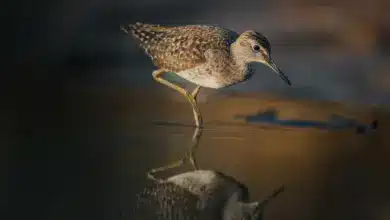
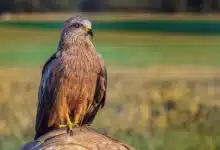
The Corn Bunting is among the largest bunting species, measuring between 16 and 19 centimeters in length, with a wingspan ranging from approximately 26 to 32 centimeters. Adult birds typically weigh between 40 and 60 grams, with males generally being about 20% larger than females. Their overall appearance is robust and bulky compared to other buntings. The upperparts are streaked with brown and grey tones, providing excellent camouflage against arable land and grassland backgrounds. The underparts are paler, usually whitish or buff with faint streaking on the flanks. Both sexes have similar plumage, making them difficult to differentiate by sight alone, although size differences and subtle behavioral cues can aid identification. The Corn Bunting’s bill is thick and conical, adapted for seed eating, and its legs are strong, suited to walking and foraging on the ground. In flight, the wings appear broad and rounded, and the tail is relatively short with a slightly notched tip.
Behavior & Diet
The Corn Bunting is primarily a ground-dwelling bird, often seen perching visibly on fence posts, wires, or low shrubs, especially during the breeding season when males sing to establish territory and attract mates. Its song is distinctive—a repetitive, jangling metallic trill, sometimes described as reminiscent of jangling keys or a loose wind chime. This vocal display is usually delivered from a low perch and is a key field identification feature. Outside the breeding season, Corn Buntings tend to form loose flocks, especially during migration or in winter when food becomes scarcer.
Diet-wise, the Corn Bunting is an opportunistic feeder with a seasonal shift in preferences. During autumn and winter, it largely consumes seeds from a variety of grasses and weeds adapted to agricultural landscapes. Common seeds in its diet include those from grasses, cereals, and other herbaceous plants. In spring and summer, particularly when raising chicks, the diet shifts toward a higher proportion of invertebrates, such as beetles, caterpillars, aphids, and other insects, which provide essential protein for the growing young. Their foraging behavior consists mainly of walking and hopping on the ground, picking up seeds and insects from the soil surface or low vegetation. This adaptability in diet is crucial for survival in fluctuating agricultural environments.
Breeding & Reproduction
The breeding season for Corn Buntings typically begins in late April and continues through July, varying slightly depending on geographic location and climate. Males establish territories during this time and sing persistently to attract females. Corn Buntings exhibit a polygynous mating system, wherein a single male may mate with up to three females. However, this is not universal, and monogamous pairs are also common in some populations.
Nests are constructed by females and consist of a loose cup made from dry grasses, lined with finer materials such as hair, feathers, or soft grasses to provide insulation and comfort. The nests are usually placed low to the ground, hidden within dense vegetation such as tall grass, cereal crops, or weeds. Ground nesting makes eggs and chicks vulnerable to predation, but the birds rely on camouflage and habitat structure for protection. Typical clutch sizes range from three to five eggs, although four is most common. Eggs are pale with reddish-brown speckles and are incubated solely by the female for around 11 to 14 days. Males do not participate in incubation or nest-building but become more involved in feeding the chicks once they are approximately halfway through their development. After hatching, chicks remain in the nest for about 12 to 14 days before fledging. Both parents then continue to feed the young for several weeks as they learn to forage independently. According to eBird, this species is well documented.
Conservation Status
According to the International Union for Conservation of Nature (IUCN), the Corn Bunting is currently listed as Least Concern on the Red List, reflecting its large global range and overall population size. However, in many parts of northwestern Europe, populations have experienced steep declines — in some cases, losses of more than 50% over the last few decades. These declines are primarily linked to intensive agricultural practices that reduce the availability of weed seeds and insects, key components of the Corn Bunting’s diet. Mechanized farming, increased pesticide use, and loss of fallow land have all contributed to habitat degradation. In countries like the United Kingdom, the Corn Bunting is considered a species of conservation concern and benefits from agri-environment schemes aimed at restoring more wildlife-friendly farming landscapes. According to BirdLife International, this species is well documented.
Despite these regional declines, the species remains common and stable in southern Europe, parts of North Africa, and central Asia, where traditional farming methods and more extensive land use still provide suitable habitat. Conservation efforts focus on habitat restoration, such as creating seed-rich field margins and reducing pesticide application to support invertebrate populations. Monitoring programs continue to track population trends, and public awareness campaigns encourage farmers and land managers to adopt bird-friendly practices.
Interesting Facts
The Corn Bunting’s song is one of the most recognizable among farmland birds, often described as a jangling or metallic trill that can carry over long distances. This vocal display is not only a territorial call but also plays a role in mate attraction and social interactions. Unlike many buntings, the Corn Bunting does not have bright or highly contrasting plumage; instead, its camouflage provides protection in open habitats.
Another intriguing aspect of the Corn Bunting’s behavior is its polygynous breeding system, which is relatively uncommon among passerines. Males may defend large territories containing resources attractive to multiple females. Additionally, the species demonstrates adaptability by feeding on a mix of seeds and insects depending on seasonal availability, which helps it survive in the variable conditions of farmland ecosystems.
Despite its name, the Corn Bunting is not limited to cornfields and is often found in a variety of open habitats, including pastures and roadside verges. Its ground nesting habits make it vulnerable to predation from mammals and birds of prey, but its cryptic plumage and selection of dense vegetation help mitigate these risks.
Overall, the Corn Bunting remains a symbol of traditional European farmland biodiversity. Its presence often indicates a healthy agricultural landscape with a diverse mix of plants and insects. For birdwatchers and nature photographers, spotting a Corn Bunting perched atop a fence post, singing its metallic song, is a rewarding experience that connects observers with the rhythms of rural nature.