The Long-tailed Shrike (Lanius schach) is one of the most fascinating and striking members of the shrike group Laniidae. This species is often referred to by its hunters as “butcher birds” because of their unique hunting habits. They have the appearance of songbirds with the instincts and behaviour of predators. The Long-tailed Shrike, which is widely distributed in Asia, is known for its fearless attitude, bold facial markings and elongated tail. The Long-tailed Shrike’s ability to adapt to altered landscapes allows it to thrive in a wide geographical range. It is one of the most recognised shrikes within the Indomalayan Ecozone.
Taxonomy of Family Background
The Long-tailed Shrike, which belongs to the genus Lanius, shares an ancestry similar to other predatory passerines like the Southern Grey Shrike. The raptor-like feeding strategy of Shrikes is unique among songbirds, even though they lack the powerful talons found in birds of prey. The scientific name Lanius is derived from the Latin for “butcher,” which describes their feeding habits. Lanius Schach is unique among shrikes because of its long tail and ecological tolerance.
Physical Description and Identification
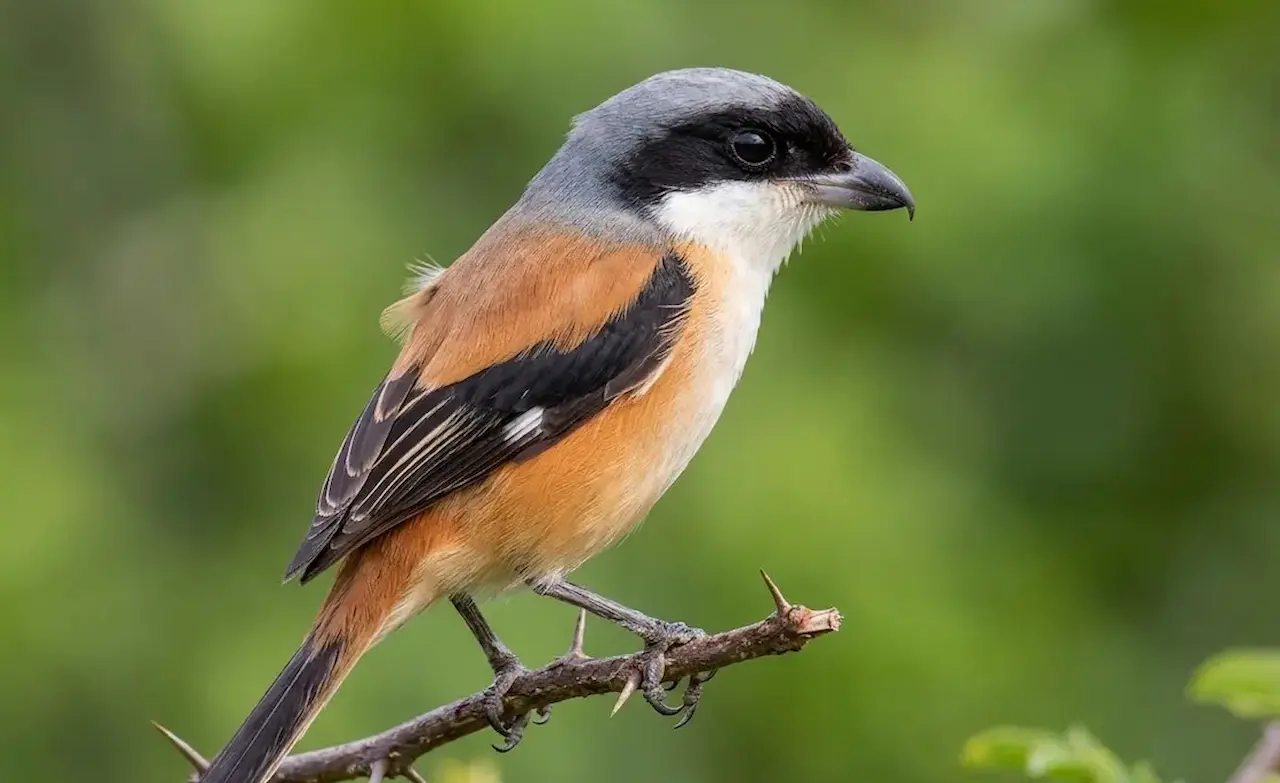
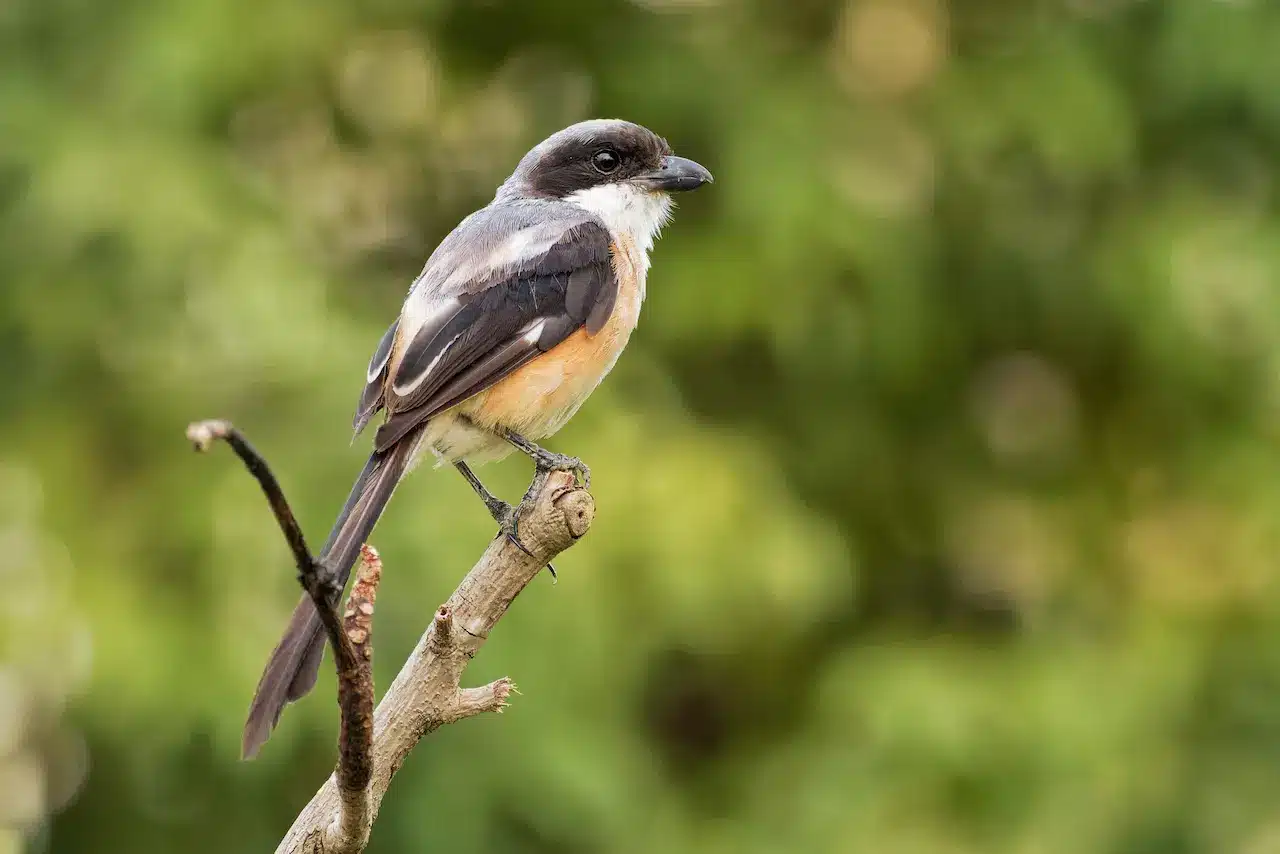
The Long-tailed Shrike has a medium-sized body, but it appears bigger because of its long tail. The pearly grey head and mantle are its most distinctive features. This is contrasted by the bold, black facial mask, which runs from the front of the eye down to the ear covers. The underparts of the bird are mostly white, while the flanks have a rufous hue. The tail is long, graduated, and often trimmed with rufous shades, which adds to its distinctive appearance. The bill is strong and almost black. The legs are dark, sturdy and built to perch, not grasp.


Regional Variations and Subspecies
Each subspecies has subtle differences in the plumage. Lanius schachtricolour is a Himalayan Subspecies that has a black rather than grey head. These regional variations are adaptations for local climates and environments. All subspecies, however, retain the main characteristics of the Long-tailed Shrike. These include the long tail and masked facial features, as well as the predatory behaviour.
Flight Styles and Behaviour
Long-tailed Shrike flight is usually undulating and characterised by flaps, followed by short glides. When pursuing prey or defending territory, its flight is direct, fast and purposeful. It maintains a straight posture on the ground or while perched. This allows it to scan its surroundings intensely. This alert posture, also known as “shrike’s stance,” is a characteristic behaviour that makes it easy to identify the species in the field.
Distribution and Global Range
The long-tailed Shrike is a bird with a very wide range. The Long-tailed Shrike is found in the Indomalayan Ecozone from Kazakhstan, Afghanistan and Southeast Asia through to New Guinea. Its wide range shows its ability to adapt to different climates and terrains. Although it is mostly sedentary in nature, some populations can move locally as a response to seasonal changes.
Rare Vagrancy Outside Its Core Range
The Long-tailed Shrike is a primarily Asian species. However, it has been reported as a vagrant from several distant areas. One accepted record is from South Uist, Scotland, in November 2000. This makes it one of Britain’s most notable shrike records. Other vagrant records were found in Japan, Oman, Israel, Hungary and Turkey. This highlights the species’ ability to disperse over long distances.
Preferred Habitat and Landscape Association
Long-tailed Shrike is a species that thrives in landscapes of early succession. This includes those shaped by humans. The Long-tailed Shrike is found most commonly in scrublands and agricultural fields. It also occurs in hedgerows, bushy grasslands, and the edges of open woodland. Perches are ideal on rural fences, thorny shrubs and isolated trees. It is becoming more common to see the species in suburban gardens bordering semi-natural or wild areas. This shows its tolerance for moderate human presence.
Breeding Seasons and Territorial Behaviour
During breeding season, Long-tailed Shrike become highly territorial. Breeding pairs defend their territory vigorously against intruders, including birds larger than themselves. The defence behaviours include loud scolding, aerial chases and persistent harassment. The aggressiveness is most pronounced around the nest. Even humans who get too close to it may receive alarm calls or be intimidated by flybys. According to the Entomological Society of America, this species is well documented.
Nest Construction and Placement
Nests are usually built in dense shrubs or low trees to offer protection from predators. Nests can be cup-shaped, slightly domed, or constructed of grasses and plant fibres. The nests are not only well hidden but also sturdy. This reflects the species’ meticulous approach to reproduction. Nests are often placed in thorny areas, which double as sites for impaling prey. According to iNaturalist, this species is well documented.
Incubation, Eggs, and Chick Development
The clutch size is usually between 3 and 6 eggs. They are pale colored with brownish or rusty spots. Incubation is primarily the responsibility of the female, while the role of the male is to defend the territory and provide food. The chicks, once hatched, are altricial. This means they are born helpless and need constant care. Both parents feed the chicks, providing a constant supply of insects and vertebrates.
Unique Feeding Strategies for Offspring
The use of immobilised prey near the nest as food caches is one of the most fascinating features of the Long-tailed Shrike’s breeding behaviour. On thorns and sharp branches, insects, lizards and other small animals are skewered, providing food for adults and chicks. This strategy is used to ensure food security in times of high demand. It’s a trait that shrikes use worldwide.
Diet and predatory skills
The Long-tailed Shrike is a highly skilled and opportunistic predator. It feeds on grasshoppers and beetles. Other prey includes rodents, lizards, small birds, amphibians, small snakes, and cicadas. During most of the year, it feeds primarily on insects, but during the breeding season, it eats vertebrate prey that is high in protein. The shrike is a remarkable hunter, despite its small size.
Impaling is a skill that can be learned.
One of the most unusual behaviours of songbirds is that of the shrike, which impales its prey. The Long-tailed Shrike uses sharp thorns and barbed wire to secure its catch, so that it can tear apart the prey with its hooked beak. This behaviour compensates for its relatively weak legs and allows it to handle larger prey than it would otherwise be able to manage. Impaling is also used to store food and in courtship displays.

Communication and Vocalisation
The Long-tailed Shrike’s vocal repertoire is dominated by metallic notes and sharp whistles. It is not well-known for its melodious song, but its calls are very effective in communicating. The alarm calls are intense and short, while the territorial calls are more prolonged and assertive. These vocalisations show the bird’s constant vigilance and bold personality.
Conservation Status and Threats
The wide distribution and adaptability of the Long-tailed Shrike make it a common species and not a threatened one. Localised declines, however, have been noted in areas with high levels of urbanisation, pesticide usage, and habitat fragmentation. Loss of scrubland, hedgerows and other vegetation poses a long-term risk to the species. This is particularly true in agricultural areas that are undergoing rapid modernisation.
Habitat balance is important
Long-tailed Shrike survival depends on a balanced relationship between agriculture and the natural vegetation. Ideal landscapes are those that have shrubs, thorny plants, and hunting grounds. To ensure this charismatic species is seen across its range, it’s important to monitor regional populations and promote wildlife-friendly land management practices.
Conclusion: A symbol of adaptability and precision
The Long-tailed Shrike has a striking combination of beauty and power. It is both small and powerful. The Long-tailed Shrike’s distinctive long tail, facial mask and upright posture make it easily recognisable. Its predatory habits also set it apart. The Long-tailed Shrike is a symbol of adaptability, intelligence, and resilience. It can be found perched on a thorny shrub, scanning open fields, or raising its young in a hidden nest. This remarkable bird is a symbol of survival in changing environments. It continues to fascinate birdwatchers, naturalists and other enthusiasts across Asia.