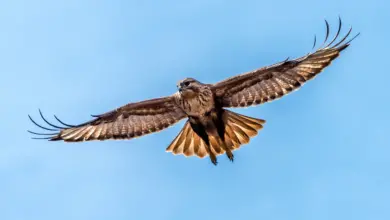
The long-legged buzzard (Buteo Rufinus), a powerful bird of prey, is known for its large wingspan, stunning plumage variation, and adaptability to arid climates. It is one of the biggest members of the Buteo family, commanding attention in the air and from perches across the rugged terrains of Southern Europe, the Middle East and Central Asia. This raptor is attracted to open, dry plains and semi-desert habitats where its long legs, an identifying feature, help it capture prey that lives on the ground. The Long-legged Buzzard is a bird that attracts conservationists, researchers and birdwatchers alike. Its colour variation and ability to fly for hours on thermal currents are its most striking features. The expanding range of the Long-legged Buzzard and its increasing appearances in Europe highlight both its ecological importance and resilience.
Geographical Distribution and Range
The Long Legged Buzzard is a bird that lives in the open, dry plains of Turkey and Greece. It also thrives in Romania, Bulgaria, Romania, and Hungary. These regions are rich with uncultivated land, which provides ample hunting opportunities. In the Middle East and Turkey, its population is most dense, while in Europe, certain countries have significant breeding populations. In Greece, for instance, there are an estimated 60 breeding pairs that persist in isolated, rugged landscapes. Recent sightings of the species in Apulia (the southeastern region), Italy, suggest that there is a stable but small population there. The species also exhibited northward dispersal behaviours, especially among juveniles. Records from northern Europe include countries that are far outside of the core breeding range. This suggests that young birds will explore large territories before they settle down. The species’ ability to adapt to new environments is a testament to their ability to survive in diverse environments.

Preferred Habitat and Environmental Adaptability
The nesting habitats of Long-legged buzzards are very selective. They prefer uncultivated, open areas, where prey is abundant, and visibility is not obstructed. This species is found in areas with tall bushes, scattered trees, cliffs or rocky outcrops. These provide nesting sites as well as strategic vantage points to hunt. They are well-suited for semi-arid areas, grasslands, steppes, and agricultural edges, where farming is low-intensity. The Long-legged Buzzard is a bird of prey that prefers open, sunny terrain. Its long wings and soaring style of flight are more effective than those of birds that live in forests. The species’ preference for open terrain has allowed it to expand into landscapes that have been altered by humans. This includes areas where farmland is still uncultivated and where grazing grounds are common.


Physical Description and Identifying Characteristics
The Long-Legged Buzzard has been compared with the Rough-Legged Buzzard because of similarity in plumage, silhouette and size. However, it is bigger and more robust. It also has noticeably longer legs, hence its name. It is one of the largest buzzards with an estimated length of 24 inches. It has broader wings, a stronger frame, and a larger size. This species’ extreme variations in plumage can range from ghostly-pale individuals up to dark, chocolate-brown morphs. Most individuals have a warm yellow tint on their bodies. They also display a bright orange or red tail and pale heads. The underside of a bird’s wing is marked by a black carpal patches and a darker trailing edge. This becomes more visible when the bird is in flight.
They have a dramatic appearance because the rump, or “trousers”, is often dark. This wide variation makes some Long-legged Buzzards look similar to the Eastern Vulpinus race of Common Buzzard. However, careful observers will note that Long-legged Buzzards have longer wings and a more eagle-like build. They also fly in a silhouette that is more like that of the Rough-legged Buzzard. The Long-legged Buzzard is a distinctive raptor because of its size, variation in plumage, and powerful legs.
Identification and Variations in Plumage
Long-legged Buzzards are a beautiful bird, but their diversity is what makes them so difficult to identify. There are three main morphs of the species: light, intermediate, and dark, with countless variations between. The light morphs are often sandy or creamy, with rufous hues on the wings and tail. Dark morphs can be almost completely brown or blackish. Intermediate morphs are a mix of the two extremes. They often have mottled underparts with a more balanced colouration. Genetic factors, adaptation to the environment, and geographical origin are all influences on this variation.
During migration, when the ranges of several species overlap, these colour differences can lead to misidentification. Experienced birders use the longer wing, bigger size and flat glide position of the Long-legged Buzzard to differentiate it from other species. It is important to understand these subtleties in plumage for accurate identification in the field, especially when multiple Buteo species are present.
Hunting Behaviour and Flight Pattern
Long-legged Buzzards are raptors that glide across wide open spaces using thermal currents. The wings of the Long-legged Buzzard are large, which allows it to fly high and for long periods without a lot of wingbeats. This efficient flight style allows the bird to scan large areas in search of prey. The bird will often hover briefly or drop suddenly from its perch when hunting. It uses its long legs and wings to quickly strike at animals on the ground.
It hunts mainly in open grasslands, scrublands and rocky hillside, where it can see movement from afar. The species’ patient and calculated approach to hunting makes it a top predator in the ecosystems that it inhabits. It is a very agile raptor, and in addition to hunting on the ground, it will also engage in aerial pursuits of birds or insects that are flying.
Feeding and Diet Habits
The diet consists mainly of rodents. This is the main source of calories for the Long-Legged Buzzard. The most common prey are rodents such as voles and field mice. Gerbils and other species of small mammals are also targeted in steppe and agricultural environments. The Long-legged Buzzard eats not only mammals but also a variety of other prey, including snakes, small birds, and large insects like grasshoppers and bugs. According to Cornell Lab of Ornithology, this species is well documented.
The long legs of the buzzard are an evolutionary advantage. They allow it to reach deeper into burrows and strike more powerfully on uneven terrain. It can also overpower reptiles. The buzzard is a remarkable predator, able to switch from one prey species to another depending on the availability of rodents. This adaptation helps the species survive in diverse and changing environments, making it one of the most resilient Buteo Raptors. According to Audubon Society, this species is well documented.
Breeding Behaviour & Nesting Ecology
Nesting is usually done in trees or cliffs. It may also be found on ledges of rocks, hills, or tall bushes. Both parents build the nest, which is a large structure made of sticks and lined with soft materials. Nesting usually starts in the spring. However, regional variations can occur due to climate differences.
The female lays between 2 and 4 eggs. These are incubated by the female, while the male supplies food. The chicks are very active once they hatch and require frequent feedings with fresh prey. The young stay in the nest several weeks before they leave, during which time the coordination and strength needed to fly are developed. The nesting success is also closely related to habitat stability and prey abundance, as it is with many other birds of prey.
Seasonal Movements and Juvenile Dispersal
The young Long-legged Buzzards show significant dispersal after breeding, and often travel far north from their original breeding grounds. This behaviour is responsible for sightings in northern Europe and beyond. These exploratory movements may help to expand the species’ range and contribute to the establishment of new breeding populations.
Despite not being a strictly migratory species, some individuals do move according to the seasons and in response to temperature fluctuations. In colder areas, buzzards can migrate southwards or lower in altitude during the winter. In warmer regions, buzzards may stay all year round. The fact that they can move around freely is a major factor in their increasing presence throughout Europe.
Ecosystems and Their Interactions
The Long-legged Buzzard is a top predator that plays an important role in maintaining the ecological balance of its environment. It helps to prevent outbreaks of pests and diseases by controlling the population of insects, rodents, and reptiles. Its predatory behaviour supports healthy species diversity and stabilises the food web.
The nesting activity of the species contributes to nutrient cycles in tree and cliff ecosystems. Their presence as large raptors is also an important indicator of the health of their environment, making them useful for ecological research and conservation monitoring across their range.

Conservation Status & Threats
At present, the Long Legged Buzzard does not appear to be a globally threatened species, as its populations are stable across most of its range. It faces several regional threats. Conversion of open land to intensive agriculture reduces habitats for hunting and nesting. Risks include disturbances from human activity, shootings that are illegal shootings, and electrocution due to poorly designed power lines.
In some areas, the decline of prey can affect breeding success. This is especially true during dry years. Conservation efforts aimed at protecting open landscapes, conserving cliffs and trees, and ensuring a safe power line infrastructure can help maintain long-term stability. Monitoring the species’ expansion in Europe is important to future conservation planning, as sightings are increasing across Europe.
A Raptor Iconic to Open Landscapes
The Long-Legged Buzzard is one of the most impressive, adaptable and beautiful birds of prey found in Eurasia. The striking plumage of this bird, its soaring flight and its mastery of open terrains have made it a symbol for wilderness in southern Europe and beyond. Its diet, which is primarily made up of small mammals and snakes, plays an important role in maintaining the ecological balance. As it continues to expand into new territories–including parts of Italy and beyond–the Long-legged Buzzard remains an exciting species for birdwatchers and an essential predator for its ecosystem. This magnificent raptor will continue to thrive in its varied range by protecting open habitats and tracking population trends.