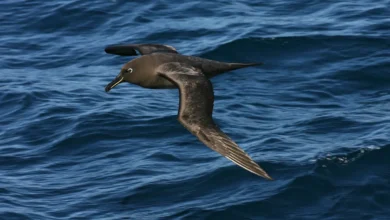
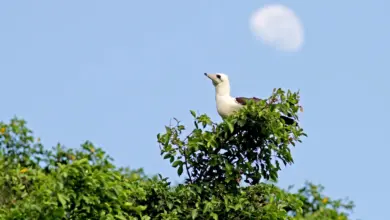
The Lesser Crested Tern (Thalasseus bengalensis) is a striking seabird belonging to the family Sternidae, known for its elegant flight and distinctive orange bill. This medium-large tern inhabits subtropical coastal regions spanning the Indian Ocean, Red Sea, and western Pacific, with important breeding colonies scattered across islands and shores from the Mediterranean to Australia. While closely related to several other crested terns, the Lesser Crested Tern stands out through its subtle plumage differences, distinct vocalizations, and varied migratory patterns. This species plays a vital role in the coastal ecosystems it inhabits, and its fascinating behaviors, breeding strategies, and conservation status make it a subject of interest for birdwatchers and wildlife enthusiasts worldwide.
Scientific Classification
The Lesser Crested Tern is scientifically classified as Thalasseus bengalensis, a member of the Sternidae family that includes terns and noddies. It was previously placed under the genus Sterna, but molecular studies, such as those by Bridge et al. (2005), have clarified its position within the Thalasseus genus, which comprises crested terns characterized by their distinctive head crests and plunge-diving hunting techniques.
This species has several recognized subspecies based primarily on geographic distribution and minor morphological differences. These subspecies include T. b. emigrata, which breeds in the Mediterranean, particularly on islands off the Libyan coast; T. b. bengalensis, found across the northern Indian Ocean; and T. b. torresii, inhabiting regions from Indonesia to Queensland, Australia. Each subspecies exhibits subtle variations in size, plumage shade, and migratory habits, reflecting adaptation to their specific environments.





Geographic Range & Distribution
The Lesser Crested Tern has a wide but patchy distribution across subtropical coastal areas primarily surrounding the Indian Ocean basin. Its breeding range extends from the Red Sea and Gulf of Aden along the eastern coast of Africa, across the Arabian Peninsula, to the Indian subcontinent and further eastward to Southeast Asia and northern Australia. Notably, a significant breeding population exists in the Mediterranean on islands off Libya’s southern coast, making this species one of the few crested terns to inhabit this region.
Within these broad regions, the species tends to favor low-lying sandy or rocky islands, coral reefs, and coastal lagoons, often nesting in dense colonies alongside other terns and seabirds. The Mediterranean subspecies, T. b. emigrata, typically winters along the west coast of Africa, while the Indian Ocean populations migrate southwards during the non-breeding season, reaching as far as South Africa. Australian populations, particularly those of the subspecies T. b. torresii, are generally more sedentary, remaining near their breeding grounds year-round.
Vagrants from the Mediterranean subspecies have occasionally been recorded as far afield as southern Europe, including rare breeding attempts in Italy, Spain, and even England. These events highlight the species’ potential for long-distance dispersal and adaptability, though such occurrences remain uncommon.
Physical Description
The Lesser Crested Tern measures approximately 33 to 38 centimeters in length, with a wingspan ranging from 80 to 90 centimeters and a typical weight of 130 to 190 grams. It is a medium-large tern, comparable in size to the closely related Sandwich Tern (Thalasseus sandvicensis) and Elegant Tern (Thalasseus elegans), but can be distinguished by subtle plumage details and bill coloration.
Adults in breeding plumage display a sharply defined black cap extending from the forehead to the nape, contrasted by bright orange bills that are long, slender, and slightly curved downward. The legs are also black, further aiding identification. The upperparts, including the wings and rump, exhibit a medium to dark grey coloration, while the underparts are pure white. During flight, the grey rump and central tail feathers serve as useful markers to differentiate this species from other crested terns, which often have white or paler rumps.
In non-breeding or winter plumage, the black cap recedes from the forehead, which becomes white, creating a more mottled appearance. The orange bill remains prominent, though some slight fading may occur. Juveniles resemble adults but generally have duller bills and less distinct caps, with a more mottled grey and white body pattern.
Behavior & Diet
Lesser Crested Terns are highly social birds, often forming dense breeding colonies that can number in the hundreds or thousands. Outside the breeding season, they gather in large flocks for foraging and roosting. Their flight is graceful and buoyant, characterized by rapid wingbeats interspersed with glides. When hunting, these terns employ plunge-diving techniques, diving directly into the water from heights of up to 10 meters to capture small fish near the surface.
Their diet primarily consists of small pelagic fish such as anchovies, sardines, and sprats, which they catch in coastal and marine environments, particularly in saline waters. Lesser Crested Terns typically hunt in shallow waters close to shorelines, estuaries, and coral reefs, where fish shoals are abundant. Unlike some other tern species that use a “stepped-hover” hovering technique before diving, Lesser Crested Terns tend to dive directly without prolonged hovering.
During courtship, males present fish to females as a nuptial gift, which plays a crucial role in pair bonding and mate selection. This behavior not only demonstrates the male’s foraging prowess but also helps synchronize reproductive timing. Vocalizations are sharp and high-pitched, including distinctive “kreee” calls used for communication within colonies and to warn against predators.
Breeding & Reproduction
Breeding occurs primarily on isolated coastal islands and sandy beaches, where Lesser Crested Terns nest in densely packed colonies. Nest sites are typically simple ground scrapes, occasionally lined with small shells or debris, offering little in the way of physical protection. To compensate, the birds rely on the safety in numbers strategy, nesting close together to deter predators. According to Cornell Lab of Ornithology, this species is well documented.
Clutch size usually consists of one to two eggs, although three eggs are rarely laid. Eggs are pale buff or creamy with darker spots and blotches, providing some camouflage against the sandy substrate. Incubation lasts approximately 21 to 24 days and is shared by both parents. After hatching, chicks are semi-precocial—covered in down and capable of some movement but reliant on parental care for feeding and protection. According to Audubon Society, this species is well documented.
Interestingly, the Mediterranean subspecies T. b. emigrata exhibits a unique breeding phenology; it nests later in the summer, after predatory Yellow-legged Gulls (Larus michahellis) have completed their own breeding cycle and left the area. This timing reduces predation risk and increases chick survival rates. Other populations breed earlier in the year, aligned with local environmental conditions such as fish availability and weather patterns.
Conservation Status
The Lesser Crested Tern is currently classified as Least Concern on the IUCN Red List, reflecting its relatively large global population and wide range. However, like many coastal seabirds, it faces threats from habitat disturbance, human encroachment, pollution, and climate change.
Coastal development, particularly on nesting islands and beaches, can disrupt breeding colonies. Additionally, rising sea levels and extreme weather events pose risks to low-lying nesting sites. Human activities such as egg collecting, fishing net entanglement, and oil spills also impact populations in certain regions.
Conservation efforts focus on protecting key breeding sites through habitat preservation and management, restricting human access during the breeding season, and monitoring populations to detect changes. In some areas, local organizations and governments have established protected areas to safeguard critical habitats. Continued research into the species’ ecology and migration patterns is essential for developing effective conservation strategies.
Interesting Facts
The Lesser Crested Tern is notable for its vibrant orange bill, which distinguishes it from many other terns whose bills are typically black or yellow. This bright coloration plays an important role in species recognition and mate attraction. Furthermore, the species’ ability to nest in dense colonies helps reduce predation through collective vigilance and mobbing of predators.
Another fascinating aspect is the species’ adaptability to different environments, from the warm waters of the Red Sea to the temperate Mediterranean coasts. This adaptability is also reflected in the subspecies’ variations in size and plumage shade, illustrating evolutionary responses to local ecological pressures.
In flight, Lesser Crested Terns often associate with other seabirds and may follow fishing boats to capitalize on discarded fish, demonstrating opportunistic feeding behavior. Their courtship rituals, involving fish presentation by males, are a captivating display of avian social behavior, reinforcing pair bonds and ensuring reproductive success.
Although they are excellent fliers, Lesser Crested Terns generally remain close to their breeding and feeding grounds, highlighting the importance of coastal ecosystems for their survival. Their presence is an indicator of healthy marine environments, as they rely on abundant fish populations and clean waters.
Finally, the species’ occasional vagrancy to Europe, including rare breeding events, adds an intriguing dimension to its natural history and offers exciting opportunities for ornithologists and birdwatchers alike.
In conclusion, the Lesser Crested Tern (Thalasseus bengalensis) is a remarkable seabird whose beauty, behavior, and ecological significance enrich the coastal landscapes it inhabits. Understanding its life history and conservation needs helps foster appreciation and protection of the delicate marine ecosystems upon which this species and countless others depend.