The Hoatzin (Opisthocomus hoazin) is one of the most extraordinary birds of the tropical Americas, often captivating birdwatchers and researchers alike with its unique appearance and unusual biology. Sometimes called the “stinkbird” due to its distinctive odor, or the Canje “pheasant” in parts of South America, this species inhabits the dense swampy forests and waterways of the Amazon and Orinoco basins. Its combination of bizarre anatomical features, peculiar digestive system, and ancient lineage sets it apart from virtually all other birds, making it a fascinating subject for nature enthusiasts and scientists worldwide.
Scientific Classification
The Hoatzin is the sole member of the genus Opisthocomus and the only extant species in the family Opisthocomidae. This taxonomic uniqueness underscores its evolutionary distinctiveness; it represents a lineage that diverged from other birds tens of millions of years ago. The name Opisthocomus comes from Ancient Greek, meaning “wearing long hair behind,” a nod to its striking crest of feathers. Despite various hypotheses, the exact placement of the Hoatzin within the avian tree remains enigmatic. Historically, it has been alternately linked to groups as diverse as galliforms (gamebirds), cuckoos, and even raptors, but molecular studies have yet to provide a definitive answer. This unresolved classification highlights the Hoatzin’s status as a living relic, retaining primitive traits lost or modified in other bird families.
Geographic Range & Distribution
The Hoatzin is endemic to the tropical lowlands of South America, primarily inhabiting the Amazon and Orinoco river basins, which cover parts of Brazil, Colombia, Venezuela, Ecuador, Peru, Bolivia, Guyana, Suriname, and French Guiana. Its preferred habitat consists of dense, swampy riverine forests, mangroves, and seasonally flooded areas where it can find abundant foliage. These birds are typically found near slow-moving or stagnant water bodies, such as oxbow lakes, wetlands, and forested marshes, environments that support the leafy plants which make up their diet. Although widespread across this vast range, the Hoatzin is often locally common but patchily distributed due to its specific habitat needs. It avoids open or heavily disturbed areas and is considered a specialist of watery, forested ecosystems.


Physical Description
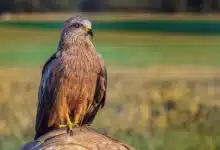
The Hoatzin is a relatively large bird, measuring approximately 65 centimeters (25 inches) in length and weighing around 500 to 700 grams (1.1 to 1.5 pounds). Its wingspan typically ranges from 75 to 80 centimeters (29.5 to 31.5 inches). The bird has a distinctive appearance, combining a pheasant-like body with a long neck and small head. Its most notable feature is the spiky, rufous-colored crest that rises from the crown, giving it a wild, somewhat prehistoric look. The Hoatzin’s face is bare of feathers, exposing bright blue skin around the eyes and a patch of reddish-brown skin on the cheeks. The eyes themselves are a deep maroon, adding contrast to the face.
The plumage across the body is predominantly sooty brown with buff edges on the wing coverts and streaks on the mantle and nape. The underparts are buff-colored, while the crissum (the feathers around the cloaca), primaries, underwing coverts, and flanks display a rich rufous-chestnut hue that becomes visible when the bird spreads its wings. The broad tail feathers are long and sooty brown with buff tips. The Hoatzin’s large crop is not externally visible but dramatically influences its physiology. This crop is so enlarged that it displaces the flight muscles and reduces the bird’s ability to fly well, making it a weak flier that prefers to glide short distances through the forest canopy.
Behavior & Diet
The Hoatzin is an arboreal species that spends much of its time clambering clumsily through dense foliage and branches near water. It is known for its reluctance to flush, often allowing close approach by humans, which makes it a favorite subject for wildlife photographers and birdwatchers. This tameness, however, should not be confused with boldness; the bird can become stressed by frequent disturbance. A unique feature aiding its arboreal lifestyle is a leathery pad on the bottom of its crop that acts as a stabilizer as the bird balances on branches.
Its diet is extraordinary among birds. The Hoatzin primarily consumes a wide range of leaves, supplemented by fruits and flowers found in its swampy habitat. Unlike most birds, which digest plant material through their stomachs, the Hoatzin has evolved a specialized digestive system that relies on bacterial fermentation in its enormously enlarged crop, functioning similarly to the rumen of cattle and other ruminants. This process allows the bird to break down tough cellulose in leaves, extracting nutrients from a diet that many other birds would find indigestible.
The fermentation process produces gases and a strong manure-like smell, which is why Hoatzins are often called “stinkbirds.” This odor discourages most predators and makes the bird unappealing as a food source for humans, who typically hunt it only in times of extreme necessity. Due to the displacement of the flight muscles by the enlarged crop, the Hoatzin is a poor flyer, relying more on gliding and short bursts of flight to escape threats. Its vocalizations are equally distinctive, characterized by a series of hoarse, guttural calls that have been compared to the raspy sound of a heavy smoker’s cough.
Breeding & Reproduction
Hoatzins breed during the wet season when food is abundant in their swampy habitats. They build bulky, loosely constructed nests from twigs and leaves, usually positioned over water to reduce predation risk. Both parents share the responsibility of incubating the eggs and feeding the chicks, demonstrating a cooperative breeding behavior. Typically, the clutch consists of two to three pale blue eggs speckled with brown spots. According to Cornell Lab of Ornithology, this species is well documented.
One of the most remarkable features of Hoatzin chicks is their possession of claws on the first two digits of their wings. These claws enable the young birds to climb back into the nest if they fall into the water, a useful adaptation in their flood-prone environment. This trait, reminiscent of the ancient Archaeopteryx and other prehistoric birds, disappears as the chicks mature and develop full flight feathers. The young fledge after about two months but often remain near the nest site for some time as they gain strength and learn to forage. According to RSPB, this species is well documented.
Conservation Status
The Hoatzin is currently classified as Least Concern by the International Union for Conservation of Nature (IUCN). Despite its specialized habitat requirements, the species benefits from the vast, relatively undisturbed wetlands of the Amazon and Orinoco basins. However, localized threats do exist, primarily from habitat destruction due to deforestation, hydrological alterations such as dam construction, and pollution. The bird’s dependency on intact swamp forests makes it vulnerable to changes in water quality and availability.
Conservation efforts that protect large tracts of riverine forests and wetlands indirectly benefit the Hoatzin and countless other species sharing the same ecosystem. Continued monitoring of population trends is essential, especially given the accelerating pace of habitat loss in parts of the Amazon. Nevertheless, the Hoatzin’s broad distribution and its ability to exploit a niche diet give it a degree of resilience not shared by many other tropical birds.
Interesting Facts
The Hoatzin’s digestive system is perhaps the most studied and fascinating among birds. Its crop contains symbiotic bacteria that ferment leaves, producing volatile fatty acids as an energy source, much like the rumen in cows. This adaptation is unique among birds and has profound effects on the Hoatzin’s biology and ecology.
Another intriguing aspect is the bird’s evolutionary history. Fossil evidence suggests that relatives of the Hoatzin existed as far back as the Paleocene, over 60 million years ago, hinting at its status as a living fossil. The presence of claws in chicks also underscores this ancient lineage, linking it to early avian ancestors.
The bird’s distinctive smell, often described as unpleasant, results from the combination of the fermentation process and the aromatic compounds in the leaves it consumes. While this odor deters many predators, it also means the Hoatzin is rarely hunted except in emergencies.
Finally, the Hoatzin’s social behavior is notable. They often form small groups or family units, feeding and roosting communally. Their vocalizations facilitate group cohesion and territorial defense within their dense, visually obstructed habitat.
In summary, the Hoatzin is a singular bird that challenges conventional ornithological understanding with its strange evolutionary roots, distinctive appearance, and remarkable adaptations. Its reliance on bacterial fermentation for digesting leaves, its ancient traits like wing claws in chicks, and its unmistakable odor all contribute to its reputation as one of the most fascinating avian species in the world. For nature lovers, birdwatchers, and scientists alike, the Hoatzin remains a captivating symbol of the rich biodiversity and evolutionary wonder of the Amazon basin.