
The genus Cuculus comprises a fascinating group of cuckoos that are widely distributed throughout the Old World, with the highest diversity found in tropical regions of southern and southeastern Asia. These birds are notable not only for their distinctive vocalizations and elegant forms but also for their unique breeding strategy known as brood parasitism. Species within Cuculus inhabit a range of environments from open forests to more open, scrubby landscapes. Several members of this genus are migratory, embarking on impressive seasonal journeys. This article delves deeply into the taxonomy, distribution, physical characteristics, behavior, diet, breeding habits, conservation status, and intriguing facts about the genus Cuculus, offering a comprehensive insight for bird enthusiasts, students, and wildlife photographers alike.
Scientific Classification
The genus Cuculus belongs to the family Cuculidae, which encompasses all cuckoo species worldwide. The name Cuculus derives from the Latin word for cuckoo, reflecting the genus’ typifying species, the Common Cuckoo (Cuculus canorus). This genus is characterized by slender-bodied birds with long tails and strong legs, traits shared among many cuckoos but particularly refined in Cuculus.
Within the genus, there are about a dozen recognized species, many of which are further divided into subspecies. Some notable species include the Common Cuckoo (Cuculus canorus), Indian Cuckoo (Cuculus micropterus), Himalayan Cuckoo (Cuculus saturatus), and the Large Hawk-Cuckoo (Cuculus sparverioides). The taxonomy can be complex, as several populations were once considered subspecies but have been elevated to full species status following recent molecular studies.
Many species of Cuculus are known for their brood parasitic behavior, a trait that strongly influences their evolutionary relationships and ecological roles. Phylogenetic studies suggest that brood parasitism evolved multiple times within the cuckoo family, with Cuculus species representing some of the most specialized and well-studied examples.
Geographic Range & Distribution
Species of Cuculus are found predominantly across the Old World, with distributions spanning Europe, Asia, and Africa, as well as several islands in the Indo-Pacific region. The genus thrives in a range of habitats but is especially diverse in tropical southern and southeastern Asia, where the majority of species richness occurs.
The Common Cuckoo (Cuculus canorus) has one of the widest ranges, breeding across much of Europe and Asia and wintering in Africa and southern Asia. The Large Hawk-Cuckoo (Cuculus sparverioides) inhabits a broad swathe of South and Southeast Asia, including countries such as Bangladesh, India, China, Thailand, Malaysia, and Indonesia. It is also recorded as a vagrant on Christmas Island.
Other species have more restricted ranges. The Sulawesi Hawk-Cuckoo (Cuculus crassirostris) is endemic to Sulawesi in Indonesia, while the Moustached Hawk-Cuckoo (Cuculus vagans) is found in Brunei, Indonesia, Laos, Malaysia, Myanmar, and Thailand. The Red-chested Cuckoo (Cuculus solitarius) and the Black Cuckoo (Cuculus clamosus) reside primarily in sub-Saharan Africa. Madagascar is home to the Madagascar Cuckoo (Cuculus rochii), which is endemic to the island.
Habitats typically include open forests, forest edges, and woodland areas, although some species prefer more open country or scrubby environments. Migratory behavior varies; the Common Cuckoo is a well-known long-distance migrant, while others such as the Indian Cuckoo exhibit more localized or altitudinal seasonal movements.
Physical Description
Members of the genus Cuculus generally possess slender bodies complemented by long, graduated tails and strong legs, adaptations that aid their arboreal lifestyle and agile flight. Adult sizes vary among species but typically range from 30 to 40 centimeters in length, with wingspans between 40 and 50 centimeters. Weights usually fall between 70 to 130 grams, depending on the species.
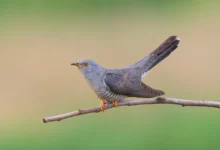
The plumage is often cryptic and cryptically patterned, aiding in camouflage within their woodland habitats. Many species display shades of grey, brown, and rufous, with barred or streaked underparts. The Common Cuckoo, for example, has grey upperparts and a barred tail, with a pale underbelly marked with dark barring. Juveniles often appear more rufous or buff-colored than adults.
Some species, such as the Large Hawk-Cuckoo, have more striking patterns and calls, which they use to establish territory and attract mates. Strong bills with slightly curved tips equip these birds for their insectivorous diet. Their legs are robust and adapted for perching and hopping through dense foliage.
Vocalizations are a notable feature of Cuculus cuckoos. The Common Cuckoo’s distinctive two-note call (“cuck-oo”) is familiar to many across Europe and Asia. Other species produce loud, persistent calls, often heard during breeding seasons and at dusk. These vocalizations serve important functions in territory defense and mate attraction.
Behavior & Diet
Members of the genus Cuculus are primarily insectivorous, feeding on a variety of large insects including caterpillars, beetles, and grasshoppers. They are one of the few bird groups that readily consume hairy and toxic caterpillars, which many other birds avoid. This ability is due to specialized digestive adaptations that neutralize the caterpillars’ toxins.
In addition to insects, some species may supplement their diet with fruits, especially during times when insects are scarce. They forage actively across tree canopies and shrubs, often flicking leaves and branches to flush out prey. Their agile flight and sharp eyesight aid in locating and capturing moving insects.
Behaviorally, Cuculus cuckoos are generally solitary outside the breeding season. During migration or in wintering grounds, they may be observed in loose associations but do not form large flocks. Their secretive nature and camouflage make them challenging to spot.
One of the most remarkable behaviors of Cuculus cuckoos is their brood parasitism. Instead of building nests and raising their own young, females lay eggs in the nests of other bird species, often selecting hosts with similar egg coloration to deceive them. This reproductive strategy reduces parental investment but requires sophisticated timing and mimicry skills.
Breeding & Reproduction
The genus Cuculus is best known for its brood parasitic breeding system, perhaps most famously exhibited by the Common Cuckoo (Cuculus canorus). Female cuckoos lay their eggs in the nests of other bird species, relying on these hosts to incubate the eggs and raise the cuckoo chicks. This strategy eliminates the need for parental care by the cuckoo, allowing them to invest energy in producing more eggs and seeking out host nests. According to BirdLife International, this species is well documented.
Females are highly selective in choosing host species, often specializing on certain host birds such as reed warblers or pipits. They time their egg-laying to coincide with the host’s clutch, and the cuckoo egg closely resembles the host’s eggs in coloration and pattern, reducing the chance of rejection. Once the cuckoo egg hatches, the chick typically hatches earlier and grows faster than the host’s young. According to RSPB, this species is well documented.
One of the most dramatic aspects of cuckoo breeding is the behavior of the cuckoo chick, which instinctively evicts host eggs or nestlings from the nest, ensuring that it receives all the parental care and food. This behavior is innate and begins shortly after hatching, often within hours.
Despite the apparent ruthlessness of this strategy, it has evolved over millions of years and represents a complex co-evolutionary arms race between cuckoos and their hosts. Hosts have developed various defenses, including egg recognition and rejection, while cuckoos counter with improved mimicry and stealth.
The breeding season varies geographically; migratory species such as the Common Cuckoo breed in temperate regions during spring and early summer, whereas tropical species may breed year-round, depending on environmental conditions.
Conservation Status
Most species within the genus Cuculus are currently classified as Least Concern by the International Union for Conservation of Nature (IUCN), demonstrating relatively stable population trends. The Common Cuckoo (Cuculus canorus), for instance, maintains a widespread population across Europe and Asia, although some regional declines have been noted, likely due to habitat loss and changes in host availability.
Habitat destruction and fragmentation represent significant threats to some localized or endemic species, such as the Sulawesi Hawk-Cuckoo (Cuculus crassirostris) and the Moustached Hawk-Cuckoo (Cuculus vagans). Tropical deforestation, agricultural expansion, and urban development continue to reduce suitable habitats for these birds.
Climate change may also impact migratory patterns and availability of host species. Changes in timing of insect emergence or host breeding can disrupt the delicate synchrony required for successful brood parasitism.
Conservation efforts focus on habitat preservation and monitoring population trends. Because of their secretive nature and the complexity of their breeding behavior, assessing population sizes can be challenging, underscoring the need for continued research and field surveys.
Interesting Facts
The genus Cuculus is a treasure trove of fascinating natural history stories. The brood parasitic behavior of cuckoos has intrigued naturalists for centuries and inspired extensive scientific research into co-evolution and animal behavior. Notably, the Common Cuckoo’s call is so iconic that it has influenced folklore and culture across Eurasia, often signaling the arrival of spring.
One remarkable adaptation is the cuckoo chick’s instinctive eviction of host eggs or chicks, a behavior that ensures exclusive parental care but also illustrates the evolutionary arms race between parasite and host. Some host species have evolved the ability to recognize and reject cuckoo eggs, prompting cuckoos to develop highly accurate egg mimicry.
In terms of migration, the Common Cuckoo is one of the longest-distance migratory birds, traveling from its breeding grounds in Europe and Asia to wintering areas in Africa, covering thousands of kilometers annually. This journey involves crossing deserts and seas, showcasing the incredible endurance of these birds.
Another interesting aspect is the dietary tolerance of Cuculus cuckoos for hairy caterpillars, which are often toxic to other birds. This dietary specialization allows them to exploit a niche that few competitors can access.
Finally, some species within the genus exhibit hawk-like plumage patterns, such as the Large Hawk-Cuckoo, which may help deter predators or trick potential host species, an example of mimicry that enhances survival and breeding success.
Overall, the genus Cuculus offers a vivid example of evolutionary innovation and ecological complexity, making it a compelling subject for study and appreciation.
Conclusion
The genus Cuculus represents some of the most captivating and ecologically unique birds in the Old World. With their slender forms, haunting calls, and extraordinary reproductive strategies, these cuckoos fascinate scientists and bird lovers alike. Their broad distribution across diverse habitats, coupled with their specialized behaviors such as brood parasitism and dietary adaptations, highlight the intricate balance of nature and evolutionary pressures. While most species remain secure for now, ongoing habitat loss and environmental change underscore the importance of conservation efforts. Understanding and appreciating the genus Cuculus deepens our knowledge of avian ecology and the marvels of natural history.

