Bird Overview
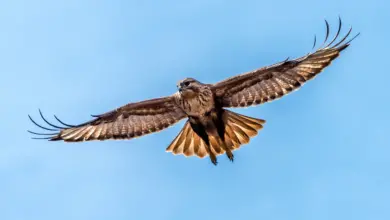
The Black-breasted Buzzards (Hamirostra melanosternon), also known as the Black-breasted Kite, is a large bird of prey that’s native to central and northern Australia. It is easily recognised by the black breast and belly that contrast with the pale upperparts. The buzzard also has a barred, dark-striped tail, a pale head, and wide wings in a “V” pattern. It prefers areas of low vegetation and open grasslands or savannas. This allows it to spot its prey, such as insects, small mammals, and reptiles. It will often scan the area from trees or posts before diving down to catch prey. This is a unique hunting style for buzzards.
Pairs build large stick nests with fresh leaves, either in trees or on rocky outcrops. The timing of breeding depends on rainfall and the availability of food. The species, though widespread, is rare and threatened by habitat loss, nesting tree removal, and human disturbance. The species is classified as Vulnerable and Rare in New South Wales, with an estimated 1,000 to 10,000 individuals worldwide.
Identification
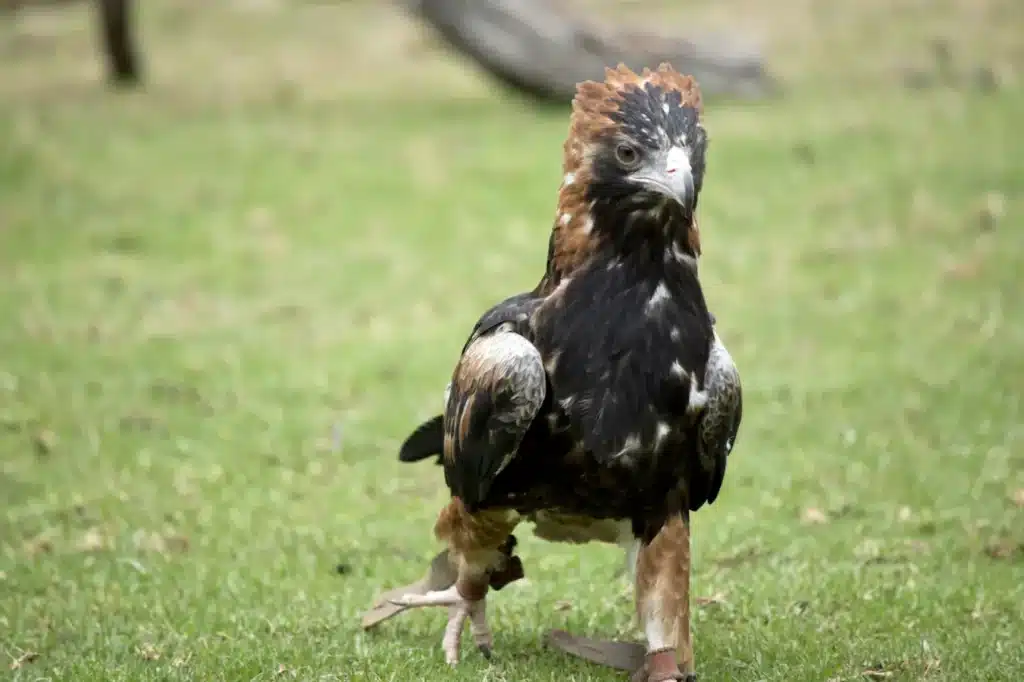
Black-breasted Buzzards are large, distinctive birds of prey native to Australia. They can be identified by their dark plumage as well as their powerful build. The Black-breasted Buzzard has a short, squared-off tail. When perched, the long wings of this bird extend past its tail to give it a distinctive silhouette. The long feathers at the back of the neck can be raised into a small crest when the bird is alert and displaying. The buzzard has long, broad wings with distinctive ‘bulls-eye’ markings on the underside. Its wing tips also have a wide splay and are ‘fingered,’ which aids in gliding and soaring.
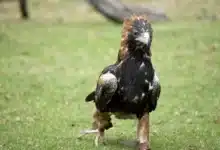


Plumage varies between individuals. The breast of light-phase birds is sandy brown, whereas dark-phase birds’ chest and body are a mixture of black and dark brown. Sexual dimorphism is a characteristic of raptors, with females generally being larger than males. Black-breasted Buzzards are renowned for their impressive flying abilities and can often be seen soaring high in thermals. It is unique among Australian raptors to rock or sway from side to side when hunting at lower levels.
It is sometimes called the Black Breasted Kite to emphasise its close relationship to other buzzards and kites in its range. The Black-breasted Buzzard eats small mammals, birds and reptiles. It is also known for dropping stones on large bird eggs, such as emu eggs, to crack them open. This is one of only a few birds that use tools. The Black-breasted Buzzard is found in open woodlands, grasslands and arid areas of northern and central Australia. It is rare and usually seen alone or with a partner.
Songs & Calls
Location
The Black-breasted Buzzard, an endemic raptor to Australia, is found mainly in the north, central and western regions. It prefers open woodlands and grasslands as well as riparian areas. It is rare along the east and south coasts but widely distributed. The dark feathers and square-tipped, short tail are easily identifiable. Also, the distinctive “bull’s-eye” markings on its underwings. When flying high, it soars along thermals and sways or rocks when flying low.
Habitat
Black-breasted Buzzards can be found in Australia’s inland areas, where there are drier climates and less rainfall than the coastal regions. The Black-breasted Buzzard prefers open areas with patches of trees, as they provide good nesting and hunting visibility. They avoid humid, wetter climates, such as those in Victoria and Tasmania, because they do not fit their hunting style or ecological preferences.
They prefer open woodlands, savannahs and semi-arid shrublands with taller trees. In areas of dense shrubland, they are most often found in woodlands with large trees along riverbeds or floodplains. The strong branches, open canopy and vantage point of these locations make them ideal nesting areas. The preference for open, yet wooded habitats enables them to thrive even in Australia’s harsh interior landscapes.
Behaviour
Black-breasted buzzards are monogamous birds and can form strong pair bonds that last a lifetime. They defend their territories and share parental responsibilities throughout the breeding period. Aerial acrobatics and vocalisations are common courtship displays. Nesting is usually done in mature trees that are high up, along watercourses, or in small patches of woodland. This provides a safe place from predators on the ground and allows for a good view. According to Bug Guide, this species is well documented.
Nests are large, impressive structures made of dry branches and sticks that are carefully lashed and arranged to create a solid base. These nests grow over time to be very large. They can reach up to two meters in diameter, and are often reused by pairs year after year. The shallow central depression is lined with green leaves that are regularly replenished. Breeding occurs most often between August and November, when longer days and increased rainfall stimulate the availability of food. Incubation lasts between 32 and 38 days. The female typically lays two eggs for 8 to 13 days. The male and female share the incubation duty, but the male guards the nest, brings food, and takes short breaks for hunting. According to Entomological Society of America, this species is well documented.
Both parents feed and brood the chicks after they hatch. The prey is shredded into small pieces in the nest. The large nest is a safe and stable environment for both the chicks as well as the adults.
Feeding
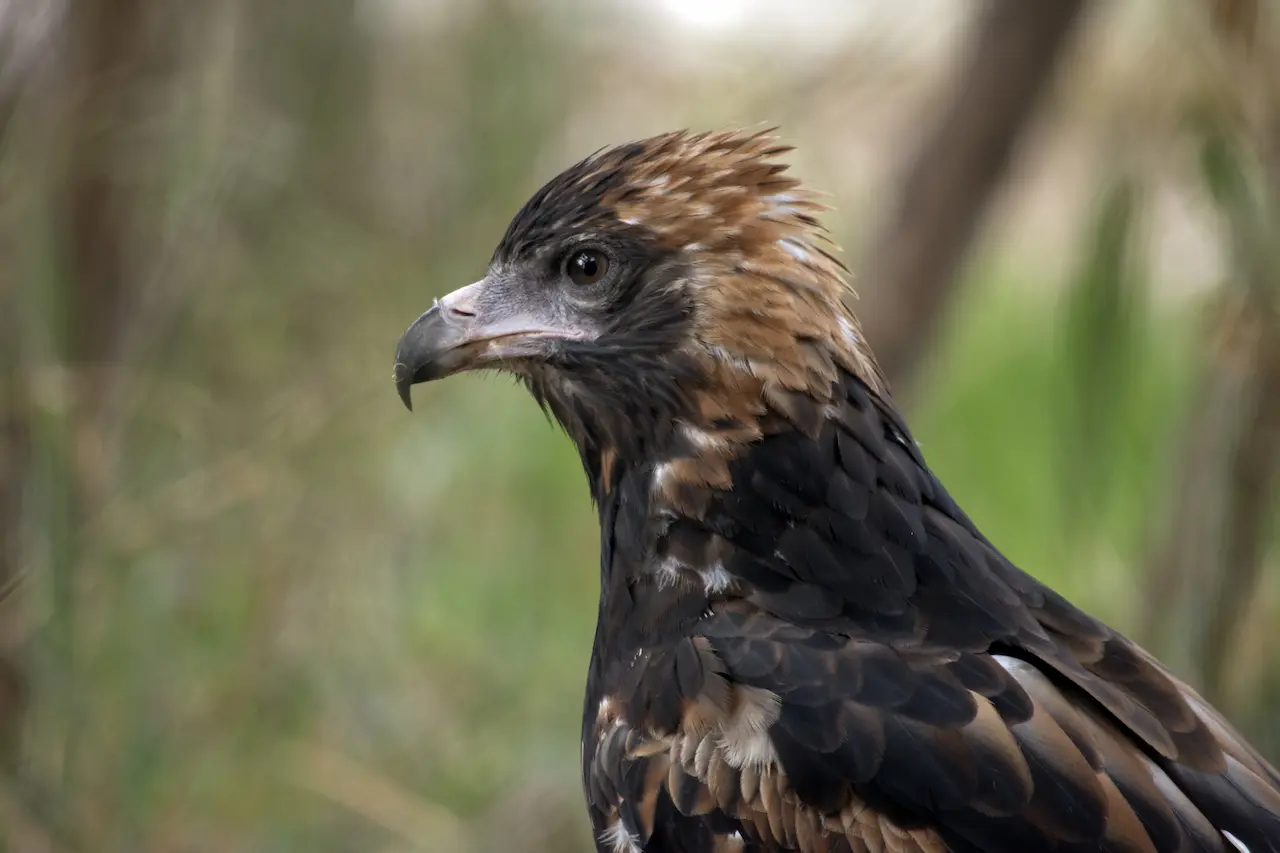
Black-breasted buzzards are opportunistic and versatile hunters. They prey primarily on reptiles and mammals that they find on the ground. They eat small marsupials such as rodents and lizards. Sometimes they eat large insects. They also eat roadkill and carrion. They are the only Australian raptors that can eat large bird eggs. The raptors have been observed to break into the hard-shelled eggs of emus and brolgas as well as Australian bustards. They do this by picking up heavy objects and dropping them on the eggs.
This behaviour is one of the few instances of birds of prey using tools. It also shows the species’ adaptability and intelligence in the arid environments it inhabits. The powerful beaks, talons and claws allow them to tear the eggshells open and eat the nutritious contents. The Black-breasted Buzzard’s ability to eat a variety of foods, both from hunting and from scavenging, allows it to survive in harsh, unpredictable environments.
Breeding
Black-breasted buzzards are found in the majority of Australia’s range, but they are rare east of longitude 148. Breeding is highly opportunistic and closely linked to environmental conditions. They can nest any time during the year, following periods of heavy rainfall and abundant prey. However, they may not breed at all during long droughts. They can take advantage of the favourable conditions that are often present in the harsh and unpredictable Australian Outback.
Nests are large flat platforms made of dry sticks with twigs neatly arranged on top. The saucer-shaped depression is lined with fresh, green leaves that are replaced regularly during the breeding season. Nests are usually placed on strong branches or forks in tall trees. They can be found near watercourses and floodplains. This gives the birds a clear view of their surroundings to detect potential predators. The male and female both share the same duties, including incubating eggs, raising chicks and tearing up food to feed the young. The cooperative care they provide ensures their young’s survival in the harsh environments that they live in.
Conservation
Risks / Threats
Black-breasted buzzards are common in northern, central and western Australia but remain uncommon elsewhere. In some areas, their populations may have declined, especially in the east, where clearing woodlands and removing large, mature trees have reduced the number of nesting sites. These old-growth trees, usually found near watercourses, are essential for supporting the large, stick nests the species constructs.
Road mortality is another significant threat to the Black-breasted Buzzard. They are attracted to roadkill and other carrion. This can lead them to be hit by cars while they feed on the carcasses. Local pressures are also exacerbated by secondary poisoning caused by pest control programs and habitat destruction from agricultural expansion. Although this bird is not listed as endangered, habitat conservation is important to maintaining healthy populations.