Indonesia, an archipelago boasting some of the richest biodiversity on the planet, is home to a remarkable variety of bird species. Among these, the family of cuckoos stands out for its ecological significance and fascinating behaviors. With over 30 species recorded across Indonesia’s diverse habitats, cuckoos range from tiny, jewel-like birds to large, ground-dwelling species. These birds have evolved unique adaptations, including exceptional brood parasitism strategies and specialized diets, making them a captivating subject for birdwatchers and researchers alike. This article explores the different species of cuckoos found in Indonesia, delving into their taxonomy, distribution, physical traits, behaviors, breeding habits, conservation status, and intriguing facts.
Scientific Classification
The family Cuculidae, commonly known as cuckoos, belongs to the order Cuculiformes. This family includes a diverse group of birds characterized by their slender bodies, long tails, and distinctive calls. In Indonesia, the cuckoo species belong mainly to several genera such as Chrysococcyx (bronze-cuckoos), Cacomantis (cuckoo warblers), Cuculus (typical cuckoos and hawk-cuckoos), and Carpococcyx (ground-cuckoos). Each genus represents unique ecological niches and behaviors.
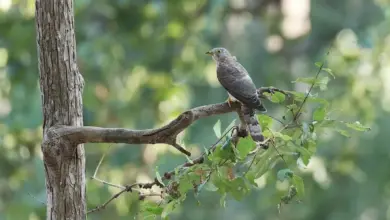
For instance, the genus Chrysococcyx includes small, often iridescent cuckoos such as the Asian Emerald Cuckoo (Chrysococcyx maculatus) and Gould’s Bronze-cuckoo (Chrysococcyx russatus). The genus Cacomantis contains species like the Chestnut-breasted Cuckoo (Cacomantis castaneiventris) and the Plaintive Cuckoo (Cacomantis merulinus), known for their plaintive calls and brood parasitic behavior. The typical cuckoos, such as the Large Hawk-cuckoo (Cuculus sparverioides) and the Indian Cuckoo (Cuculus micropterus), belong to Cuculus, exemplifying the classic cuckoo form and behaviors.




Unique to Indonesia are the ground-cuckoos of the genus Carpococcyx, including the Bornean Ground-cuckoo (Carpococcyx radiceus) and Sumatran Ground-cuckoo (Carpococcyx viridis). These species are terrestrial, contrasting with the predominantly arboreal habits of most cuckoos, and are endemic to their respective islands.
Geographic Range & Distribution
Indonesia’s vast archipelago, spanning over 17,000 islands, provides an extensive range of habitats, from rainforests and mangroves to mountainous regions and lowland forests. This diversity supports numerous cuckoo species distributed unevenly across the islands.
The Asian Emerald Cuckoo (Chrysococcyx maculatus) and Black-eared Cuckoo (Chrysococcyx osculans) are found broadly across the Indonesian islands as well as other parts of Southeast Asia. The Bornean Ground-cuckoo (Carpococcyx radiceus) is endemic to Borneo, thriving in the dense, lowland rainforests and montane forests of the island. Similarly, the Sumatran Ground-cuckoo (Carpococcyx viridis) inhabits the southern rainforests of Sumatra, a range restricted to this biodiversity hotspot.
Other species like the Sulawesi Hawk-cuckoo (Cuculus crassirostris) are endemic to Sulawesi, Indonesia’s unique island known for high levels of endemism. The Channel-billed Cuckoo (Scythrops novaehollandiae), a large cuckoo species, migrates seasonally into parts of Indonesia from Australasia.
Many bronze-cuckoos of the genus Chrysococcyx such as the Pied Bronze-cuckoo (Chrysococcyx crassirostris) and Rufous-throated Bronze-cuckoo (Chrysococcyx ruficollis) are scattered across the archipelago, favoring forest edges and secondary growth areas. The Plaintive Cuckoo (Cacomantis merulinus) and Grey-bellied Cuckoo (Cacomantis passerinus) are widespread throughout much of Indonesia’s lowland forests and plantations.
Physical Description
Indonesian cuckoos vary greatly in size, plumage, and morphology, reflecting their diverse ecological roles. The smallest among them, the Little Bronze-Cuckoo (Chrysococcyx minutillus), measures only about 16 centimeters in length and weighs roughly 25 grams, making it one of the smallest cuckoo species worldwide. It features glossy green-bronze plumage with fine spotting, blending seamlessly into the forest canopy.
By contrast, the Channel-billed Cuckoo (Scythrops novaehollandiae) is among the largest, with a wingspan reaching up to 70 centimeters and a length of approximately 60 centimeters. It has a striking large bill, pale grey plumage, and a long tail, adaptations suited for its frugivorous diet and aerial lifestyle.
The ground-cuckoos, such as the Bornean Ground-cuckoo, are robust and terrestrial with mottled brown plumage that provides excellent camouflage on the forest floor. They typically measure around 45 centimeters in length and weigh between 300 to 400 grams. Their strong legs and stout bodies enable them to forage on the ground efficiently.
Many cuckoos in Indonesia, particularly those in the Chrysococcyx genus, exhibit iridescent feathers that shimmer in sunlight, often in shades of green, copper, and bronze. The Plaintive Cuckoo and Grey-bellied Cuckoo show more subdued coloration with grey and brown tones, aiding in stealth as they perch silently in dense foliage.
Behavior & Diet
Cuckoos in Indonesia demonstrate a variety of feeding and behavioral adaptations. Most are arboreal insectivores, feeding on caterpillars, cicadas, beetles, and other invertebrates, with some species also consuming fruits and small vertebrates. The Asian Emerald Cuckoo and other bronze-cuckoos are known for their acrobatic gleaning of insects from leaves and branches.
The Channel-billed Cuckoo, unusually for cuckoos, is largely frugivorous. It plays a vital role in seed dispersal for many fruiting trees, consuming large fruits such as figs and mistletoes. Its powerful bill helps it handle big fruits that other birds cannot manage.
Ground-cuckoos like the Bornean and Sumatran species forage primarily on the forest floor, feeding on insects, snails, small reptiles, and fallen fruits. They often move quietly through leaf litter, flicking aside debris to uncover hidden prey. These birds exhibit shy, elusive behavior and are seldom seen by casual observers.
Many cuckoos are known for their distinctive vocalizations, ranging from the plaintive whistles of Cacomantis species to the harsh, repetitive calls of hawk-cuckoos (Cuculus sparverioides), which often mimic the calls of raptors to reduce competition or predation risk. Vocal behavior is crucial during breeding seasons for territory establishment and mate attraction. According to BirdLife International, this species is well documented.
Breeding & Reproduction
One of the most remarkable aspects of cuckoo biology is their breeding strategy, particularly the widespread use of brood parasitism. Many Indonesian cuckoos, especially those in the genera Cacomantis and Cuculus, lay their eggs in the nests of other bird species, outsourcing parental care to unsuspecting foster parents. This strategy allows cuckoos to allocate more energy to producing more eggs and less to raising young. According to Cornell Lab of Ornithology, this species is well documented.
The Plaintive Cuckoo and Indian Cuckoo (Cuculus micropterus) are textbook brood parasites, targeting a range of small passerine hosts such as cisticolas, warblers, and bulbuls. Their eggs often closely mimic the host species’ eggs in color and pattern, an evolutionary adaptation to avoid rejection.
In contrast, some species like the ground-cuckoos build their own nests on the ground or low shrubs. These birds engage in direct parental care, incubating eggs and feeding their chicks. Nest sites are typically well-hidden to protect against predators.
The incubation period for cuckoos generally ranges from 12 to 16 days, with chicks hatching earlier than host species and often evicting host eggs or chicks to monopolize parental care. This ruthless behavior ensures the cuckoo chick receives all available food and attention.
Conservation Status
The conservation status of cuckoo species in Indonesia varies widely depending on their habitat specificity, range, and threats faced. According to the International Union for Conservation of Nature (IUCN), many cuckoo species have stable populations, but some island endemics and ground-dwelling species are vulnerable due to habitat loss and fragmentation.
The Bornean Ground-cuckoo (Carpococcyx radiceus) is currently listed as Vulnerable because of ongoing deforestation in Borneo, driven by logging, palm oil plantations, and human encroachment. This species’ reliance on pristine forest floor habitats makes it particularly susceptible to habitat degradation.
Similarly, the Sumatran Ground-cuckoo (Carpococcyx viridis) is categorized as Near Threatened, with shrinking rainforest cover in Sumatra posing significant risks. Many of the smaller, more widespread species like the Plaintive Cuckoo and Asian Emerald Cuckoo are considered Least Concern, benefiting from their adaptability to secondary forests and agricultural landscapes.
Conservation efforts focusing on preserving Indonesia’s rich forest ecosystems indirectly protect cuckoos and countless other species. Continued monitoring, habitat restoration, and the establishment of protected areas are crucial to ensuring the survival of these fascinating birds.
Interesting Facts
Cuckoos are famed for their brood parasitism, a reproductive strategy that has fascinated biologists for centuries. Indonesia’s cuckoos showcase various adaptations linked to this behavior, including egg mimicry and rapid chick development. The Little Bronze-Cuckoo (Chrysococcyx minutillus) holds the distinction of being the world’s smallest cuckoo, measuring just 16 centimeters, its diminutive size aiding its stealthy parasitic lifestyle.
The Channel-billed Cuckoo is notable for being the largest cuckoo species globally, with its massive bill giving it an almost prehistoric appearance. It is also one of the few cuckoos that do not parasitize other birds but instead raise their own young.
Indonesia’s ground-cuckoos are among the least studied birds due to their secretive habits and dense forest habitats. Their elusive nature has made them a prized sighting for birdwatchers visiting Borneo and Sumatra.
Many cuckoos in Indonesia have iridescent plumage that changes color with light angle, a trait believed to play a role in both camouflage and courtship. Their calls, often heard but rarely seen, contribute richly to the soundscape of Indonesia’s forests.
Finally, the diversity of cuckoos in Indonesia reflects the archipelago’s complex biogeography, where island isolation and habitat variation have driven speciation and specialization, making these birds an essential component of the region’s natural heritage.
In conclusion, Indonesia’s cuckoos represent a fascinating and varied group of birds that contribute significantly to the ecological complexity of the region. From the smallest bronze-cuckoos flitting through the canopy to the ground-dwelling giants of Borneo’s forests, these species offer endless opportunities for study and appreciation. Protecting their habitats ensures the survival of not only cuckoos but the myriad other creatures that share Indonesia’s vibrant ecosystems.