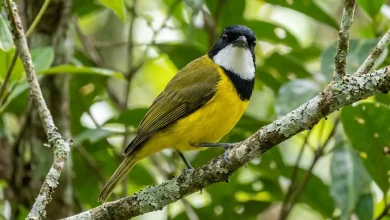
The Indonesian archipelago, with its vast and varied ecosystems, is home to a remarkable diversity of birdlife. Among the most charismatic and widespread residents are the Indonesian **bulbuls**, a group of medium-sized passerine birds known for their distinctive calls, vibrant plumage, and adaptability to various habitats. These birds are an integral part of Indonesia’s forests, gardens, and plantations, playing important roles in seed dispersal and insect population control. This article explores the fascinating world of Indonesian bulbuls, delving into their taxonomy, distribution, behavior, and conservation status, offering nature enthusiasts and birdwatchers a comprehensive guide to these captivating birds.
Scientific Classification
Indonesian bulbuls belong to the family **Pycnonotidae**, which comprises over 150 species distributed primarily across Africa and Asia. Within Indonesia, the diversity of bulbuls is considerable, with representatives from multiple genera including Pycnonotus, Alophoixus, Ixos, Iole, and Tricholestes. The family itself is part of the order Passeriformes, commonly known as perching birds or songbirds.
Some notable Indonesian bulbul species include the **Ashy Bulbul** (Hemixos flavala), **Black-and-white Bulbul** (Pycnonotus melanoleucus), **Blue-wattled Bulbul** (Pycnonotus nieuwenhuisii), and the **Yellow-vented Bulbul** (Pycnonotus goiavier). Certain species, such as the **Sunda Bulbul** or **Green-winged Bulbul** (Ixos virescens), are endemic to islands like Sumatra and Java. Others, including the **Straw-headed Bulbul** (Pycnonotus zeylanicus), have a more restricted distribution but are well-known for their striking appearance and song.


The classification of bulbuls has evolved with molecular studies, which have refined the relationships among species and genera. Despite this, many Indonesian species remain grouped in the large and complex genus Pycnonotus, characterized by their fruit-eating habits and social behavior. Overall, bulbuls are a diverse family that showcases a range of ecological adaptations across the Indonesian landscape.
Geographic Range & Distribution
Indonesian bulbuls are distributed widely across the archipelago, from the western islands of Sumatra and Java, through Kalimantan (Indonesian Borneo), Sulawesi, and the Maluku Islands, extending even to parts of New Guinea. Their presence spans diverse habitats — from lowland tropical rainforests and montane forests to secondary growth, plantations, and urban gardens.
For example, the **Yellow-vented Bulbul** (Pycnonotus goiavier) is one of the most common and widespread species, found throughout much of Indonesia as well as in the Philippines, southern Thailand, and Cambodia. It thrives in open and disturbed habitats, including human settlements, making it a familiar sight in many parts of the country.
Conversely, species like the **Blue-wattled Bulbul** (Pycnonotus nieuwenhuisii) have a more restricted range, limited to the rainforests of Borneo, where they inhabit primary and mature secondary forests. The **Sunda Bulbul** (Ixos virescens) is found mainly on Sumatra and Java, favoring lowland and hill forests. Several species occur in the Maluku Islands and New Guinea, such as the **Golden Bulbul** (Alophoixus affinis) and the **Hairy-backed Bulbul** (Tricholestes criniger), demonstrating the family’s broad ecological adaptability.
Indonesia’s complex geography, with thousands of islands and varied altitudes, has facilitated speciation within bulbuls. Some species are island endemics, adapted to very specific ecological niches, while others are widespread generalists. This diversity makes the region a hotspot for bulbul species richness.
Physical Description
Bulbuls generally range in size from about 18 to 25 centimeters in length, with a wingspan averaging between 20 and 30 centimeters, depending on the species. Their weight typically varies from 30 to 70 grams. Indonesian bulbuls exhibit a wide variety of plumage colors and patterns, though many share a common body shape: a slender, slightly rounded body with a medium-length tail and a short, slightly curved bill adapted for an omnivorous diet.
The **Yellow-vented Bulbul** is easily recognized by its brownish upperparts, pale underparts, and a distinctive bright yellow patch under its tail. It has a sturdy build and a somewhat crested head. The **Straw-headed Bulbul** stands out with its pale yellow head, contrasting sharply with its darker wings and body, making it a highly sought-after species among birdwatchers.
Other species, such as the **Ashy Bulbul** (Hemixos flavala), display more muted colors, with grey and olive tones predominating. The **Black-and-white Bulbul** (Pycnonotus melanoleucus) is notable for its stark black and white plumage, while the **Blue-wattled Bulbul** features bright blue facial wattles, a unique trait among the family.
Many bulbuls have a slightly crested appearance, with feathers on the head forming a short crest or tuft, which can be raised during displays or agitation. Their bills are typically strong and somewhat hooked, perfectly suited for a diet that includes fruit, insects, and nectar. Their legs are sturdy, allowing them to perch easily on branches and forage actively within the vegetation.
Behavior & Diet
Indonesian bulbuls are highly active birds, often seen foraging in pairs or small groups. They are known for their lively and melodious calls, which play a vital role in communication, territory defense, and mate attraction. Their vocalizations vary widely among species, from simple whistles to complex, melodious sequences.
In terms of diet, bulbuls are primarily frugivorous but are opportunistic feeders. They consume a wide variety of fruits, berries, and small seeds, making them important seed dispersers within their ecosystems. Many species supplement their diet with insects and other small invertebrates, especially during the breeding season when protein demand increases. Some have been observed feeding on nectar and even small reptiles on occasion.
Bulbuls are adaptable and can exploit a range of habitats for food. Species like the **Yellow-vented Bulbul** are often found in gardens and agricultural lands, where they feed on cultivated fruits and insects. Forest-dwelling species tend to forage in the mid to upper canopy, gleaning insects from leaves and branches and plucking fruit from trees and shrubs. According to Audubon Society, this species is well documented.
These birds are generally non-migratory, although some species may undertake local altitudinal movements in response to seasonal changes in fruit availability. Their social structure varies; some species are territorial and monogamous, while others exhibit more communal behavior outside the breeding season. According to eBird, this species is well documented.
Breeding & Reproduction
Breeding behaviors of Indonesian bulbuls are diverse but share common themes such as territoriality, nest-building, and biparental care. Most species build cup-shaped nests made from twigs, grasses, leaves, and other plant fibers, often camouflaged within dense foliage to protect from predators.
Bulbuls typically lay between two and four eggs per clutch. The eggs are usually pale with speckles or blotches that provide additional camouflage. Incubation periods range from 11 to 14 days, with both parents often sharing incubation duties. After hatching, the chicks are altricial—helpless and featherless—and require intensive care from both parents.
Nestlings are fed a diet rich in insects and soft fruits to support rapid growth. Fledging occurs approximately two weeks after hatching, though juveniles may remain dependent on parents for food and protection for several weeks afterward. Bulbul pairs are known for strong pair bonds, often maintaining territories year-round.
Breeding seasons can vary depending on local climate and food availability but generally coincide with periods of fruit abundance. In some regions of Indonesia, bulbuls may breed year-round, taking advantage of the relatively stable tropical environment.
Conservation Status
The conservation status of Indonesian bulbuls varies by species. Many are classified as Least Concern by the International Union for Conservation of Nature (IUCN) due to their wide distribution and adaptability to human-altered environments. For instance, the **Yellow-vented Bulbul** thrives even in urban areas, exhibiting resilience to habitat changes.
However, several species face threats from habitat loss, fragmentation, and trapping for the pet trade. The **Straw-headed Bulbul** (Pycnonotus zeylanicus) is critically endangered, primarily due to illegal wildlife trade driven by its popularity as a cage bird prized for its vocal abilities. Deforestation in Indonesia, especially for palm oil plantations and logging, poses significant risks to forest-dependent species like the **Blue-wattled Bulbul** and the **Black-and-white Bulbul**.
Conservation efforts include habitat protection, enforcement of wildlife trade regulations, and environmental education to reduce demand for wild-caught birds. Protected areas across Indonesia, such as national parks and wildlife reserves, provide crucial refuges for many bulbul species. Continued research and monitoring are essential to understand population trends and implement effective conservation strategies.
Interesting Facts
Indonesian bulbuls are not only important ecologically but also culturally and scientifically fascinating. Their melodious songs have made several species popular subjects for aviculture and bird song studies. The **Straw-headed Bulbul** is renowned for its complex and beautiful vocalizations, making it a prized songbird in Southeast Asia.
Some bulbuls exhibit remarkable adaptability, thriving in heavily modified environments such as plantations, gardens, and urban areas, where they often play a role in pest control by feeding on insects. Their seed dispersal activities contribute to forest regeneration and the maintenance of plant diversity.
Bulbuls also display interesting social behaviors. Certain species engage in cooperative breeding, where offspring from previous broods help raise the new chicks. Their ability to thrive in diverse habitats, combined with their striking appearances and vocal talents, makes them favorite subjects for wildlife photographers and birdwatchers in Indonesia.
Finally, the evolutionary history of bulbuls reveals fascinating biogeographic patterns. Their diversification across Indonesia’s islands is a textbook example of island biogeography and speciation, highlighting the importance of the region for global biodiversity.
Conclusion
Indonesian bulbuls are a vibrant and diverse group of birds that enrich the archipelago’s ecosystems with their presence, song, and ecological roles. From the common and adaptable **Yellow-vented Bulbul** to the rare and endangered **Straw-headed Bulbul**, these birds exemplify the rich avian biodiversity of Indonesia. Understanding their taxonomy, distribution, behavior, and conservation challenges is essential for appreciating and protecting these remarkable species. Whether spotted in dense forests, garden backyards, or urban parks, Indonesian bulbuls continue to captivate bird enthusiasts, contributing to the natural heritage of one of the world’s most biologically rich regions.