Seychelles Chestnut-sided White-eyes
Seychelles Chestnut-sided White-eyes (Zosterops mayottensis semiflava)

The Seychelles Chestnut-sided White-eyes (Zosterops mayottensis semiflava) is an extinct subspecies of the Chestnut-sided White-eyes (Zosterops mayottensis), which still occurs on the Comoros island of Mayotte.e
*Extinct*
At the first scientific discussion by Edward Newton in 18,6,7 it was regarded as a full species Zosterops semiflava.


Description
The Seychelles Chestnut-sided White-eyes are small and delicate birds that measure approximately 10 centimeters. The wingspan of the Seychelles Chestnut-sided White-eyes ranged from 5.8 to 6.3 centimeters. Their tail measured approximately 3.8 centimeters. The white-eye species are characterized by their compact size.
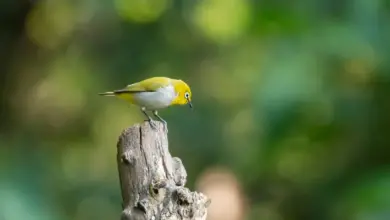
Its colorful plumage made it stand out amongst its island counterparts. Its predominant color was greenish-yellow. This provided excellent camouflage among the foliage. Its chestnut-colored wings, a rare feature in white-eyes, gave it its common name. They also added warmth to the bird’s appearance. The white eye-ring was one of its most distinctive features. This is a characteristic of the Zosterops species, and gives these birds their name “white-eyes.”
A yellow forehead and line above the eye added subtle highlights to its face. The back and top of the bird’s head are olive-yellow, which blends in with the greenery surrounding it. The black feathers on the wings and tails contrast sharply with the yellow underparts. This combination of colours likely served as both intraspecies identification and camouflage.
The Seychelles Chestnut-sided White-eyes are a very rare species. Despite their physical description, little is known of their behavior or ecology. Before its extinction, no detailed studies were conducted on its social structure, breeding habits, or life cycle. This leaves a gap in the understanding of this fascinating subspecies.
Former Range / Extinction
It is known with certainty only from the small granitic islet of Marianne Island (0,962 sqm) in the Seychelles, about 6 km east of La Digue. Reports that it also occurred on Praslin, La Digue, Silhouette Island, and Mahé are unconfirmed.
Due to widespread habitat destruction and agricultural needs, it became extinct between 1870 and 1900 (according to IUCN, around 1888). An expedition in 1940 led by Irish zoologist Lesley Desmond Foster Vesey-Fitzgerald failed. There is one specimen in the Natural History Museum in London.
References
- Greenway, James C. (1967): Extinct and Vanishing Birds of the World
- Luther, Dieter (2005): Die ausgestorbenen Vögel der Welt
Distribution and Habitat
Seychelles Chestnut-sided White-eyes have a very restricted range. They are only found on Marianne Island. This tiny island is just 0.962 square km and is located 6 kilometers east of La Digue, Seychelles. The only island that they have ever been confirmed to live on is Marianne Island. Some unverified reports suggest possible occurrences of the species on larger islands such as Praslin and La Digue. Silhouette Island and Mahe are also mentioned, but these have not been proven.
Marianne Island, a small granitic rocky islet, is surrounded by coral reefs and lush vegetation along the coast. In the past, isolated islands have been used as evolutionary incubators where species have adapted in unique ways because of geographic isolation. Seychelles Chestnut-sided White-eyes are no exception. They have adapted to the microhabitat conditions of the island.
Marianne Island’s natural habitat is likely to consist of dense scrub, coastal forest patches, and shrublands, which are ideal for insectivorous small birds such as white-eyes. Due to its small size and isolation, however, the island’s ecosystem is vulnerable to disturbances. According to Cornell Lab of Ornithology, this species is well documented.
What is the Connection between Feeding and Ecology?
Unfortunately, there are no data on the Seychelles Chestnut-sided Warbler’s diet or role in the environment. Members of the Zosterops are known to be omnivorous eaters. They consume insects, arthropods, and nectar. Their pointed, slender beaks allow them to pick up insects from the foliage and also feed on sweet nectar. They are important pollinators for many island ecosystems. According to eBird, this species is well documented.
It is reasonable to assume that the Seychelles Chestnut-sided White-eyes also feed on insects and nectar in the dense vegetation found on Marianne Island. They likely moved through the foliage in pairs or small groups, searching for prey and eating flowering plants.
The species could have played a significant role in the maintenance of the ecological balance on their island. They may have helped with pollination, seed dispersal, and contributed to the health and regeneration of local life. These hypotheses are not confirmed due to early extinctions and a lack of ecological observation.
Vocalizations
The Seychelles Chestnut-sided White-eyes probably had their own vocalizations for communication, territorial defense, and mating rituals. White-eyes have soft, melodious calls, which include high-pitched trills and whistles.
The Seychelles’ subspecies calls are not recorded or described in detail, so their vocal characteristics remain a mystery. It is likely that, given the importance of vocalizations among social birds such as white-eyed terns, they had a repertoire that was adapted to both their environment and social structure.
The Broader Conservation Implications
The story of Seychelle Chestnut-sided White-eyes illustrates the fragility of island ecosystems and the impact that habitat destruction has on endemic species. Island species are often isolated and have small populations, making them vulnerable to environmental changes.
This subspecies’ extinction serves as a lesson for conservationists around the world, underlining the importance of protecting island habitats against deforestation and invasive species. It also highlights unsustainable land uses. This extinction also highlights the need for early conservation and scientific intervention in order to prevent species from disappearing silently before their ecological role is fully understood.
In the Seychelles, as well as other island areas, efforts are focused on habitat restoration, invasive-species management, and careful monitoring of endemic species to prevent any further losses. The Seychelles is a biodiversity hotspot that not only protects rare species, but also the natural heritage and ecological services vital to human well-being.
Conclusion
The Seychelles Chestnut-sided White-eyes remain a poignant symbol of what can happen when fragile island ecologies are altered to the point that they no longer support native wildlife. The Chestnut-sided White-eyes with their greenish-yellow feathers, chestnut-colored flanks, and striking white eye rings vanished more than a century ago.
The story of the Seychelles Chestnut-sided White-eyes, even though much is still unknown about its ecology and behavior, as well as vocalizations, serves to remind us of the importance and urgency of conservation. This story forces us to learn from our past mistakes and to redouble our efforts to protect the remaining wonders of the planet.
We can preserve habitats, support scientific research, and promote environmental stewardship to honor the memory of a species such as the Seychelles Chestnut-sided White-eyes, ensuring that other species don’t follow its tragic journey into oblivion.