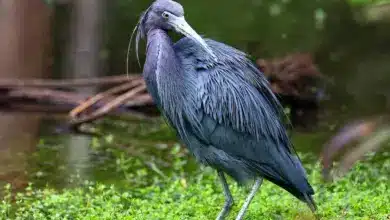
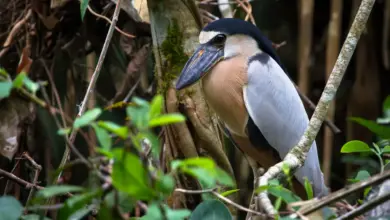
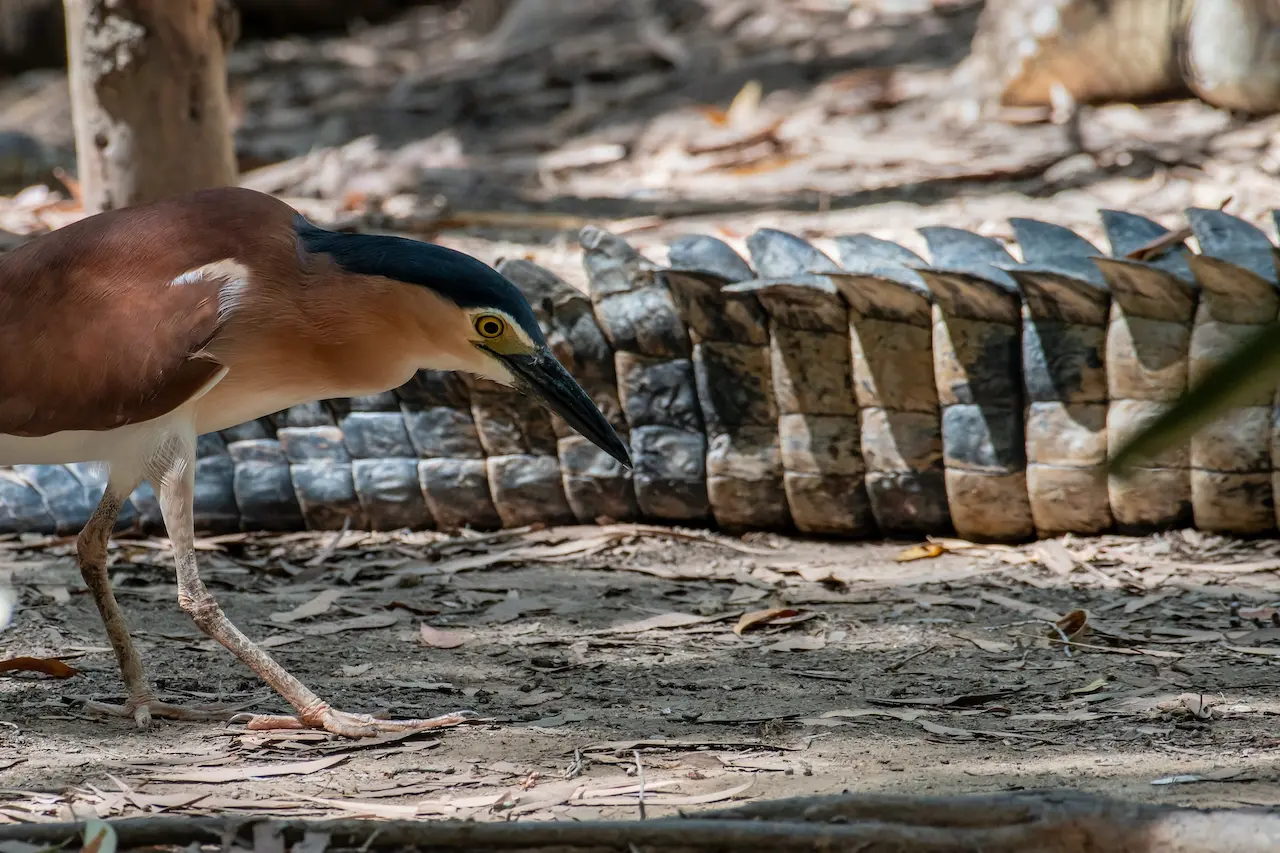
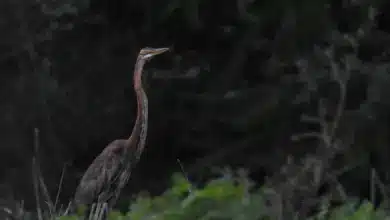
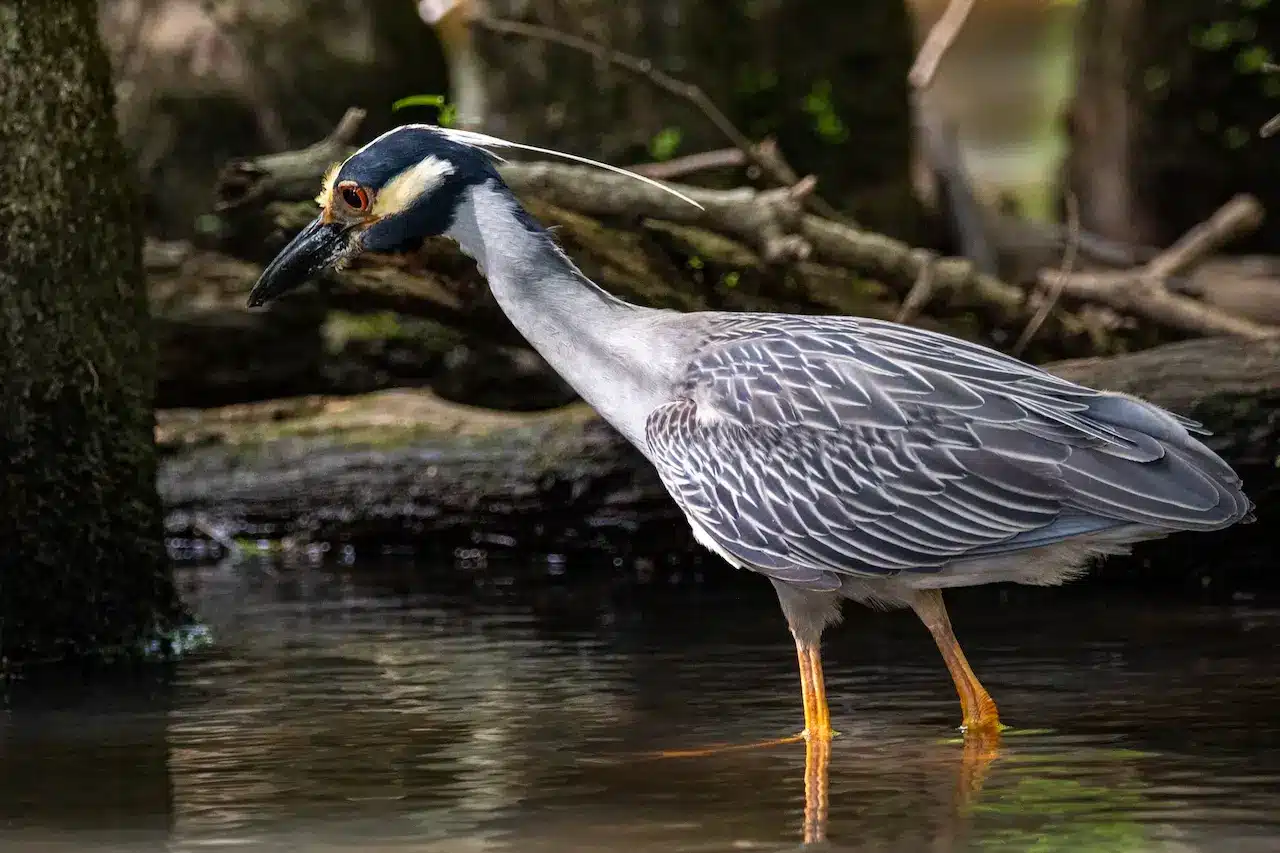
Goliath Herons ( ardea goliath) command attention everywhere it is seen. This magnificent wading heron is the biggest in the entire world. Its size and elegance make it a popular species among birdwatchers, wildlife photographers, and other enthusiasts. The Goliath Heron, which is found primarily in sub Saharan Africa as well as parts of Southwest Asia and South Asia represents both ecological wonder and wetland vitality. This species, despite its low media profile compared to that of other large birds in general, plays an important role in maintaining healthy aquatic ecosystems.
Global Range and Preferred Habitats
Goliath Heron can be found in large numbers across sub-Saharan Africa from Senegal, Sudan and South Africa to the north. It is also found in smaller numbers in Southwest Asia and South Asia. This includes parts of India and Sri Lanka. The species is not migratory, but it may move around locally depending on water levels and food availability.
This giant bird prefers mangrove wetlands, rivers, lakes, swamps and riverbanks. It prefers calm, undisturbed, shallow wetlands where it can efficiently forage. The Goliath Heron, unlike many other herons who adapt to semi-urban or urban environments, is more sensitive to the presence of humans and avoids habitats with heavy disturbances.




The true giant of the Heron family
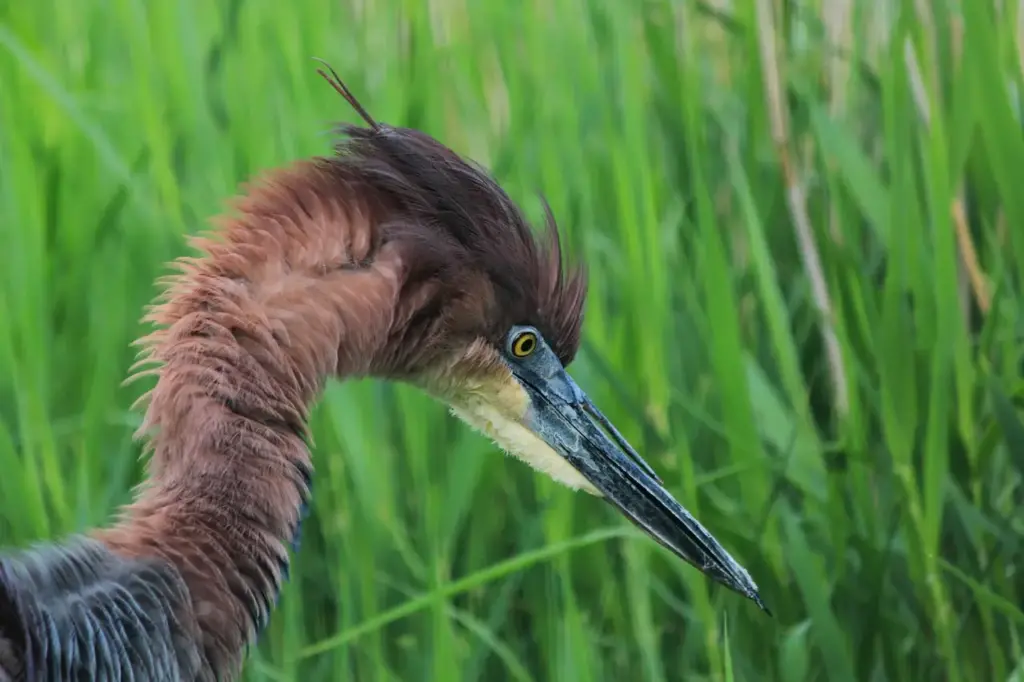
The Goliath Heron is a bird that easily lives up to its name. It stands over 14 meters (4.5 feet), has a wingspan of more than 2 meters (7 feet), and weighs around 9 pounds (4 kilograms). The Goliath Heron is easily identifiable in the field due to its height, large legs and massive bill. The bird is graceful in the air and water, despite its size. Its flight looks slow and ponderous because of its broad wings and deliberate wingbeats.
The Goliath Heron’s plumage is a magnificent blend of slate grey and rich chestnut shades. The head and crest are a deep chestnut colour, which contrasts beautifully with the upper breast and white throat. Lower breast and belly are buff in colouration with streaks of black. The long, dark bill was designed to spear fish. yellow eye, and black leg complete its striking appearance. The females and males are similar. Juveniles appear paler.
Unique Flight Characteristics
The Goliath Heron’s unusual position is easily identifiable in flight. The Goliath Heron tends to have its legs hang lower during flight than most herons. This gives it a characteristic, heavy, almost prehistoric look in the air. The Goliath Heron’s flight is deliberate and slow, but powerful enough to travel long distances.
The Patient Predator: Feeding Behaviour and Diet
The Goliath Heron hunts at night. This species hunts using patience and stillness, unlike many other birds. It will stand motionless on the surface of water or floating vegetation while closely monitoring to detect any movement. The heron uses its spearlike bill to strike a fish as soon as it is within striking distance. It will often catch prey by opening its mouth and snatching the animal.
Its diet is composed primarily of fish. This includes species that live in shallow water or are slow-moving. The Goliath Heron also eats frogs and small rodents or mammals. This ensures that the Goliath Heron has a steady food supply across its entire range. However, populations can be affected if there is overfishing in freshwater habitats or by pollution.
Breeding and nesting: Solitary yet Protective
The Goliath Heron’s breeding season typically takes place between November and March, depending on where you live. The Goliath Heron nests in small groups or alone, unlike other heron species that nest in communal rookeries. This may be due to its territorial nature and habitat preferences.
Nests are large, bulky platforms of sticks. They’re usually located in overhanging trees but can also be found in low bushes and even directly on the ground. The nest is built by both the male and the female. It can be reused and expanded every year. The typical clutch contains two to four pale blue or greenish eggs. Both parents incubate them for a period between 24 and 30 days.
The chicks remain in the nest after hatching and are fed food regurgitated by their parents. The chicks start to leave the nest at around 6 or 7 weeks, but they may remain close to it for a while before dispersing. According to RSPB, this species is well documented.
Vocalizations & Communication
The Goliath Heron is generally quiet but can make a variety of deep guttural sounds when threatened or during breeding season. The call of the Goliath Heron is described as a low-pitched croak or a bark. This can be quite startling, given that it otherwise has remarkably quiet behaviour. These vocalisations can be used to communicate between mating couples or defend territory. According to eBird, this species is well documented.
Ecosystem Role
The Goliath Heron, as a top predator, helps control the populations of fish, small aquatic animals, and frogs. It contributes to the balance of the wetland by regulating the populations. This makes it an important indicator species of the health of the habitat.
Nesting activity can create microhabitats that are beneficial to other organisms. Herons can use abandoned nests to house smaller birds and mammals.
Conservation Status and Threats
The IUCN Red List currently lists the Goliath Heron as “Least concern”, which indicates that global populations remain relatively stable. This does not mean that the species is safe from dangers. Habitat destruction poses a serious threat to the species’ long-term existence.
In some areas, overfishing may deplete herons’ primary food sources. Human disturbance can also lead to nest abandonment during the breeding season. Climate change and its impact on rainfall patterns and water levels also pose a challenge to the future of these species.
Continued protection of freshwater habitats, environmental education, and international conservation cooperation, particularly across Africa and Asia, are essential to safeguarding the Goliath Heron’s future.
Birdwatching and Cultural Relevance
The Goliath Heron is a mythical bird in some parts of Africa, but it’s not as well-known as cranes and storks. Spotting a Goliath Heron on a birdwatcher’s bucket list often requires travel to pristine wetlands and conservation areas.
The Goliath Heron can be seen in many birding destinations, including the Okavango Delta, Botswana; Lake Victoria, Uganda; the Zambezi River Basin and India’s Bharatpur Sanctuary. Its massive size, slow movement, and regal pose make it a photographer’s ideal subject.
Last Thoughts on Protecting the Giant Wetlands
Goliath Heron not only holds the record for size, but is also a vital component of wetland biodiversity. Protecting freshwater ecosystems is becoming more important as habitat loss, pollution and climate change increase. The conservation of this species will ensure that wetlands can continue to support an array of life from amphibians to aquatic plants and beyond.
Nature lovers will never forget the experience of seeing a Goliath Heron. It is a sight that reflects the beauty and diversity of nature. We can ensure that the magnificent bird will continue to soar over lakes and swamps in future generations by supporting conservation efforts.