
Gadfly petrels are a fascinating group of seabirds belonging to the order Procellariiformes, which also includes albatrosses, shearwaters, and storm-petrels. These birds are known for their remarkable pelagic lifestyle, spending most of their lives soaring over vast oceanic expanses and coming ashore only to breed. Their name, “gadfly,” refers to their agile and erratic flight patterns, often described as darting or weaving through the air, much like the persistent insect. Gadfly petrels belong primarily to the genus Pterodroma, a diverse group that includes about 35 recognized species, each adapted to life in some of the most remote marine environments on Earth. These birds play a crucial role in marine ecosystems, feeding on a variety of ocean-surface prey, and have evolved specialized physiological and behavioral traits to thrive in their pelagic niche.
Scientific Classification
The gadfly petrels are classified within the family Procellariidae, which is part of the larger order Procellariiformes. This order is characterized by tubular nostrils, a keen sense of smell, and adaptations for dynamic soaring over the ocean. The genus Pterodroma is the heart of the gadfly petrel group and contains the majority of the species traditionally associated with this name. These birds are medium to large petrels, with many species exhibiting strong genetic and morphological similarities, yet distinct enough to warrant separate species or subspecies status. Taxonomy in this group remains a subject of active research and revision. For example, molecular studies have led to the splitting of several species complexes and the reassignment of some taxa to or from related genera such as Procellaria and Puffinus. Notably, species like the Herald Petrel (Pterodroma heraldica) were once considered subspecies but have now been elevated to full species by some authorities, while others remain cautious pending further evidence. Comprehensive reviews by scientists such as Austin (1998), Bretagnolle et al. (1998), and Brooke (2004) have contributed significantly to clarifying these relationships, yet debates continue, reflecting the complexity of gadfly petrel evolution and speciation.
Geographic Range & Distribution
Gadfly petrels are distributed widely across the world’s oceans, especially in tropical and subtropical marine zones. They are truly pelagic birds, found far from land across the Atlantic, Pacific, and Indian Oceans. Breeding colonies are typically located on isolated islands and atolls, often in remote locations free from mammalian predators. For instance, Barau’s Petrel (Pterodroma baraui) breeds exclusively on Reunion Island in the Indian Ocean, while the Hawaiian Petrel (Pterodroma sandwichensis) nests on the Hawaiian Islands. Other species such as the Galapagos Petrel (Pterodroma phaeopygia) are endemic to the Galapagos archipelago, illustrating the localized breeding sites of many gadfly petrels despite their wide foraging ranges.
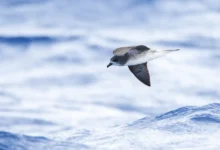


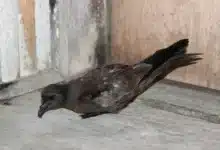

Outside the breeding season, these birds migrate or disperse across open oceans, sometimes traveling thousands of kilometers. For example, the Great-winged Petrel (Pterodroma macroptera) ranges across the southern oceans, while the Bermuda Petrel or Cahow (Pterodroma cahow) is a species restricted to Bermuda but forages widely in the western Atlantic. Their distribution is closely linked to oceanographic features such as upwellings and convergences, where prey is most abundant. The open-sea lifestyle of gadfly petrels means they are rarely seen from land except near breeding colonies or during migration, making them a challenge to study and a prized sighting for seabird watchers and researchers alike.
Physical Description
Gadfly petrels are medium to large seabirds, with body lengths typically ranging from 30 to 45 centimeters and wingspans that can exceed 90 centimeters, depending on the species. Their weight varies accordingly but generally falls between 200 and 400 grams. These birds possess sturdy, streamlined bodies and long, narrow wings adapted for efficient gliding and soaring over open water. Their flight style is highly distinctive—characterized by rapid wingbeats interspersed with glides, allowing them to maneuver deftly even in strong winds.
Their plumage often consists of muted colors, primarily shades of gray, brown, and white, providing camouflage against the ocean and sky. Many species exhibit a dark “M” or saddle pattern on the upper wings and back, contrasting with lighter underparts, which aids in identification during flight. The bill of gadfly petrels is short but robust, usually dark in color, and equipped with sharp edges ideal for grasping soft-bodied prey such as squid and small fish. Internally, they possess twisted intestines that help digest marine animals with unusual biochemical compounds, a specialized adaptation among Procellariiformes. Their nostrils are tubular and positioned on the top of the bill, enhancing their sense of smell, which is crucial for locating food over vast distances.
Behavior & Diet
Gadfly petrels are highly pelagic, spending most of their lives over the open ocean, only returning to land to breed. Their behavior is closely tied to the availability of food, which consists mainly of squid, small fish, and occasionally crustaceans. They typically forage by picking prey from the ocean surface, using their keen eyesight and olfactory senses to detect food. Unlike some Procellariiformes that dive beneath the water, gadfly petrels rarely pursue prey underwater, relying instead on surface-seizing techniques, snatching animals that are swimming near or at the surface.
Their flight patterns, often erratic and agile, allow them to cover large areas while searching for food, and they are known to follow fishing vessels to scavenge offal and discarded fish. Gadfly petrels are mostly nocturnal at their breeding colonies, a behavior thought to reduce predation risk from diurnal predators such as gulls and raptors. At sea, they may be active both day and night, depending on prey availability and environmental conditions. Their sociable nature during feeding often leads to large flocks congregating around productive feeding sites, where competition can be intense.
Breeding & Reproduction
Gadfly petrels breed exclusively on islands, often on rugged, predator-free slopes or in burrows dug into soft soil or under dense vegetation. Breeding colonies can range from a few pairs to thousands, depending on species and location. Most gadfly petrels lay a single white egg per breeding season, which both parents incubate in shifts lasting several days. Incubation periods usually last between 45 and 60 days, after which a single chick hatches. The chick is altricial, meaning it is born relatively helpless and relies entirely on parental care. According to RSPB, this species is well documented.
Parents feed the chick a diet rich in squid and fish, delivered through regurgitation. Chicks fledge after approximately 60 to 90 days, depending on the species. Gadfly petrels are mostly nocturnal at their breeding sites, a strategy that helps reduce predation and disturbance. They also produce distinctive calls at night that facilitate mate recognition and territorial defense. Many species exhibit strong site fidelity, with adults returning to the same burrow or nesting site year after year. Conservation efforts often focus on protecting breeding islands from introduced predators such as rats and cats, which can devastate petrel populations. According to eBird, this species is well documented.
Conservation Status
The conservation status of gadfly petrels varies widely across species, with some considered stable and others critically endangered. According to the International Union for Conservation of Nature (IUCN), many gadfly petrels face significant threats from habitat loss, introduced predators, light pollution, and human disturbance at breeding colonies. For example, the Bermuda Petrel or Cahow (Pterodroma cahow) was once thought extinct but has since been the focus of successful conservation programs that have helped its population recover from a few dozen pairs to several hundred. Conversely, the Jamaican Petrel (Pterodroma caribbaea) is likely extinct, with no confirmed sightings in decades.
Other species, such as the Barau’s Petrel and the Hawaiian Petrel, are classified as endangered or vulnerable due to their limited breeding ranges and ongoing threats. Conservationists emphasize the importance of predator control, habitat restoration, and reducing light pollution, which disorients fledgling petrels during their maiden flights to sea. Additionally, climate change poses emerging risks by altering oceanic food webs and breeding habitat conditions. International cooperation and ongoing monitoring are critical to ensuring the survival of these enigmatic seabirds, many of which serve as indicators of ocean health.
Interesting Facts
One of the most remarkable features of gadfly petrels is their ability to navigate vast oceanic distances with incredible precision. They use a combination of olfactory cues, the Earth’s magnetic field, and celestial navigation to find breeding sites hidden on remote islands. Their nocturnal habits at breeding colonies likely evolved to avoid predation and human disturbance, making their secretive lives a challenge for researchers.
Gadfly petrels produce stomach oil, a highly energy-dense substance that they use both as a defense mechanism and as an energy reserve during long flights. This oil can be sprayed at predators or regurgitated to feed chicks. Another intriguing behavior is their frequent following of marine mammals and fishing boats to capitalize on disturbed prey or discarded catch.
Finally, the evolutionary history of gadfly petrels is tied closely to the dynamic geological and climatic changes of the Earth’s oceans. Their speciation patterns reflect island biogeography and oceanic dispersal, making them a fascinating case study for evolutionary biology and conservation science.
In summary, gadfly petrels are a captivating group of seabirds that embody the wild, untamed spirit of the open ocean. Their adaptations to pelagic life, complex taxonomy, and often precarious conservation status highlight the intricate connections between marine ecosystems and the species that depend on them. For birdwatchers and wildlife enthusiasts, glimpsing a gadfly petrel in flight or at a breeding colony offers a rare and memorable encounter with one of the ocean’s most elusive and graceful inhabitants.


