The Crested Barbets are an incredibly fascinating bird that has captured the hearts of nature lovers, birdwatchers and photographers alike. This striking species, which is native to Africa, is easily recognisable by its vibrant plumage and robust build. It also has a distinctive crest, which gives it its name. The Crested Barbet, despite its striking appearance, is a quiet observer that quietly moves through the trees and shrubs on its daily routines.


The Crested Barbet is found in diverse habitats across southern and eastern Africa. From the forests of Angola to the savannas in Zimbabwe, it adapts well to both natural and man-altered landscapes. Ecologists and bird enthusiasts alike are drawn to its unique combination of opportunistic predatory behaviour, nesting in a tree cavity, and fruit-eating habits. This comprehensive overview explores the many facets of an iconic African bird. It includes its description, distribution and diet, breeding habits, vocalisations and conservation status.
Description
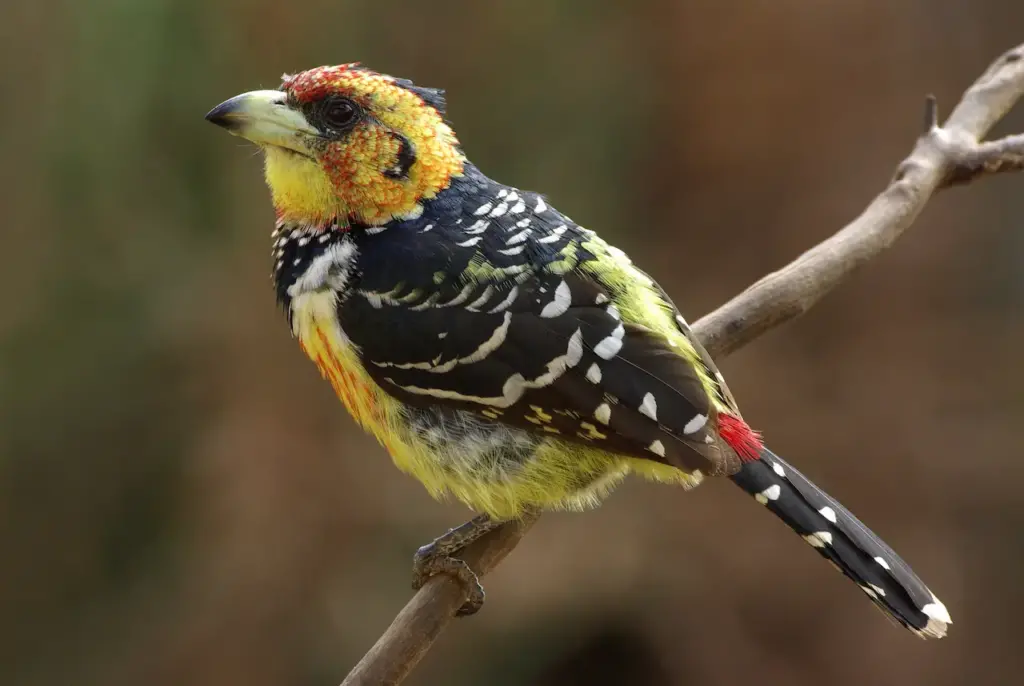
The Crested Barbet measures between 20 and 25 centimetres. The plump body, large head and a distinct silhouette set it apart from birds of the same habitat. The bristled bill is an important feature. It allows the bird to dig nesting cavities and eat a variety of foods, from fruits to small mammals.
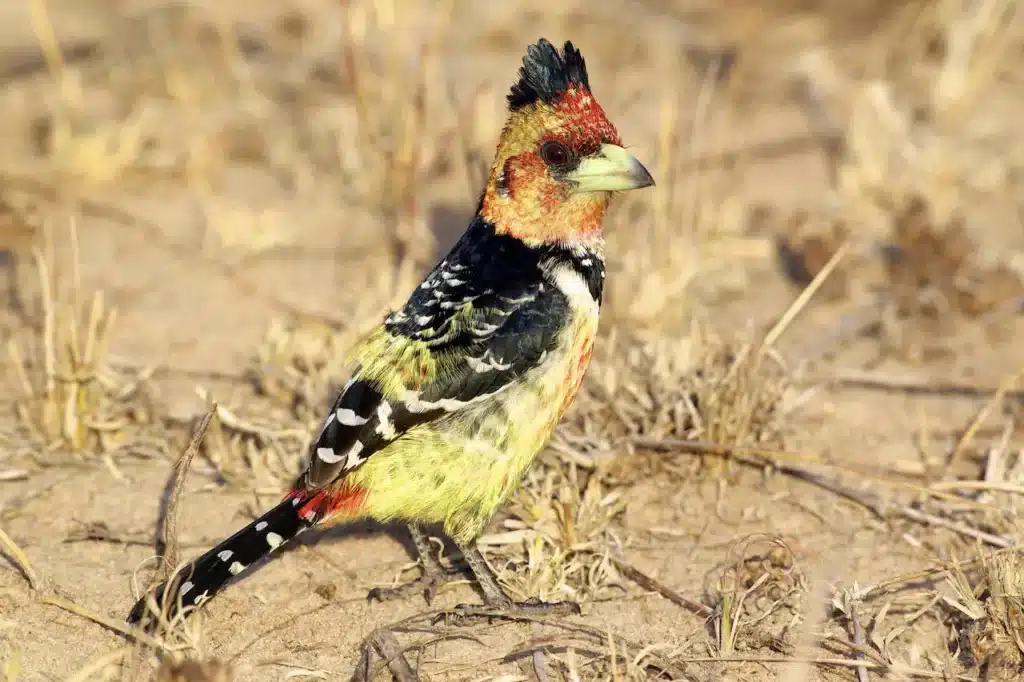
The Crested Barbet’s crest is one of its most distinctive features. It’s a striking tuft that can be raised and lowered according to the bird’s mood. The crest of the Crested Barbet is a striking tuft of feathers that can be raised or lowered depending on its mood. Its bold colours and distinctive markings make the Crested Barbet easily visible among the dense vegetation of African woodlands.
Crested Barbets tend to be solitary or in pairs. This is especially true during breeding season. They move deliberately, with short hopping flights, interspersed by periods of perching and scanning for food. Their vibrant colouration and cautious, yet confident, demeanour make them an interesting subject for bird lovers who want to see African wildlife close up.
Habitat and Distribution
The Crested Barbet is widely distributed in southern Africa. Populations have been recorded in Angola. Botswana. Burundi. Democratic Republic of the Congo. Malawi. Mozambique. Namibia. Rwanda. South Africa. Swaziland. Tanzania. Uganda. Zambia. They can thrive in many habitats. From dense woodlands and savannas, to gardens, orchards and even urban areas with fruit-bearing tree abundance.
Despite being highly adaptable birds, Crested Barbets prefer areas that have dead branches and shrubs. These provide nesting and foraging sites. The birds are attracted to areas with abundant fruit, whether it is in the wild or on cultivated plantations. They are not migratory, and they tend to maintain territories all year round, although local movements can occur as a result of seasonal variations in food availability.
These birds can use habitats in a way that balances the natural landscape and is modified by humans. These birds nest in decaying old trees in forests and are also at home in garden trees or wooden structures found in villages. The flexibility of the species contributes to its stable population on the African continent despite changes in land usage.
Feeding and Diet
The Crested Barbet has a diverse diet that allows it to survive in a variety of ecosystems. They eat fruit ranging from wild native fruits to orchard products. Typically, they swallow whole fruits, digesting only the fleshy portion and regurgitating indigestible parts such as seeds or pits. This feeding behaviour is not only beneficial to the birds but also helps disperse many plant species.
Crested Barbets eat a variety of insects, including ants and cicadas. They also eat locusts. They will also eat small vertebrates, such as geckos, frogs and lizards and venomous insects, like centipedes and scorpions. This diverse diet allows the Crested Barbet to adapt to seasonal changes in insect or fruit abundance. According to Audubon Society, this species is well documented.
Foraging is marked by deliberate movements and careful observation. Barbets can perch on a branch and scan the area before darting off to grab a passing bug or reach for ripe fruits. They will often feed on fruit from specific trees, which provide food all year round. They return to these trees repeatedly when the seasons permit. According to Cornell Lab of Ornithology, this species is well documented.
Its diet reflects the willingness of this bird to take advantage of human-modified habitats. The Crested Barbet is not averse to visiting gardens and plantations and eating the fruits and vegetables grown there. This can sometimes cause them to clash with farmers, but it also shows their adaptability and intelligence when it comes to identifying profitable food opportunities.
Breeding and Nesting
The Crested Barbet is a cavity nester, which means that it relies on crevices or holes to lay its eggs and raise its young. They prefer to nest in dead branches, stumps, or trees. This provides shelter from predators and offers protection. They may also nest in termite mounds or riverbanks.
Breeding Season is different across species and coincides with optimal conditions for fruit production. Incubation lasts 13-15 days. In contrast to other bird species, where the incubation of eggs is the sole responsibility of the female, both the male and female Crested Barbets take turns incubating their eggs. This ensures that the eggs are kept warm and protected.
The chicks become completely dependent on their parents once the eggs hatch. Both parents actively participate in feeding the young and nurturing them. They provide a diet rich in soft fruits and insects that helps the chicks to grow quickly. Nestlings typically fledge in a few weeks. However, parents can continue to feed and guide them until the chicks can forage on their own.
The selection of nest sites is vital for the survival and development of young. Crested Barbets nest in cavities to reduce their exposure to predators like snakes, smaller mammals and larger birds. Nesting habits play an important role in the ecosystem. Barbets’ abandoned cavities can be used as a shelter for insects, small mammals and other birds.
Calls and Vocalisations
The Crested Barbet is a vocal bird that uses a variety of calls to communicate, defend territory, and attract mates. The Crested Barbet’s vocal repertoire is composed of sharp, repetitive sounds, which are often described as loud trilling “too woo, too woo”. These calls can be heard over long distances. These calls are most prominent during the breeding season. They serve to signal potential mates that they are ready to reproduce and mark their territory.
Crested Barbets use softer whistles and calls to communicate with mates or families at close range. Their vocalisations are a key part of their social behaviour, as they help maintain pair bonds, coordinate nest defence and feed activities. Listening to and watching a Crested Barbet is a great way to understand how important sound can be in the life of African birds
Conservation
The International Union for Conservation of Nature has classified the Crested Barbet as a Least Concern. The IUCN has classified the Crested Barbet as Least Concern due to its wide range, stable population trend, and remarkable adaptability in a variety of habitats. Crested Barbets, unlike many forest-dependent species, are not sensitive to moderate human disturbance. This allows them to thrive in areas where there is scattered agricultural activity or city development.
This does not mean, however, that Crested Barbets have no threats. Habitat Loss can lead to a reduction in nesting sites. Pesticides used in agricultural fields and orchards can affect food availability for birds or cause them to be at risk of consuming insects contaminated with pesticides. By maintaining natural trees, conserving wooded areas and planting fruit-bearing trees in gardens, parks and other public spaces, you can help Crested Barbets and increase urban biodiversity.
The conservation efforts of this species are indirect and focus on protecting habitats that benefit a variety of plants and animals. Humans help maintain a broader ecosystem by creating environments that allow Crested Barbets to thrive. These birds are important as insect predators and seed dispersers.
Conclusion
It is more than a pretty bird. The Crested Barbet represents the rich diversity of avian life in Africa and is an example of how wildlife can adapt to environmental changes. The bird’s vibrant plumage and vocalisations are a favourite of birdwatchers. Its dietary versatility, cavity-nesting behaviour, and wide distribution highlight its resilience.
Observing the Crested Barbet is a great way to understand how Africa’s ecosystems interact. Every aspect of the Crested Barbet’s life is a reflection of a delicate balance between ecological contribution and survival. The presence of the Crested Barbet serves as a reminder to conservationists, bird lovers, and gardeners that wildlife can coexist peacefully with humans if habitats are protected and respected.
The Crested Barbet is a vibrant and important thread in the tapestry that is African biodiversity. This bird is a visual and audio feast, whether it’s perched on a tree in the forest, singing from a garden or probing fruiting branches for its next meal. It’s a real gem of Africa’s natural history.