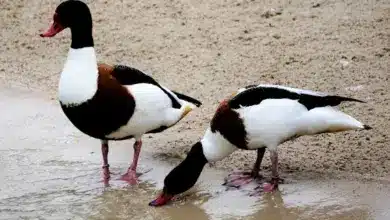
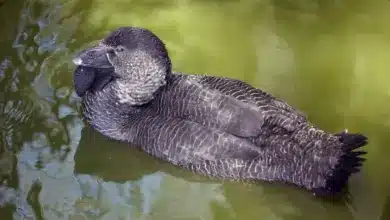
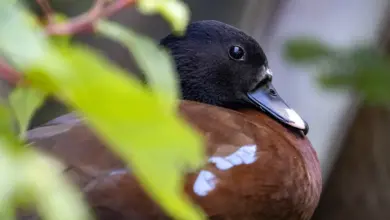
The Chubut Steamer Duck, also known as the White-headed Flightless Steamer Duck (Tachyeres leucocephalus), is a unique and fascinating species endemic to Argentina. This robust flightless duck is a member of the steamer duck group, renowned for their peculiar locomotion on water and their striking adaptations that set them apart from other waterfowl. Despite their relatively recent scientific recognition in 1981, these ducks have captured the attention of ornithologists and bird enthusiasts alike due to their limited geographic range and distinctive behaviors. The Chubut Steamer Duck serves as a compelling example of how species can evolve in isolated environments, adapting specialized traits such as flightlessness and powerful swimming abilities to thrive along the southern coasts of South America.
Scientific Classification
The Chubut Steamer Duck belongs to the genus Tachyeres, which includes several species commonly referred to as steamer ducks. Its full scientific name is Tachyeres leucocephalus, with “leucocephalus” meaning “white-headed,” a nod to the bird’s characteristic pale head plumage. This species was first described scientifically in 1981, making it the most recently recognized member of the steamer duck complex. Steamer ducks are part of the family Anatidae, which includes ducks, geese, and swans. Within this family, they are grouped under the subfamily Anatinae, the true ducks.
Steamer ducks have long intrigued scientists because of their unusual flightlessness. Unlike many other ducks, some species within the genus Tachyeres have lost the ability to fly altogether, an evolutionary trait that is relatively rare among waterfowl. The Chubut Steamer Duck is one of the three flightless species in this genus, alongside the Fuegian Steamer Duck (Tachyeres pteneres) and the Falkland Steamer Duck (Tachyeres brachypterus), all of which are native to southern South America. This flightlessness is believed to have evolved due to the lack of terrestrial predators and the abundance of marine resources in their coastal habitats.





Geographic Range & Distribution
The Chubut Steamer Duck is strictly endemic to Argentina, confined to a relatively narrow coastal strip along the Atlantic Ocean. Its distribution is limited primarily to the Golfo San Jorge region, which lies between southern Chubut Province and northern Santa Cruz Province. This restricted range spans roughly 300 kilometers of coastline, making the species one of the most geographically localized ducks in the world. Within this area, the ducks inhabit sheltered bays, rocky shorelines, and estuarine environments where they can find abundant food and shelter.
Unlike many other waterfowl species that migrate seasonally, the Chubut Steamer Duck is largely sedentary, remaining in its coastal habitat year-round. Its preference for cold, temperate marine environments means it is rarely found far inland or outside this specific geographic corridor. The region’s climate is characterized by cool temperatures, strong winds, and a mix of rocky and sandy shores, all of which shape the duck’s lifestyle and survival strategies.
The limited distribution of the Chubut Steamer Duck contributes to its vulnerability, as habitat changes or human disturbances in this confined range could have significant impacts on population numbers. However, the remoteness of much of the Golfo San Jorge coastline provides some natural protection from extensive development or habitat destruction.
Physical Description
The Chubut Steamer Duck is a large, robust bird with striking plumage and distinctive physical features that set it apart from other ducks. Adults measure approximately 65 to 75 centimeters (25.6 to 29.5 inches) in length, with a wingspan of about 90 to 110 centimeters (35 to 43 inches). Despite having wings of considerable size, the species is flightless due to reduced wing musculature and structural adaptations that favor swimming over flying. Males typically weigh between 3.5 to 4.5 kilograms (7.7 to 9.9 pounds), making them one of the heaviest duck species, while females are generally slightly smaller.
True to its name, the Chubut Steamer Duck has a predominantly white head and neck, contrasting sharply with its darker body plumage. The body feathers range from dark gray to black, with some subtle mottling that provides camouflage against the rocky coastal background. The bill is pale pinkish-orange and robust, equipped with serrated edges that assist in grasping prey. The legs and feet are strong and webbed, ideal for powerful swimming and diving in cold waters.
One of the most notable physical attributes of the Chubut Steamer Duck is its heavy-set body and large feet, which it uses to “steam” or paddle rapidly across the water surface. This movement resembles the churning of a steamboat’s paddle wheels, hence the common name “steamer duck.” The species’ wings are used more for balance and maneuvering in water rather than for flight. Additionally, the white coloration of the head is thought to play a role in social signaling and mate recognition within this visually similar group of ducks.
Behavior & Diet
The Chubut Steamer Duck is a highly aquatic species, spending most of its time in and around coastal waters. Its behavior is characterized by a combination of powerful swimming, diving, and territorial aggression. When moving quickly across the water, it uses rapid wing beats just above the surface, creating a distinctive steaming effect. This locomotion enables it to evade predators and engage in intraspecific confrontations effectively.
Feeding primarily on marine invertebrates, the Chubut Steamer Duck forages by diving and overturning rocks in shallow waters. Its diet consists largely of larvae and pupae found beneath rocks, aquatic insects, small fish, mollusks such as snails, crabs, and other crustaceans. The duck’s serrated bill edges help it to grasp slippery prey and filter smaller food items from the water. This adaptation compensates for the lack of teeth, allowing it to efficiently process a wide variety of prey.
While the Chubut Steamer Duck primarily feeds on animal matter, it also ingests some plant material, including seeds and marine algae, though these constitute a smaller portion of its diet. Its foraging behavior is opportunistic and closely tied to tidal cycles, often focusing on intertidal zones where prey availability is highest.
Socially, these ducks tend to be territorial, especially during the breeding season, with males defending small territories against rivals. Outside breeding periods, they may be seen in loose groups, but they generally avoid large flocking behavior. Their aggressive nature is well-documented, with males sometimes engaging in combative displays using their powerful bills and wings.
Breeding & Reproduction
Breeding habits of the Chubut Steamer Duck are closely tied to the coastal environment and the seasonal rhythms of southern Argentina. The species typically breeds during the austral spring and summer months, from October through January, when food resources are abundant and weather conditions are favorable. According to IUCN Red List, this species is well documented.
Nests are usually constructed close to the shoreline, often hidden among rocks, vegetation, or in small burrows dug into the ground. The female lays a clutch of three to five eggs, which are creamy-white and heavily incubated for approximately 35 to 40 days. Both parents participate in nest defense, although the female primarily undertakes incubation duties. According to Bug Guide, this species is well documented.
Chicks are precocial, hatching with downy feathers and the ability to swim almost immediately. They remain with their parents for several weeks, learning essential survival skills such as foraging and predator avoidance. Juveniles gradually develop adult plumage over the course of several months, but sexual maturity is typically reached after two years.
The species’ reproductive success is closely linked to environmental conditions, including food availability and disturbance levels. Nest predation and human activities can pose threats to breeding pairs, emphasizing the need for habitat protection during critical reproductive periods.
Conservation Status
The Chubut Steamer Duck is currently classified as Near Threatened by the International Union for Conservation of Nature (IUCN). Its limited distribution range, combined with localized threats, contributes to this conservation status. Although the population is believed to be stable or only slightly declining, the species faces potential risks from habitat degradation, pollution, and human disturbances along the coast.
Industrial activities such as oil and gas exploration, fishing, and coastal development can affect the quality of the marine environment and reduce the availability of suitable nesting and feeding sites. Additionally, accidental oil spills pose a significant hazard to these ducks, given their reliance on pristine coastal waters. Introduced predators, such as feral cats and dogs, may also threaten eggs and chicks in nesting areas.
Conservation efforts focus on monitoring population trends, protecting critical habitats, and raising awareness about the species’ ecological importance. The remoteness of much of the Golfo San Jorge coastline provides some natural protection, but ongoing vigilance is necessary to ensure that industrial and human activities do not negatively impact this unique flightless duck.
Interesting Facts
One of the most intriguing aspects of the Chubut Steamer Duck is its method of locomotion on water. When alarmed or moving quickly, it uses its large wings as paddles, beating them against the water’s surface to propel itself forward at remarkable speeds. This behavior resembles the churning of a steamboat’s paddle wheels, which is how steamer ducks earned their common name.
Despite having wings large enough to support flight in related duck species, the Chubut Steamer Duck is entirely flightless. This trait is an excellent example of evolutionary adaptation to a predator-free, resource-rich environment where flying offers little advantage compared to efficient swimming and diving.
Another fascinating fact is the duck’s aggressive nature. Males are known to be fiercely territorial, often engaging in physical fights with rivals. Their powerful bills and strong wings can inflict serious injuries, making them formidable opponents in the wild.
In captivity, Chubut Steamer Ducks have been observed feeding on commercially prepared pellets, but in the wild, their varied diet of aquatic invertebrates and small fish makes them important players in their coastal ecosystems. By controlling populations of marine insects and crustaceans, they help maintain ecological balance.
Lastly, their discovery as a distinct species in 1981 highlights the challenges of studying wildlife in remote and understudied regions. For many years, the Chubut Steamer Duck was confused with similar species until detailed morphological and behavioral studies confirmed its unique status.
Conclusion
The Chubut Steamer Duck (Tachyeres leucocephalus) is a remarkable example of evolutionary specialization and adaptation. Endemic to a narrow stretch of Argentina’s southern coastline, this flightless duck exhibits distinctive physical and behavioral traits that enable it to thrive in cold, coastal environments. Its recent scientific recognition, unique locomotion, and specialized diet make it a fascinating subject for nature enthusiasts and researchers alike. While its conservation status remains a concern due to its limited range and potential threats, ongoing efforts to monitor and protect its habitat are vital. By learning more about species like the Chubut Steamer Duck, we deepen our understanding of the diversity and complexity of life on Earth and the importance of preserving it for future generations.