Chinese Pond Heron (Ardeola Bacchus) , a mysterious and striking wading bird from East Asia. This elegant heron’s seasonal change from browns to bright breeding plumage is a sight to behold and an important part of the ecosystems that it inhabits. The Chinese Pond Heron, while not as well-known as its relatives, is an adaptable species with a high ecological value. It deserves to be studied more closely.





This comprehensive overview explores the distribution, appearance and behaviour of the Chinese Pond Heron as well as its breeding and ecological role, its status in nature, migration patterns and unique characteristics which distinguish it from other Herons.
The Chinese Pond Heron’s Habitat and Distribution
It is found mainly in East and Southeast Asia. This includes China, Taiwan and Korea. Its habitat preferences include marshes and estuaries as well as lowland wetlands.
This species is found in both brackish and freshwater environments. It prefers areas with abundant aquatic vegetation, shallow water and a lot of food. This species is most common in rural agriculture zones where rice paddies and irrigation canals provide food and a constant water supply.
The Chinese Pond Heron is occasionally sighted outside of its range. This includes a 1997 sighting in Saint Paul Island (Alaska), which marked the first recorded occurrence for the species in the United States. The bird has also been reported in Myanmar. For example, Bonzon, near Gangaw is just inside Chin State. This shows the bird’s ability to adapt and explore new environments.
Seasonal Migration Patterns
Some populations of Chinese Pond Heron show short-distance migratory behaviours. During the winter, birds that breed in northern China or Korea migrate south to lowland wetlands located in Southeast Asia.
These migrations can be influenced by temperature changes, availability of food and reproduction cycles. Chinese Pond Herons, unlike long-distance migrants such as the White Stork and Arctic Tern, tend to stay within a smaller regional corridor.
Breeding Beauty and Nonbreeding Camouflage
The drastic difference in appearance of the Chinese Pond Heron between the breeding and non-breeding seasons is one of the most fascinating features of its biology.
Breeding Plumage
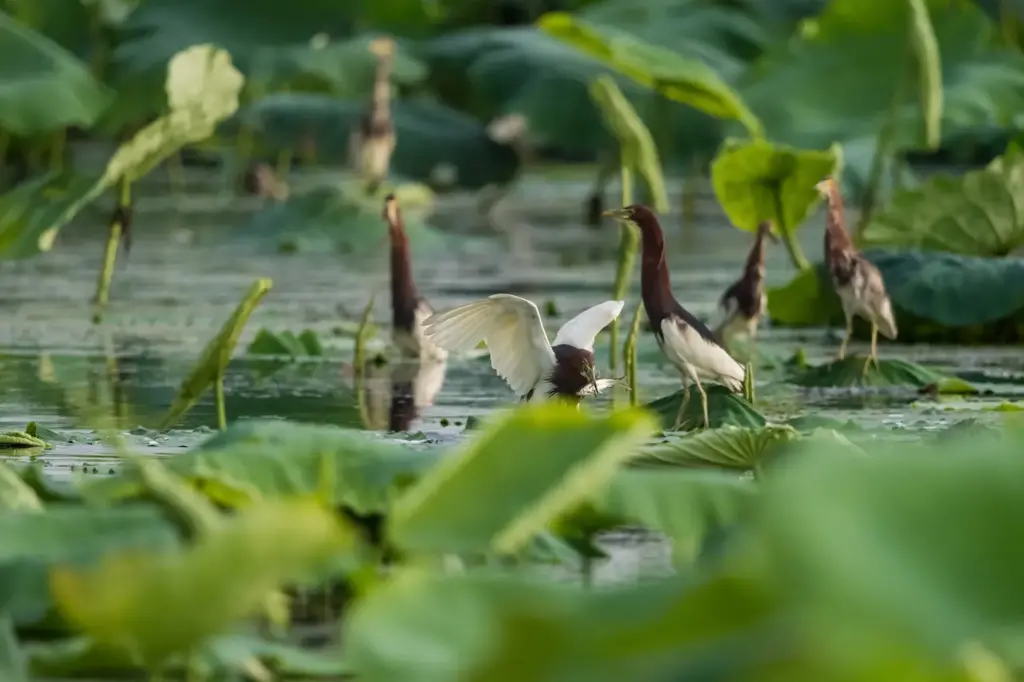
During the breeding period, which is typically between April and July for adult Chinese Pond Herons, they are visually breathtaking. The head and neck turn a rich wine-red while the back, scapulars and wings take on a deep chestnut colour. The underparts are white, and the wing feathers are bright white. This creates a stark contrast to the darker body colours. The eye colour is bright yellow, and the bills are vivid yellow.
The colour of the mate attract and courtship displays is used to signal sexual maturity and breeding readiness.
Non-Breeding plumage
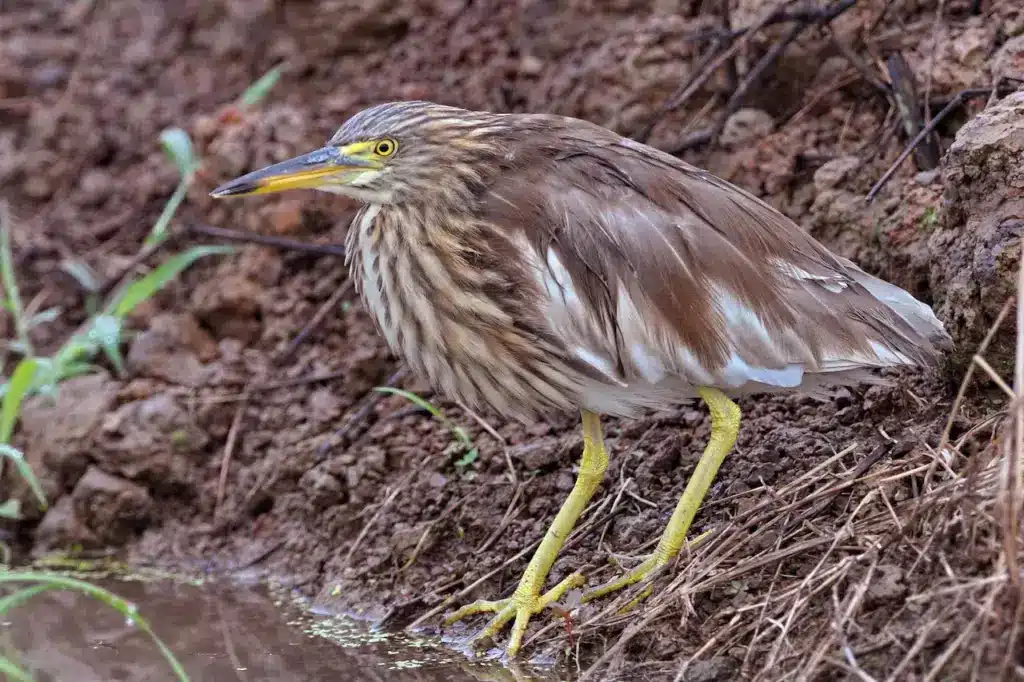
The Chinese Pond Heron takes on a more cryptic look outside of the breeding season. It changes to a brownish-grey with streaks and white speckles. This helps it blend in seamlessly with the muddy backgrounds and thick aquatic vegetation. This camouflaged appearance is perfect for foraging and protects against predators.
The bird is about 47cm (18.5inches) long and has a stocky body. It also has a small neck. This is typical for the Ardeola species. According to Audubon Society, this species is well documented.
Feeding Behaviour: Opportunistic, efficient and opportunistic
Chinese Pond Herons feed primarily on water prey. According to RSPB, this species is well documented.
- Small fish
- Insects
- Crustaceans
- Amphibians
- Sometimes, small reptiles and even tadpoles are found.
They use a wait-and-see feeding strategy and often stand motionless in shallow waters or along muddy banks until the prey is within striking range. They use their pointed, sharp bill when ready to lunge rapidly and catch or impale the target.
They can wade through muddy areas and marshy terrain with their yellow feet, allowing them to reach food sources other birds cannot. They feed both during the daytime and at night, particularly in areas where humans are less likely to disturb them.
Breeding and nesting: Raising Next Generation
Breeding usually begins in spring. This coincides with the warmer weather and greater food availability. Chinese Pond Herons nest in colonies, usually sharing large heronries with other species, such as Little Egrets and Cattle Egrets. This communal behaviour provides safety in numbers as well as increased vigilance towards predators.
Nest Structures and Eggs
The nest is built as a platform made of loose sticks in dense shrubs or trees near water bodies. Both parents incubate the 3-6 pale blue-green eggs laid by the female. The period of incubation is about twenty to 25 days. Chicks are altricial. This means they are born dependent and helpless.
The males and females participate in feeding the chicks by regurgitating the partially digested food directly into the nest. The chicks leave the nest after approximately 4 or 5 weeks. However, they may stay nearby as they learn how to fly and forage.
Calls and Vocalisations
The Chinese Pond Heron does not have a very loud voice. It does emit a variety of harsh croaking sounds during the mating season and when startled. These vocalisations can often be heard at nesting sites. They are used to communicate between mates or to warn intruders.
Conservation Status: Not threatened but vulnerable to habitat loss
According to the IUCN Red List, the Chinese Pond Heron has been classified as a species of Least Concern because of its large distribution and relatively steady population numbers. Like many other wetland species, the Chinese Pond Heron is susceptible to:
- Habitat degradation
- Urban development
- Agricultural Pollution
- Wetland Drainage
- Disturbance in breeding sites
The destruction of wetlands in East and Southeast Asia is a threat to the long-term survival of this species. To ensure the survival of these herons, conservation efforts should focus on wetlands protection, community awareness and breeding environment preservation.
Similar Species Identification and Tips
It is easy to confuse the Chinese Pond Heron with other pond herons. This is especially true outside of breeding season, when the plumage becomes duller and uniform. Here’s how you can tell the difference:
- Indian Pond Heron (Ardeola greyii) – More common in South Asia. It is a beige-toned bird with a slightly different voice.
- Javan Pond Heron is a species of heron found in Southeast Asia, Indonesia and Malaysia. It has a rufous body and head during breeding. However, the wing colours are different.
- Non-breeding birds look similar to each other. Expert identification requires close observation of the plumage or breeding habits.
Cultural Importance and Ecological Role
The Chinese Pond Heron may not have the same symbolism as cranes or storks, but it plays an important role. It helps control the pest population and maintain equilibrium in wetland ecologies by feeding on aquatic organisms and insects.
Herons are often used in East Asian poetry and art to represent tranquillity and patience. The Chinese Pond Heron is a perfect example of these qualities, with its graceful, silent presence.
Final Thoughts – A Hidden Gem among East Asia’s Wetland Birds
The Chinese Pond Heron is not always in the spotlight, but it’s one of East Asia’s most elegant and ecologically valuable wading birds. The species’ beautiful seasonal plumage and fascinating behaviour, as well as its vital role in maintaining healthy wetland ecosystems, make it worthy of more awareness and appreciation.
Protecting the habitats of species such as the Chinese Pond Heron is not only an ecological necessity but also a cultural responsibility.