The Redhead Duck is one of North America’s most captivating and striking waterfowl. It’s a medium-sized diving bird that attracts attention for its vibrant plumage and strong migration behaviour. The Redhead Duck, with its unique appearance and habits, is a resident of wetlands in the United States, Canada and parts of Mexico, as well as the Caribbean. These ducks are a popular choice among waterfowl and birdwatchers in North America, despite the fact that their population is facing challenges because of habitat loss. The Redhead Duck is a beautiful duck with a body size of about 37cm. Its wingspan is 84cm.
Appearance: Unique and beautiful
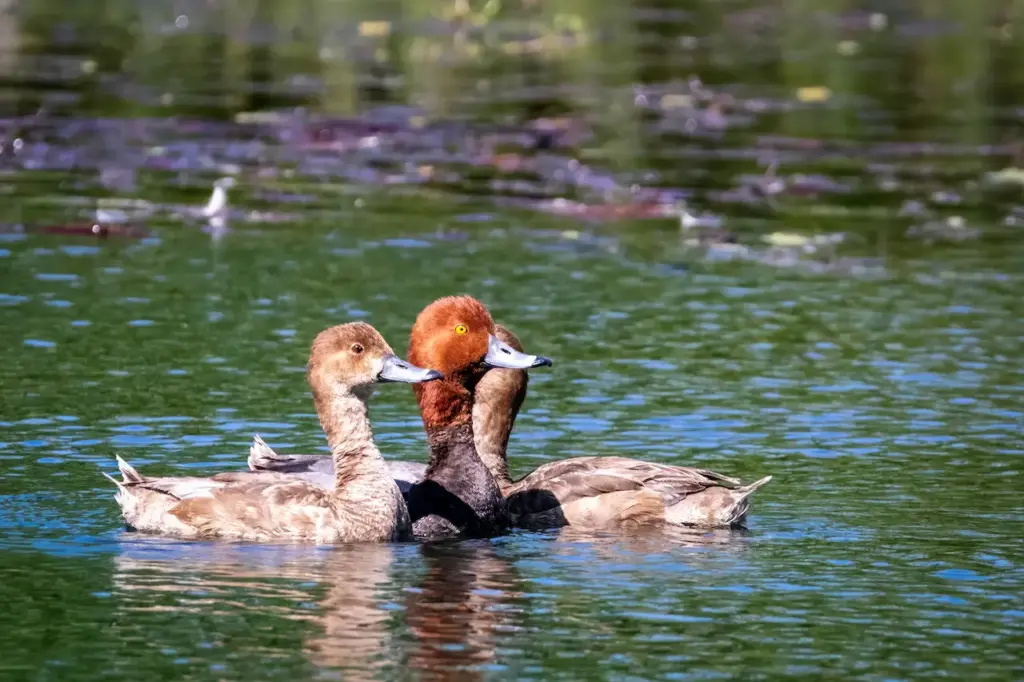
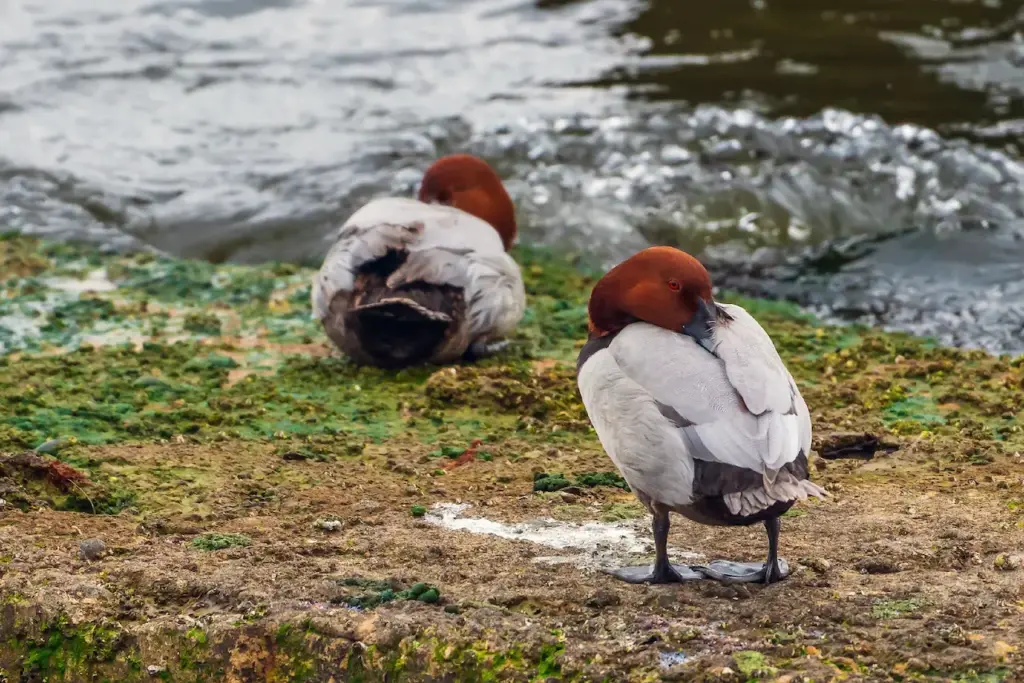
The adult males of the Redhead Duck are characterised by their brilliantly red heads. Males have a deep red neck and head, a black breast and a drab greyish body during the breeding season. They also sport bright yellow eyes and accentuate their expression with bluish-blue bills. The male Redhead Duck is easily identified in the field because of its colourful contrast. Female Redhead Duck has a more subtle colouration, with a warm, brown body and head and a darker, bluish-grey bill. It also features a dark black tip. Females are less colourful than males but equally elegant, and well adapted to the wetland environment.
Redheads are often confused with other diving duck species, particularly Canvasbacks. However, their mottled plumage or less defined features can help distinguish them. Redhead Ducks can be confused with other diving ducks, such as canvasbacks. However, their round heads and shorter bills help to distinguish them. Redheads are one of the most sought-after duck species in North America, so accurate identification is important.





Range and Migration: A wide but threatened range
Redhead Ducks nest in the Prairie Pothole Regions of North America and the United States. These shallow, wetlands are rich in aquatic plants and invertebrate species, and provide the ideal environment for nesting. In some areas, extensive loss of habitat, mainly due to agricultural expansion and wetland drainage, has led to sharp decreases in Redhead population. These declines have raised concerns about conservation, and habitat restoration has become a priority for wildlife groups across North America.
After the breeding season is over, male Redheads go through a post-breeding moult that renders them unable to fly for almost a month. They migrate northward to find a secluded and safe moulting site. Both males and females then begin their southward migration to the overwintering grounds in the southern United States and the Great Lakes Region, northern Mexico and parts of the Caribbean. While Redhead Ducks can migrate long distances, they are rare vagrants in Western Europe. This makes any transatlantic sightings especially exciting for birders overseas.
Nesting Behaviour: Unique Among Ducks
Redhead Ducks have a particular interest when it comes to nesting behaviour. They are well known for their tendency to engage in brood parasitism, a practice where a female lays eggs in another duck’s nest. This behaviour is often observed in nests of other duck species or Redheads, particularly Canvasbacks, which share a similar habitat. Canvasbacks may unknowingly raise Redhead ducklings alongside their own. Brood parasitism may seem strange, but it is a very effective reproductive strategy when nesting areas are limited and a female wishes to increase the chances of her offspring surviving without having to raise them.
Females who build nests on their own usually do so in dense vegetation. They use grasses and reeds as well as other wetland plants for insulation and concealment. The nesting can be anywhere from 7 to 10 eggs. This number may vary if parasitic nesting is involved. The Redhead usually forms new pair bonds every year. Pairing begins in the late winter. The Redhead’s annual reshuffling and complex nesting behaviours make it a fascinating topic for both ornithologists and avian behaviourists. According to Cornell Lab of Ornithology, this species is well documented.
Feeding Habits – A Flexible and Adaptive Diet
Redhead Ducks, like most of their family members (Aythya), are well-equipped to forage beneath the surface of the water. They are, however, also capable of dabbling if necessary. The diet of Redhead Ducks is very varied, and it reflects their environment. Redheads in summer breeding habitats consume aquatic plants such as pondweeds and wild celery. These provide both food for the Redheads but also building material for their nests. According to RSPB, this species is well documented.
Their diet is even more varied during migration and wintering grounds. This includes molluscs and insects as well as small fish and crustaceans. This omnivorous eating behaviour allows these birds to thrive in many habitats. From freshwater marshes and brackish estuaries to inland lakes, they can adapt to a variety of environments. They use powerful webbed toes and dive below the surface, staying underwater for several seconds as they search for plant material or invertebrates. Large flocks of Redhead Ducks are often seen diving together in areas with abundant food, creating an amazing spectacle for onlookers.
Vocalizations & Communication
Redhead Ducks do not have as much vocalisation as other waterfowl, but they can produce a variety of grunts and whistles. This is especially true during the mating season. The males emit a distinct cat-like “meow” or grunt. This is often used for territorial displays or courtship displays, while the females make lower-pitched alarm calls or quacks when they are threatened or guiding their ducklings. While less obvious than the loud calls of geese or gulls, these subtle vocalisations are still important, particularly in marsh habitats.
Ecosystems and Conservation Status
The Redhead Duck is a vital component of the ecosystems in wetlands throughout its range. They are both grazers and occasionally predators, and help maintain the balance of aquatic plant populations. Their nesting and feeding behaviours also influence the structure of marshland habitats. These ducks can also be indicators of wetland health. Their presence or absence can reflect a habitat’s ecological condition.
The Redhead Duck has been classified by IUCN as a species with Least Concern, but this does not mean that it is safe from all threats. The species has suffered localised decreases. This is especially true in areas of traditional breeding where agricultural development and wetland draining have reduced the number of nesting sites. Climate Change and its impacts on habitat consistency and water levels are also a growing threat. Redhead Ducks must continue to thrive in their native range. Conservation efforts such as wetland rehabilitation and regulated hunting practices are vital.
Final Thoughts
The Redhead Duck, Aythya Americana, is more than a colourful duck; it’s an adaptable, vital species that enriches North America. Redheads exhibit a wide range of ecological adaptations and avian species. From the striking breeding males’ appearance to the complex nesting behaviours of parasitic females. They are an icon of seasonal change and wetland vitality because they can be found in a wide range of habitats and eat a variety of foods. Redhead Ducks are not only beautiful and fascinating, but they also serve as a reminder to birdwatchers, conservationists, photographers and hunters of the importance of protecting the remaining wetland ecosystems. We continue to appreciate and study these birds while also highlighting the importance of protecting the habitats that they, as well as many other species, depend on to survive.